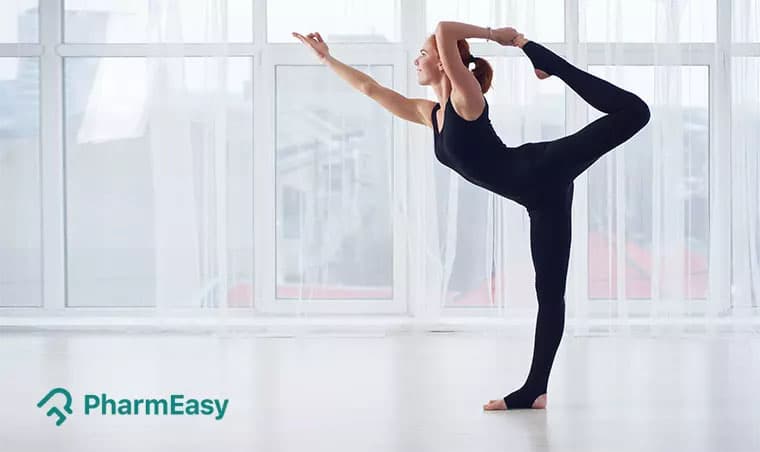
Natarajasana: Unlocking the Dancer's Pose for Holistic Health
Meena, 45, a homemaker from Jaipur, noticed a persistent ache in her lower back and a general feeling of lethargy. Her daily routine involved long hours of sitting and managing household chores, often performed while sitting on the floor – a common activity during family gatherings or even for daily tasks in many Indian homes. She decided to explore yoga, hoping for a natural way to improve her flexibility and reduce stress.
Her yoga instructor introduced her to Natarajasana, the Dancer Pose, and over a few weeks, Meena experienced a remarkable transformation. Her posture improved, the back pain subsided, and she felt a newfound sense of calm and equilibrium in her life.
The reality is, many of us lead lives that are increasingly sedentary, punctuated by periods of intense activity or prolonged stress. This lifestyle can take a toll on our physical and mental health.
Natarajasana, a beautiful and challenging yoga asana, offers a potent antidote. Honestly, its benefits extend far beyond mere physical prowess; it's an activity that nurtures the mind and spirit.
The Profound Benefits of Natarajasana
Natarajasana, named after Lord Shiva in his dancing form, is a standing pose that requires significant equilibrium, concentration, and flexibility. While it may appear intimidating at first glance, the rewards it offers are truly substantial.
Its engagement can lead to a more graceful and resilient body, coupled with a more focused and tranquil mind.
Physical Transformations
The physical advantages of mastering Natarajasana are numerous and well-documented. Initially, the pose demands considerable effort to maintain stability. However, with consistent engagement, it significantly enhances your proprioception – the body's ability to sense its position in space.
Recovery is rarely linear.
This heightened awareness is crucial for preventing falls and improving coordination. Over 70% of adults over 65 experience falls annually, highlighting the importance of balance training (WHO).
Flexibility is another major beneficiary. The pose stretches the thighs, chest, and shoulders, while also strengthening the ankles and knees.
For individuals who spend long hours hunched over desks or engaged in repetitive physical tasks, this deep stretch can alleviate muscle tension and boost range of motion. Worth knowing: Regular engagement can help strengthen posture by strengthening the core and back muscles, counteracting the effects of prolonged sitting.
On top of that,, Natarajasana is excellent for improving circulation. The inversion-like aspect, where the torso leans forward while the leg extends backward, can enable invigorate the blood flow towards the upper body. This pose also strengthens the supporting leg, including the calf muscles and hamstrings, building endurance and power.
The challenge of holding steady engages the core muscles deeply, contributing to a stronger abdominal region. It's a complete workout for the lower body and core.
Mental and Emotional Well-being
But why does this happen? The intense focus required to hold the pose naturally calms the mind. Distracting thoughts tend to dissipate as your entire attention is drawn to maintaining equilibrium and breath.
This meditative quality can significantly reduce stress and anxiety levels. Studies published in journals like The Lancet have indicated that regular yoga engagement can lower cortisol levels, the body's primary stress hormone, by up to 20%.
Here's where it gets interesting.
Natarajasana cultivates mental fortitude and self-confidence. Each time you manage to hold the pose a little longer or achieve a deeper expression, you build a sense of accomplishment.
This is particularly beneficial for individuals struggling with self-doubt or feeling overwhelmed by daily pressures. The pose also fosters a sense of presence, anchoring you firmly in the current moment — a powerful antidote to rumination and worry.
Honestly, the sense of peace that washes over you after a session of Natarajasana is profound. It's not just about the physical release of tension; it's about achieving a state of mental clarity and emotional equilibrium. The concentration required trains the brain to be more focused in other areas of life as well.
Cultural Significance and Global Reach
The pose has deep roots in Indian philosophy and spirituality, symbolizing the cosmic dance of creation and destruction. Lord Shiva’s Nataraja form represents the eternal cycle of the universe.
This connection imbues the engagement with a sense of purpose and deeper meaning, transforming it from a mere physical exercise into a spiritual discipline.
In many cases, yoga activities have transcended geographical boundaries. While originating in India, yoga is now a global phenomenon, with organizations like the International Diabetes Federation (IDF) even exploring its role in managing chronic conditions like diabetes, where improved insulin sensitivity is a key benefit.
Over 101 million Indians have diabetes (ICMR, 2023), making accessible wellness activities like yoga even more critical.
How to Engage in Natarajasana (Dancer Pose) Safely
Performing Natarajasana correctly is paramount to reaping its benefits while avoiding injury. It’s crucial to approach this pose with patience and respect for your body’s current capabilities. Always begin with a warm-up to prepare your muscles and joints.
That alone changes everything.
Step-by-Step Guide
- Starting Position: Stand tall in Tadasana (Mountain Pose) with your feet hip-width apart and arms by your sides. Ground yourself through your feet, feeling the connection with the earth.
- Shift Weight: Gently shift your body weight onto your left foot. Keep this leg strong and stable, with a slight bend in the knee if needed to avoid locking it.
- Lift the Right Leg: Bend your right knee and bring your right heel towards your right buttock. Reach back with your right hand and grasp your right ankle or foot. If you cannot reach your foot, you can use a yoga strap looped around your ankle.
- Extend the Leg: Slowly begin to lift your right leg upwards and backwards, extending it away from your body. Simultaneously, lean your torso slightly forward. This movement requires coordination and equilibrium.
- Arm Placement: Extend your left arm forward, parallel to the floor, with your palm facing down. This helps with equilibrium. Alternatively, you can keep it extended upwards.
- Engage and Breathe: Engage your core muscles to support your spine. Breathe deeply and evenly, allowing your breath to guide your movement and maintain stability. Focus your gaze on a fixed point in front of you (drishti).
- Hold and Release: Hold the pose for 5-10 breaths, or as long as you comfortably can, focusing on extending through your lifted leg and reaching forward with your free hand. To release, gently lower your right leg and return to Tadasana.
- Repeat on the Other Side: Perform the pose on the left side, shifting your weight to your right foot and lifting your left leg.
Modifications and Precautions
For beginners, holding onto a wall or chair for support is highly recommended. Focusing on the preparatory stretches for the hamstrings and quadriceps can also be beneficial.
If you experience any knee or ankle pain, modify the pose or skip it altogether. In many cases, individuals with high blood pressure or serious back issues should consult their physician before attempting this asana.
So what does that mean for you? It means approaching yoga with awareness and self-compassion. Pushing too hard, especially in a pose that demands equilibrium, can lead to injury. Listen to your body; it will tell you when to deepen the pose and when to hold back.
Integrating Natarajasana into Your Routine
Incorporating Natarajasana into your weekly yoga engagement can yield major long-term health benefits. Aim to engage in it at least 2-3 times a week.
It can be performed as part of a morning routine to energize your day or in the evening to release accumulated tension. The activity itself takes only a few minutes, but its effects linger much longer.
Consistency is key. Even short, regular sessions are more effective than infrequent, long ones.
Consider attending yoga classes led by certified instructors who can provide personalized guidance and ensure proper alignment, especially when first learning the pose. Many reputable institutions like AIIMS (All India Institute of Medical Sciences) recommend yoga as a complementary therapy for various health conditions.
Here's where it gets interesting.
Tips for Deeper Engagement
- Focus on Breath: Let your breath be your anchor. Deep, steady breaths will aid you maintain equilibrium and calm your nervous system.
- Engage Your Core: A strong core is essential for stability. Actively draw your navel towards your spine.
- Mindful Movement: Move slowly and deliberately into and out of the pose. Avoid jerky movements.
- Use Props: Don't hesitate to use blocks, straps, or a wall for support, especially when you are beginning.
- Visualize: Imagine yourself as a graceful dancer, finding fluidity and strength in the pose.
Conclusion: Embrace the Dance of Well-being
Natarajasana is more than just a yoga pose; it’s a journey towards greater physical strength, mental clarity, and emotional equilibrium. Its engagement offers a beautiful way to connect with your body, calm your mind, and embrace a more harmonious existence.
By understanding its benefits and engaging in it with awareness, you can unlock its transformative potential.
Key Takeaways:
- Natarajasana significantly improves equilibrium and proprioception, crucial for preventing falls.
- The pose enhances flexibility by stretching the thighs, chest, and shoulders.
- Regular engagement can reduce stress and anxiety by promoting mental focus and calm.
- It strengthens the core, ankles, and knees, contributing to overall physical resilience.
- Cultural roots connect the pose to spiritual discipline and mindfulness.
Always consult a qualified physician before making any medical decisions.