Female TOT Surgery for Stress Incontinence in Dhanbad
What You Must Know Before Choosing a Surgeon
Stress urinary incontinence — the involuntary leakage of urine during everyday activities like coughing, sneezing, laughing, exercising, or lifting — is one of the most common yet most under-discussed health concerns among women, particularly after childbirth or during the years around menopause. For many women in Dhanbad, the embarrassment and inconvenience of this condition often go unspoken for years, with women quietly adjusting their lives around it rather than seeking treatment. The good news is that effective, minimally invasive surgical solutions like TOT (Trans-Obturator Tape) surgery are now widely available, and Dhanbad is home to a growing community of skilled female surgeons who specialise in exactly this kind of care.
The city's healthcare landscape includes female general surgeons, female laparoscopic surgeons, female gynaecological surgeons, and female urological surgeons who together offer women a comfortable, judgement-free environment to discuss symptoms that can otherwise feel difficult to talk about. Whether your concern stems from leakage during a workout, a persistent dampness that disrupts daily confidence, or a gradual worsening of symptoms over the years, Dhanbad's specialists are equipped to assess your condition thoroughly and recommend whether lifestyle changes, pelvic floor therapy, or surgical correction through TOT is the right path forward.
Stress urinary incontinence occurs when the muscles and tissues supporting the bladder neck and urethra weaken, often as a result of pregnancy, vaginal childbirth, hormonal changes during menopause, chronic coughing (such as from smoking or respiratory conditions), obesity, or simply the natural effects of ageing on connective tissue. The hallmark symptom is leakage triggered by increased abdominal pressure — a sneeze, a laugh, climbing stairs, or lifting a heavy bag can all cause small (or sometimes larger) amounts of urine to escape involuntarily. Some women also notice a sensation of pelvic heaviness or a feeling that something is "not quite right" internally. Risk factors include multiple vaginal deliveries, large babies during childbirth, family history of pelvic floor weakness, chronic constipation, repetitive heavy lifting, and conditions that increase abdominal pressure over long periods. If left unaddressed, stress incontinence tends to worsen gradually over time, and can lead to skin irritation from constant moisture, social withdrawal due to embarrassment, sleep disruption, and a significant decline in quality of life and self-confidence.
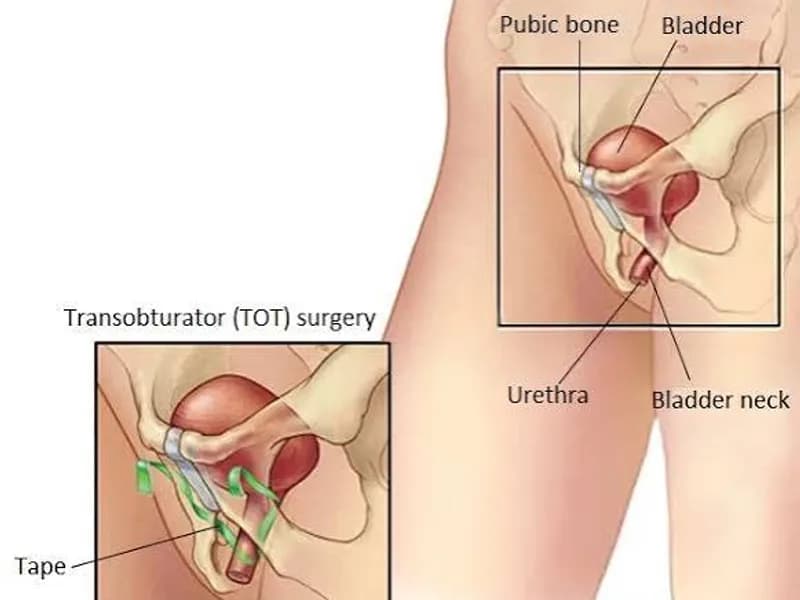
TOT surgery is recommended when conservative measures — pelvic floor exercises (Kegels), bladder training, weight management, and lifestyle modifications — haven't provided sufficient relief, or when the degree of leakage is significant enough to interfere meaningfully with daily life. The procedure involves placing a thin, supportive synthetic tape under the urethra through small incisions near the inner thighs, providing a "hammock" of support that prevents the urethra from descending under pressure. Because it's performed through the obturator foramen rather than behind the pubic bone, TOT carries a lower risk of bladder injury compared to some older techniques, and is typically a same-day or overnight procedure. The benefits of early treatment are considerable — women often describe a transformation in their daily confidence, the ability to exercise without worry, uninterrupted sleep, and freedom from constantly planning their day around bathroom access.
For women experiencing any degree of stress incontinence, consulting with female surgeons in Dhanbad early can help determine the severity of the condition and the most appropriate treatment — and in many cases, earlier intervention means a simpler, less invasive solution.
Consultation fees for the specialists listed in this article range from approximately ₹200 to ₹520, and most clinics across Dhanbad maintain OPD hours from around 9:00 AM to 1:00 PM and 5:00 PM to 8:00 PM on weekdays, with some offering Saturday appointments as well. The overall cost of TOT surgery in Dhanbad, including pre-operative assessment, the procedure itself, hospital stay, and the surgical mesh/tape, generally ranges between ₹45,000 and ₹90,000. Many women find it helpful to read verified patient reviews before choosing a hospital, particularly regarding post-operative comfort, the clarity of pre-surgical counselling, and how well the surgical team addresses questions and concerns — all of which contribute to feeling at ease before undergoing this kind of procedure.
For appointments call 8877772277.
Average TOT Surgery Cost in Dhanbad
The cost of TOT surgery in Dhanbad depends on the type of synthetic tape used, whether the procedure is combined with any additional pelvic floor repair, anaesthesia type, and the hospital's room category. The table below provides an approximate breakdown.
Procedure | Cost Range | Hospital Stay |
Standard TOT (Trans-Obturator Tape) procedure | ₹45,000 – ₹65,000 | 1–2 days |
TOT with additional cystocele repair | ₹65,000 – ₹90,000 | 2–3 days |
Pre-operative workup (urodynamic study, ultrasound, blood work) | ₹4,000 – ₹10,000 | Day care |
Anaesthesia charges (spinal/regional) | Included in package or ₹5,000 – ₹8,000 | Not applicable |
Premium/private room upgrade | ₹2,000 – ₹5,000 per day | As selected |
Post-operative follow-up visits (first 3 months) | ₹500 – ₹1,500 per visit | Not applicable |
Pelvic floor physiotherapy sessions (optional, post-surgery) | ₹500 – ₹1,000 per session | Not applicable |
PMJAY Note: Women covered under the Pradhan Mantri Jan Arogya Yojana (Ayushman Bharat) scheme may be eligible for cashless treatment of certain incontinence procedures at empanelled hospitals in Dhanbad, depending on the scheme's applicable package codes. It's best to verify eligibility and required documents with the hospital's PMJAY desk in advance.
Why TOT Surgery Is Performed
Failures of Conservative Care: To correct stress urinary incontinence that hasn't responded adequately to pelvic floor exercises or lifestyle changes.
Triggered Leakage Relief: To address leakage triggered by coughing, sneezing, laughing, exercising, or sudden movements.
Post-Childbirth Support: To provide long-term structural support to a weakened urethra following vaginal childbirth.
Psychological Well-being: To restore confidence and reduce the social anxiety associated with unpredictable urine leakage.
Halting Progression: To treat incontinence that has progressively worsened over time despite conservative management.
Minimally Invasive Preference: To offer a minimally invasive alternative to more extensive open surgical procedures for incontinence.
Pads Dependency Reduction: To reduce dependency on absorbent pads and the discomfort and cost associated with long-term pad use.
Sleep Optimization: To improve sleep quality by reducing nighttime leakage episodes related to stress incontinence.
Menopause-Related Weakness: To address incontinence that has developed or worsened after menopause due to hormonal tissue changes.
Active Lifestyle Restoration: To allow women to resume physical activities like exercise, dancing, or sports without fear of leakage.
Benefits of TOT Surgery
High Success Rates: Most clinical studies show significant improvement or complete resolution of symptoms in the majority of patients.
Discreet Incisions: Minimally invasive approach with small incisions near the inner thighs, leaving minimal visible scarring.
Time-Efficient: Short procedure time, typically completed within 30–45 minutes.
Rapid Recovery: Quick recovery compared to traditional open incontinence surgeries, often allowing discharge within 24–48 hours.
Enhanced Safety Profile: Lower risk of bladder perforation compared to retropubic sling techniques, due to the precise trans-obturator pathway.
Flexible Anaesthesia: Can often be performed under regional (spinal) anaesthesia, avoiding the risks associated with general anaesthesia.
Durable Results: Long-lasting structural support, with many women experiencing durable improvement for years after the procedure.
Quick Return to Routine: Minimal disruption to daily schedules, with most women returning to light activities within a week.
Quality of Life Uplift: Significant improvement in daily confidence, body image, and ability to participate in social and physical activities.
Combined Surgical Capability: Can be seamlessly combined with other pelvic floor repair procedures if needed, addressing multiple concerns in one session.
Top Female Surgeons for TOT Surgery in Dhanbad
Below is a directory of experienced female doctors in Dhanbad who can be consulted for the evaluation and surgical management of stress urinary incontinence, including TOT procedures. Please contact the hospital directly to confirm availability, OPD timings, and whether the doctor performs this specific procedure, as individual surgical focus may vary.
Dr. Neetu Kumari Singh
Qualification: MBBS, MD (Obstetrics & Gynaecology), FMAS
Experience: 18 Years
Consultation Fee: ₹300
Hospital: Alkari Devi Hospital
Address: Bhuli, Dhanbad, Jharkhand
Landmark: Near Bhuli More
Dr. Neha Bajaj
Qualification: MBBS, MD, DNB, MRCOG, FIAGE
Experience: 6+ Years
Consultation Fee: ₹500
Hospital: Kailash Hospital
Address: Housing Colony, Bartand, Dhanbad
Landmark: Near Bartand Bus Stand
Dr. Komal Singh
Qualification: MBBS, MS (Obstetrics & Gynaecology)
Experience: 25 Years
Consultation Fee: ₹300
Hospital: Tata Central Hospital
Address: Bhaga, Dhanbad
Landmark: Near Tata Hospital Campus
Dr. Isha Rani Mishra
Qualification: MBBS, MS (OBG)
Experience: 11 Years
Consultation Fee: ₹500
Hospital: Citizens Medical Centre
Address: Bhuli, Dhanbad
Landmark: Near Citizens Medical Centre
Dr. Radhika Mohan
Qualification: MBBS, MS (Obstetrics & Gynaecology)
Experience: 7 Years
Consultation Fee: ₹500
Hospital: Asarfi Hospital
Address: Hirapur, Dhanbad
Landmark: Near Asarfi Hospital Main Gate
Dr. Aparajita Sinha
Qualification: MBBS, MS (OBG)
Experience: 7 Years
Consultation Fee: ₹450
Hospital: Private Women's Clinic
Address: Dhanbad City
Landmark: Near City Centre
Dr. Rina Kumari
Dr. Sweta
Qualification: MBBS, DGO, DNB
Experience: 10+ Years
Consultation Fee: ₹500
Hospital: Asian Dwarkadas Jalan Hospital
Address: Saraidhela, Dhanbad
Landmark: Near ADJ Hospital
Dr. Diksha Mani
Qualification: MBBS, DNB Obstetrics & Gynaecology
Experience: 10+ Years
Consultation Fee: ₹520
Hospital: Asarfi Hospital
Address: Hirapur, Dhanbad
Landmark: Near Asarfi Hospital
Dr. Archana Kumari
📅 To book an appointment with any of the above specialists, call the hospital reception directly or use the contact details available on their hospital's official page.
🚨 Emergency Support: 8877772277
Patients exploring surgical procedures in Dhanbad for pelvic floor concerns may also wish to ask about combined procedures, since stress incontinence often coexists with other pelvic support issues like prolapse, which can sometimes be addressed in the same surgical session.
Recovery After TOT Surgery
TOT surgery is known for its relatively quick and comfortable recovery compared to many other gynaecological or urological procedures, but understanding what to expect helps set realistic expectations for the healing process.
Immediate Post-Operative Period (Day 0–1)
Most women stay in the hospital for observation for 24 to 48 hours. A temporary urinary catheter may be placed to ensure the bladder empties properly while initial swelling settles, and this is usually removed within a day. Mild pain or a pulling sensation near the inner thighs (where the tape passes) is common and managed with oral pain relief. Vaginal spotting or light discharge for a few days after surgery is normal.
Early Recovery (Days 2–14)
Most women feel well enough to return home within a day or two and can manage most light daily activities at home during the first week. Walking is encouraged from the first day to promote circulation, but prolonged standing, vigorous activity, and lifting anything heavier than a few kilograms should be avoided. Some women notice mild groin discomfort, especially with movements like getting up from a chair, which typically improves significantly within 1–2 weeks.
Diet and Bladder Care
There are no major dietary restrictions after TOT surgery, though staying well-hydrated supports bladder health during recovery. Eating fibre-rich foods and staying hydrated helps prevent constipation, which is important because straining during bowel movements can put unwanted pressure on the healing pelvic tissues. Avoiding excessive caffeine in the first couple of weeks can also help reduce bladder irritability during the initial healing phase.
Activity Restrictions
Sexual intercourse, swimming, tampon use, and heavy lifting should be avoided for at least 4–6 weeks, or until cleared by your surgeon, to allow the tape to integrate properly with surrounding tissue. Driving can usually resume within a few days once any residual discomfort from sitting has resolved. Most women in desk-based jobs return to work within 1–2 weeks, while those with physically demanding roles may need 3–4 weeks.
Follow-up Schedule
A follow-up visit is typically scheduled around 2 weeks after surgery to assess healing and confirm that urinary symptoms have improved. A further follow-up at around 6–8 weeks helps confirm that the tape has settled well and that there are no signs of erosion or discomfort. Long-term follow-up is generally minimal, as TOT is designed to be a durable, one-time intervention.
⚠️ Warning Signs to Watch For: Contact your surgeon promptly if you experience difficulty urinating or a sense of incomplete bladder emptying, fever, increasing groin or pelvic pain rather than gradual improvement, heavy bleeding, foul-smelling vaginal discharge, or any signs of wound infection at the small incision sites.
Risks and Complications
Temporary difficulty urinating or a sensation of incomplete bladder emptying in the early days after surgery.
Mild to moderate groin or inner thigh pain in the area where the tape passes, usually resolving within a few weeks.
Vaginal mesh/tape erosion, which is uncommon but may require minor corrective treatment if it occurs.
Urinary tract infection (UTI) during the early recovery period.
Rare risk of bladder, urethral, or bowel injury during tape placement, particularly in women with prior pelvic surgeries.
Temporary urinary urgency or overactive bladder symptoms that usually settle within weeks.
Bleeding or bruising at the incision sites, generally minor and self-limiting.
Persistent or recurrent leakage in a small percentage of cases, sometimes requiring a secondary procedure.
Discomfort during intercourse (dyspareunia), which is uncommon but should be discussed with your surgeon if it occurs.
General anaesthesia or spinal anaesthesia-related risks, which are assessed individually and are generally low.
❓ Frequently Asked Questions
1. What exactly is TOT surgery and how does it treat incontinence?
TOT, or Trans-Obturator Tape surgery, involves placing a narrow strip of synthetic mesh under the urethra through small incisions near the inner thighs. This tape acts as a supportive "sling" that prevents the urethra from moving downward when abdominal pressure increases — such as during coughing or sneezing — which is the root cause of stress incontinence. By providing this support, the tape helps prevent involuntary urine leakage during everyday activities.
2. How is TOT different from other incontinence surgeries like TVT?
Both TOT and TVT (Tension-free Vaginal Tape) use a similar mesh tape, but they differ in the surgical route used to place it. TOT passes the tape through the obturator foramen near the inner thighs, while TVT passes it behind the pubic bone. TOT is generally associated with a lower risk of bladder injury, though both techniques have high success rates. Your surgeon will recommend the most suitable option based on your specific anatomy and any prior pelvic surgeries.
3. Am I a good candidate for TOT surgery?
Women who experience stress urinary incontinence — leakage triggered by physical exertion, coughing, sneezing, or laughing — that hasn't responded well to pelvic floor exercises or lifestyle changes are generally good candidates. A consultation with specialist doctors in Dhanbad involving a physical examination and sometimes a urodynamic study will help confirm whether TOT is the right approach for your specific situation.
4. How long does the surgery take?
TOT surgery is typically a quick procedure, usually completed within 30 to 45 minutes, making it one of the shorter surgical interventions for incontinence.
5. Will I need general anaesthesia?
Many TOT procedures can be performed under spinal or regional anaesthesia, meaning you remain conscious but pain-free below the waist. General anaesthesia is also an option and may be preferred based on your overall health and your anaesthetist's recommendation.
6. How long will I need to stay in the hospital?
Most women stay for 24 to 48 hours for observation, though some hospitals offer this as a day-care procedure with discharge on the same day, depending on individual recovery and the surgeon's assessment.
7. When can I resume normal activities after TOT surgery?
Light activities can usually resume within a few days, while more strenuous activities, exercise, and heavy lifting should wait at least 4–6 weeks. Most women return to desk-based work within 1–2 weeks.
8. Is the synthetic tape used in TOT safe?
The synthetic tapes used in TOT procedures are made of materials specifically designed for long-term implantation and have been used in millions of procedures worldwide with a strong safety record. As with any implanted material, there is a small risk of complications such as erosion, which your surgeon will discuss with you as part of informed consent.
9. How successful is TOT surgery in the long term?
TOT surgery has demonstrated durable, long-lasting results for the majority of women, with many studies showing sustained improvement for years after the procedure. As with any surgery, individual results can vary, and a small percentage of women may experience recurrence of symptoms over time.
10. Can TOT surgery be combined with other procedures?
Yes, if you have other pelvic floor concerns such as a cystocele (bladder prolapse) alongside stress incontinence, your surgeon may recommend combining TOT with a prolapse repair in the same surgical session, which can be more convenient and cost-effective than separate procedures.
11. Will I be able to have children after TOT surgery?
TOT surgery is generally recommended for women who have completed their family planning, as pregnancy and vaginal delivery after the procedure could affect the tape's positioning and effectiveness. If you're planning future pregnancies, discuss timing with your surgeon.
12. What happens if symptoms return after TOT surgery?
While uncommon, if leakage symptoms recur after TOT surgery, your doctor will re-evaluate your condition, which may involve repeat urodynamic testing. Depending on the findings, options may include pelvic floor therapy, medication, or in some cases, a secondary surgical procedure.
13. Is there pain after the surgery?
Some discomfort, particularly in the inner thigh and groin area where the tape passes, is common in the first 1–2 weeks but is generally well-controlled with oral pain medication and improves steadily.
14. How much does TOT surgery cost in Dhanbad?
The cost typically ranges from ₹45,000 to ₹90,000 depending on whether additional procedures are combined, the type of tape used, and the hospital's facilities. It's best to get a detailed estimate during your consultation.
15. How do I prepare for my consultation?
It can help to keep a simple diary of your leakage episodes — noting what triggers them (coughing, exercise, laughing) and how often they occur — to share with your doctor. This information, along with a physical examination and possibly a urodynamic study, helps your surgeon determine the best treatment approach for your specific situation.
Cost Summary
Standard TOT surgery in Dhanbad typically ranges from ₹45,000 to ₹65,000.
Combined TOT with cystocele repair costs more, generally between ₹65,000 and ₹90,000.
Pre-operative diagnostic workup, including urodynamic studies, adds roughly ₹4,000 to ₹10,000.
Private or semi-private room upgrades typically add ₹2,000 to ₹5,000 per day.
Anaesthesia charges may be included in package pricing or billed separately at ₹5,000 to ₹8,000.
Optional pelvic floor physiotherapy sessions post-surgery cost approximately ₹500 to ₹1,000 each.
PMJAY/Ayushman Bharat beneficiaries should confirm eligibility for cashless treatment with empanelled hospitals.
Always request a complete cost breakdown including surgeon's fee, OT charges, mesh/tape cost, anaesthesia, and follow-up visits.
Conditions Treated by TOT Surgery in Dhanbad
• Stress Urinary Incontinence
The primary condition addressed by TOT surgery, stress urinary incontinence involves involuntary urine leakage during activities that increase abdominal pressure, such as coughing, sneezing, or exercising. TOT provides structural support to the urethra, significantly reducing or eliminating this leakage.
• Post-Partum Pelvic Floor Weakness
Vaginal childbirth, particularly multiple deliveries or delivery of larger babies, can weaken the pelvic floor muscles and tissues supporting the urethra. TOT surgery helps restore this support, addressing incontinence that develops or worsens after childbirth.
• Menopause-Related Urethral Hypermobility
Hormonal changes during menopause can lead to thinning and weakening of the tissues supporting the urethra, resulting in increased mobility of the urethra under pressure. TOT stabilises this by providing a supportive sling beneath the urethra.
• Mixed Urinary Incontinence (Stress Component)
Some women experience a combination of stress and urge incontinence. TOT surgery specifically addresses the stress component, often used alongside medical management for any urge-related symptoms.
• Recurrent Incontinence After Previous Pelvic Surgery
Women who have had previous hysterectomy or other pelvic surgeries may develop or experience recurrence of stress incontinence due to changes in pelvic support structures. TOT can be used to address this recurrent leakage.
• Incontinence Associated with Chronic Cough
Conditions causing chronic coughing — such as long-standing respiratory issues — place repeated stress on the pelvic floor, often leading to incontinence. While managing the underlying cough is important, TOT provides structural support that helps reduce leakage triggered by coughing episodes.
• Obesity-Related Stress Incontinence
Excess body weight increases abdominal pressure on the pelvic floor, contributing to or worsening stress incontinence. TOT surgery can provide significant symptom relief, often complementing weight management efforts.
• Urethral Hypermobility Due to Connective Tissue Changes
Some women have inherently more mobile connective tissue, making the urethra more prone to descending under pressure. TOT addresses this by providing external structural support regardless of the underlying cause of hypermobility.
• Incontinence During Physical Exercise
Many active women experience leakage specifically during exercise — running, jumping, or weightlifting — even without significant leakage in daily life. TOT can be particularly beneficial for these women, allowing a return to physical activity without the worry of leakage.
• Occult (Hidden) Stress Incontinence Associated with Prolapse
Some women with pelvic organ prolapse don't notice incontinence until the prolapse is corrected, at which point underlying stress incontinence becomes apparent. In such cases, TOT may be performed alongside prolapse repair to address both issues comprehensively.
Why Choose a Female Surgeon in Dhanbad
Discussing symptoms like urinary leakage can feel uncomfortable for many women, often more so than other health concerns, simply because of how personal and, for some, embarrassing the topic can feel. Choosing to consult a female surgeon can make this conversation considerably easier, allowing for more open and detailed discussions about symptoms, triggers, and how the condition is affecting daily life — details that are important for accurate diagnosis and treatment planning but that some women find difficult to share.
Dhanbad's female specialists bring a wide range of experience to incontinence care, with many having extensive backgrounds in obstetrics and gynaecology that give them a deep understanding of how pregnancy, childbirth, and hormonal changes affect pelvic floor health over a woman's lifetime. This contextual understanding often translates into more empathetic counselling, where the surgeon can discuss not just the surgical procedure itself but also realistic expectations, lifestyle adjustments, and long-term pelvic health.
The city's female doctors are spread across a variety of practice settings — from established multi-specialty hospitals to smaller, more personal clinics — giving women the flexibility to choose an environment that feels right for them. Whether a patient prefers the resources of a larger hospital or the more individualised attention of a smaller clinic, Dhanbad's network of experienced female doctors means quality care is accessible without needing to travel outside the city.
Choosing the right surgeon ultimately comes down to a combination of clinical expertise, comfort during consultations, and practical considerations like hospital location and appointment availability. Taking the time for an initial consultation — where you can ask questions, discuss your symptoms openly, and understand the proposed treatment plan — is one of the most valuable steps in the process, regardless of which surgeon you choose.
Conclusion
Stress urinary incontinence is far more common than most women realise, yet it remains one of the most under-treated conditions simply because many women assume it's "just something that happens" after childbirth or with age. The reality is that effective, minimally invasive treatments like TOT surgery exist precisely to address this issue, and for many women, a relatively short procedure can mean the difference between constantly planning around bathroom access and being able to live, exercise, and socialise without that underlying worry.
If leakage during everyday activities has become a part of your routine — whether it's occasional or frequent — it's worth having a conversation with a specialist about your options. A proper evaluation can clarify the severity of your condition and whether conservative measures, TOT surgery, or another approach is most appropriate for you.
Dhanbad's growing community of experienced female doctors means that women have access to thorough evaluations and a range of advanced surgical care options without needing to seek treatment in other cities. With a quick recovery time and high success rates, TOT surgery has helped many women reclaim a level of confidence and freedom they may not have felt in years. Taking that first step to discuss your symptoms with a specialist could be the beginning of a meaningful change in your daily life.
📞 For appointments call 8877772277.