Graves' Disease: The Autoimmune Cause of an Overactive Thyroid
Graves' disease is the most common cause of hyperthyroidism, an autoimmune disorder where the immune system stimulates the thyroid into overdrive. Named after Irish physician Robert Graves who described it in 1835, this condition is one of the most intriguing examples of autoimmune dysfunction — where the body's defence system becomes the problem rather than the solution.
What is Graves' Disease?
Graves' disease is an autoimmune disorder in which the immune system produces abnormal antibodies that mimic thyroid-stimulating hormone (TSH), the signal from the pituitary gland that normally tells the thyroid how much hormone to produce. These rogue antibodies — called Thyroid-Stimulating Immunoglobulins (TSIs) — bind to TSH receptors on the thyroid and continuously stimulate it to produce excessive amounts of T3 and T4 hormones. Unlike a normal TSH signal that regulates production, these antibodies cannot be switched off by the body's feedback loops.
How the Immune System Normally Works
The immune system relies on precise communication between different cell types. B cells produce antibodies targeted against specific foreign proteins (antigens). T cells regulate and execute immune responses. Regulatory T cells (Tregs) act as peacekeepers, suppressing overactive immune reactions and maintaining tolerance to the body's own tissues. This system prevents the immune response from becoming a self-destructive force.
What Goes Wrong in Graves' Disease
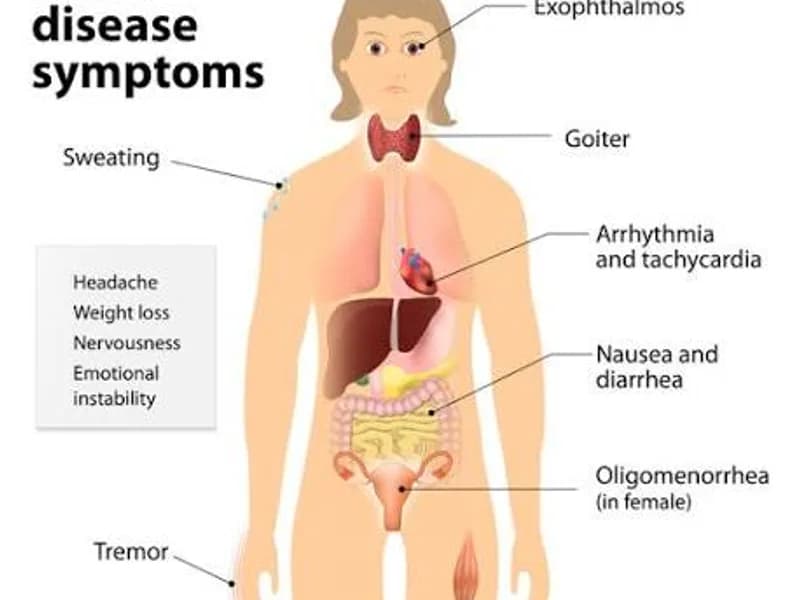
In Graves' disease, this regulatory tolerance breaks down. Autoreactive B cells escape immune surveillance and begin producing TSI antibodies. These antibodies activate the TSH receptor on thyroid cells just as real TSH would — but they are never shut off. The result is continuous, uncontrolled thyroid stimulation. Additionally, in some patients, TSI antibodies also bind to receptors in the eye tissue and skin, causing distinctive complications like bulging eyes (Graves' ophthalmopathy) and thickened skin on the legs (pretibial myxoedema).
Causes and Triggers
• Genetic predisposition — first-degree relatives of Graves' patients have a 15-fold higher risk
• Smoking — strongly associated with developing Graves' disease and worsening eye complications
• Physical or emotional stress — can trigger onset in genetically susceptible individuals
• Pregnancy and postpartum — hormonal shifts increase risk
• Infections — certain viral or bacterial infections may initiate the autoimmune cascade
• Excessive iodine exposure
Genetic and Environmental Factors
Graves' disease has a strong hereditary component, with both HLA genes (immune regulation genes) and non-HLA genes implicated. It is 8 times more common in women than men, particularly in those aged 20 to 50. Stress and hormonal transitions are the most commonly cited environmental triggers. Smoking not only raises the risk of Graves' disease but dramatically worsens Graves' ophthalmopathy, making smoking cessation an urgent priority for patients.
Symptoms and Warning Signs
• Weight loss despite increased appetite
• Rapid, irregular, or pounding heartbeat
• Heat intolerance and excessive sweating
• Trembling hands, restlessness, anxiety
• Fatigue and muscle weakness
• Enlargement of the thyroid (goitre)
• Frequent bowel movements
• Sleep difficulties
• Bulging eyes and eye irritation (Graves' ophthalmopathy) — a hallmark sign
• Thickening of the skin on the shins (pretibial myxoedema) — rare but distinctive
Diagnosis Process
A thorough diagnosis includes blood tests for TSH (suppressed), free T3 and T4 (elevated), and TSI antibody levels. A radioactive iodine uptake (RAIU) test shows how actively the gland is producing hormones. Thyroid ultrasound assesses gland size and blood flow. Eye examinations are essential if ophthalmopathy is suspected. Consulting an experienced Endocrinologist is critical for confirming Graves' and distinguishing it from other causes of hyperthyroidism.
Treatment Options
Treatment options include:
• Anti-thyroid Drugs — Methimazole or Propylthiouracil (PTU) block hormone synthesis
• Radioactive Iodine (RAI) Therapy — the most common definitive treatment; destroys overactive thyroid tissue
• Beta-blockers — control symptoms like heart palpitations and tremors while awaiting other treatments
• Surgery — thyroidectomy is considered when other treatments are inappropriate. Patients with large goitre or ophthalmopathy may also be evaluated for
Diet and Nutrition Recommendations
• Reduce iodine intake — avoid seaweed, seafood excess, iodised salt
• Eat calcium-rich foods — hyperthyroidism accelerates bone loss
• Anti-inflammatory foods — berries, leafy greens, olive oil, fatty fish
• Frequent small meals to address weight loss and energy demands
• Avoid caffeine and alcohol which worsen palpitations and anxiety
Daily Lifestyle Management
• Prioritise sleep and rest — your body is metabolically overworked
• Avoid intense exercise until thyroid levels are controlled
• Stop smoking immediately — it worsens eye complications significantly
• Practise relaxation techniques: meditation, guided imagery, gentle yoga
• Wear UV-protective sunglasses if experiencing eye symptoms
Mental Health Impact
Graves' disease profoundly affects mental health. The hormonal storm triggers anxiety, emotional volatility, irritability, panic attacks, and cognitive disruption. Patients often feel as though they've lost control of their emotions and mental clarity. This is a direct physiological effect, not a psychological weakness. Treating the thyroid condition substantially improves mental state, but therapy and peer support during the active disease phase are valuable adjuncts.
Possible Complications
• Thyroid storm — a medical emergency with dangerously high hormone levels
• Heart failure or atrial fibrillation from chronic tachycardia
• Osteoporosis from excess thyroid hormone accelerating bone resorption
• Vision loss from severe Graves' ophthalmopathy
• Post-treatment hypothyroidism requiring lifelong hormone replacement
Living Well with Graves' Disease
Graves' disease is challenging, but most patients achieve remission or stable management with treatment. Staying informed, compliant with therapy, and proactive about follow-up care is essential. Patients in West Bengal can access comprehensive thyroid and autoimmune disease care at Advanced Treatment Hospitals in Kolkata with dedicated endocrinology departments.
Frequently Asked Questions
Can Graves' disease go into remission on its own?
Spontaneous remission occurs in some patients, particularly after anti-thyroid drug treatment. However, relapse rates are high, and most patients require definitive treatment.
Is Graves' disease hereditary?
Yes, there is a strong genetic predisposition, but environmental triggers also play a significant role in whether the disease develops.
Can Graves' disease affect my eyes even if my thyroid is treated?
Yes — Graves' ophthalmopathy can develop or worsen independently of thyroid hormone levels, particularly in smokers. Specialist eye care is important.
Conclusion
Graves' disease represents a fascinating but disruptive malfunction of the immune system. With modern treatment options including medication, radioactive iodine, and surgery, the vast majority of patients achieve lasting control. The key is early diagnosis, specialist-guided treatment, lifestyle modification, and — above all — never ignoring symptoms that persist or worsen.