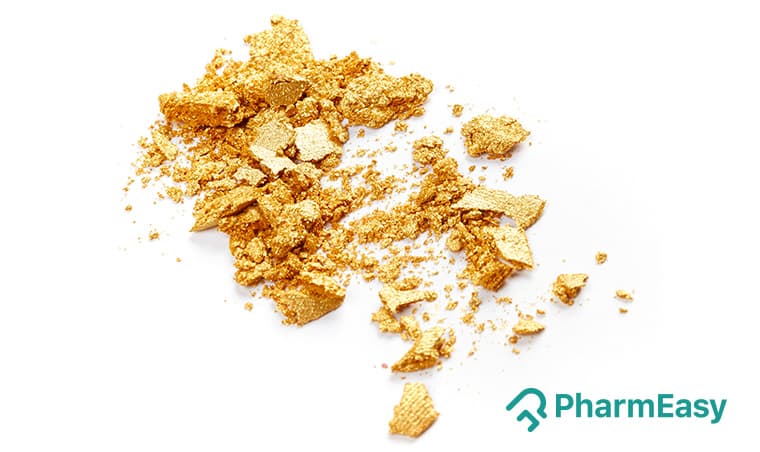
Gold Ash: Understanding This Potent Traditional Indian Preparation
Meena, 45, a homemaker from Jaipur, noticed a persistent joint pain that worsened during the monsoon season. Traditional remedies offered little relief, and her family physician suggested exploring alternative therapies.
Her aunt, a staunch follower of Ayurveda, recommended Swarna Bhasma, a gold-ash preparation, for its purported anti-inflammatory and rejuvenating properties. This sparked Meena's curiosity, and she began researching this ancient Indian medicine.
' This intricate procedure aims to reduce the toxicity of raw gold and enhance its therapeutic efficacy. For centuries, it has been revered in Ayurvedic and Siddha medicine as a powerful 'Rasayana' (rejuvenator) and 'Vajikarana' (aphrodisiac), believed to enhance strength, immunity, and longevity.
The preparation involves intricate steps like purification (Shodhana), oxidation, and calcination, generally using herbal extracts and specific temperatures. The final product is a fine, usually yellowish or golden, powder.
Here's where it gets interesting.
The Ayurvedic Perspective on Gold Ash
Ayurveda classifies Swarna Bhasma as a potent medicine that can address a wide array of ailments. It is believed to pacify all three 'doshas' – Vata, Pitta, and Kapha – which are the fundamental energies governing health in the body. Its primary indications include respiratory disorders like asthma and tuberculosis, neurological conditions, reproductive health issues, and chronic debilitating diseases.
It is also used to boost overall vitality and combat the effects of aging. The rationale behind using gold in medicine stems from its perceived ability to enhance 'Ojas' – the vital essence of life.
Here's the thing — modern scientific research is gradually beginning to explore the pharmacological activities of Swarna Bhasma, though much of it remains in preliminary stages. Studies have investigated its anti-inflammatory, immunomodulatory, antioxidant, and even anti-cancer properties.
For instance, some research suggests that gold nanoparticles, which are present in Swarna Bhasma, might interact with biological systems in ways that could explain some of its therapeutic claims. However, it's crucial to understand that these findings are generally based on laboratory experiments or animal studies and do not directly translate to proven human efficacy or safety without rigorous clinical trials.
Benefits of Gold Ash
Proponents of Swarna Bhasma claim a broad spectrum of benefits, generally linked to its supposed ability to strengthen the body's natural healing mechanisms. These purported advantages include:
- Boosting Immunity: It is believed to enhance the immune system's ability to fight off infections and diseases.
- Respiratory Health: Traditionally used for conditions like chronic cough, bronchitis, and tuberculosis, offering symptomatic relief.
- Nervous System Support: May help in managing neurological disorders and improving cognitive functions.
- Joint Health: Its anti-inflammatory properties are thought to alleviate pain and stiffness associated with arthritis.
- Rejuvenation and Anti-Aging: Considered a potent Rasayana, it's used to promote longevity and vitality.
- Reproductive Health: Employed in addressing infertility and improving sexual vitality.
Practically speaking, the perceived benefits generally align with Ayurvedic principles of balancing bodily energies and strengthening the body's core resilience. The belief is that by strengthening 'Agni' (digestive fire) and removing 'Ama' (toxins), the body becomes more capable of healing itself.
That's the part worth remembering.
Understanding the Creation Process
The creation of Swarna Bhasma is a meticulous, multi-stage process deeply rooted in ancient Ayurvedic texts. It begins with the purification of raw gold, generally involving heating and quenching in herbal decoctions. This step, known as 'Shodhana,' is crucial for detoxifying the metal. Following purification, the gold is repeatedly subjected to incineration (Puta) in a closed vessel (Musha) with specific herbal mixtures and purgative agents like 'Snuhi Ksheera' (latex of Euphorbia neriifolia).
The number of Puta cycles can vary significantly, generally ranging from dozens to hundreds, depending on the desired potency and the specific text followed. This process aims to convert metallic gold into a fine, absorbable ash, potentially reducing its particle size to the nanoscale. The entire procedure can take several months to complete.
What most people miss: the quality and efficacy of Swarna Bhasma heavily depend on the expertise of the practitioner, the quality of the raw materials, and adherence to the classical Ayurvedic protocols. Variations in the creation can lead to differences in the final product's characteristics and therapeutic effects.
The transformation of gold into a Bhasma is believed to alter its physical and chemical properties, making it bioavailable and therapeutically active.
Risks and Safety Concerns
Despite its revered status, Swarna Bhasma is not without risks, especially if improperly prepared or consumed in excessive doses. Heavy metal toxicity is a primary concern. While the Bhasmikarana process aims to reduce toxicity, residual impurities or incomplete calcination can lead to the presence of harmful elements.
This is where most patients struggle.
Gold itself, in metallic form, is generally considered inert, but its processed form might carry risks. Reports and studies have highlighted concerns regarding the presence of heavy metals like lead, mercury, and arsenic in some commercially available Ayurvedic preparations, including those containing Swarna Bhasma. The World Health Organization (WHO) has previously flagged concerns about heavy metal contamination in traditional medicines globally.
Have you ever wondered why? The challenge lies in standardization and quality control. Unlike pharmaceutical drugs, the production of many Ayurvedic medicines, including Swarna Bhasma, can be highly variable.
This variability makes it difficult to ensure consistent purity and dosage. The long-term effects of consuming heavy metal-containing preparations are not always well-documented. The Indian Council of Medical Research (ICMR) has also emphasized the need for stringent quality control measures in the manufacturing of Ayurvedic medicines to ensure patient safety.
In some instances, individuals may experience adverse reactions such as digestive disturbances, allergic reactions, or other unpredictable effects. These reactions can be due to the gold itself, the processing materials, or contaminants.
That's the part worth remembering.
It's imperative that Swarna Bhasma is sourced from reputable manufacturers who adhere to Good Manufacturing Practices (GMP) and undergo rigorous testing for heavy metals and other impurities. Relying on unverified sources or local practitioners without proper credentials can be extremely dangerous.
Gold Ash in Modern Research
While traditional Ayurvedic texts extol the virtues of Swarna Bhasma, modern science is slowly piecing together a more objective understanding. Research has focused on the nanoparticles of gold created during the Bhasma process. These gold nanoparticles (AuNPs) have shown promise in various biomedical applications, including drug delivery, diagnostics, and therapeutics.
Some in-vitro (laboratory) studies have indicated that Swarna Bhasma might possess anti-inflammatory effects by modulating certain inflammatory pathways. Its antioxidant potential, which could assist combat cellular damage caused by free radicals, is another area of investigation. The International Diabetes Federation (IDF) notes the growing interest in complementary and alternative medicine for chronic diseases, and Swarna Bhasma is sometimes explored in this context, although evidence for its efficacy in conditions like diabetes is largely anecdotal.
Worth knowing: The specific mechanisms by which Swarna Bhasma might exert its effects are still being elucidated. Researchers are investigating how these gold nanoparticles interact with biological molecules and cells. However, it is vital to reiterate that most of this research is preclinical.
This is where most people struggle.
Translating these findings into safe and effective treatments for humans requires extensive clinical trials, which are often lacking or incomplete for many Ayurvedic formulations. The Lancet has published articles highlighting the need for more robust scientific validation of traditional Indian medicines.
Dosage and Administration
The dosage of Swarna Bhasma is highly individualized and depends on several factors, including the patient's age, the nature and severity of the ailment, the specific preparation used, and the practitioner's discretion. , 15-30 mg). It is usually taken orally, mixed with honey, ghee, or specific herbal decoctions, as prescribed by an Ayurvedic physician.
The frequency of administration can range from once daily to once a week. Self-medication with Swarna Bhasma is strongly discouraged due to the risks associated with incorrect dosage and purity issues. An experienced Ayurvedic practitioner will assess the individual's constitution and condition before prescribing any dosage regimen.
So what does that mean for you? It means that if you are considering Swarna Bhasma, seeking professional guidance from a qualified Ayurvedic doctor is non-negotiable.
They can determine if it's appropriate for your disorder, recommend a safe dosage, and ensure you are sourcing a pure product. Remember, even natural or traditional remedies carry inherent risks if not used correctly.
That's the part worth remembering.
Cultural Context and Traditional Use
In India, Ayurvedic practices are deeply interwoven with cultural and social life. Many families continue traditional healing practices, generally passed down through generations. The use of Swarna Bhasma aligns with this cultural heritage, where gold itself is considered auspicious and possesses symbolic value, generally used in religious ceremonies and as a form of wealth. The creation and administration of such potent medicines are generally seen as a sacred ritual.
The creation process itself, involving specific timings and astrological considerations in some traditions, reflects the holistic approach of Ayurveda. It's common to find families who have relied on Ayurvedic physicians for generations, especially for chronic ailments that may not respond well to conventional medicine. This deep-rooted trust and cultural acceptance contribute to the continued relevance of formulations like Swarna Bhasma.
The monsoon season, which generally exacerbates certain health conditions like joint pain and respiratory issues in India, is also a time when the efficacy of Ayurvedic remedies like Swarna Bhasma is generally highlighted by practitioners. Similarly, dietary practices during festivals, which can sometimes be heavy and lead to digestive imbalances, are also occasions where Ayurvedic principles and medicines are sought.
The cultural significance of gold extends beyond its material value, encompassing spiritual and therapeutic beliefs.
Key Takeaways
- Swarna Bhasma is a calcined gold preparation used in Ayurveda and Siddha medicine, believed to have rejuvenating and therapeutic properties.
- Its creation involves a complex, multi-stage process aimed at purifying and reducing gold to an absorbable ash, potentially in nanoparticle form.
- Purported benefits include boosting immunity, supporting respiratory and nervous systems, and improving joint health, though scientific validation is ongoing.
- Risks include heavy metal toxicity if improperly prepared or contaminated; rigorous quality control is essential.
- Dosage and administration must be determined by a qualified Ayurvedic practitioner due to the potency and risks involved.
Always consult a qualified physician before making any medical decisions.