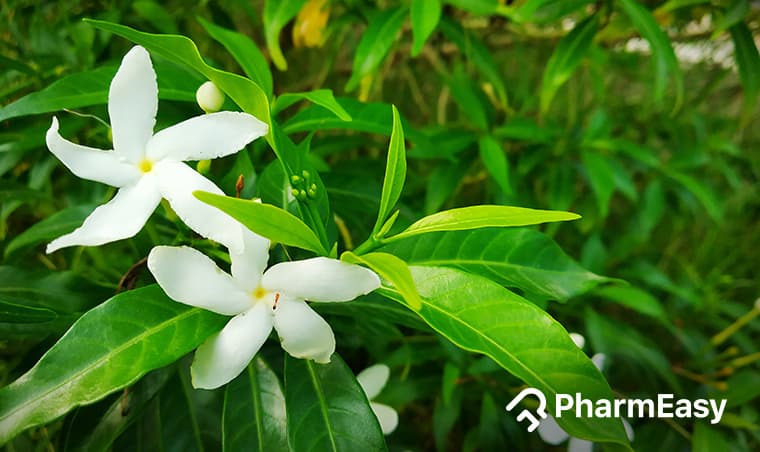
Tagar: Unveiling India's Medicinal Marvel
Meena, 45, a homemaker from Jaipur, noticed her rest quality declining. The stress of managing household chores and her children’s studies left her tossing and turning, feeling exhausted each morning. Her neighbor, familiar with older remedies, suggested Tagar (known scientifically as Tabernaemontana divaricata), a common garden plant often overlooked for its potent healing qualities. Many of us walk past these seemingly ordinary plants without realizing the ancient wisdom they hold.
Tagar, also referred to as Chandni or Aparajita in different regions of India, is a perennial shrub belonging to the Apocynaceae family. Its beautiful white, star-shaped flowers are a usual sight in Indian gardens, often planted for ornamental purposes.
However, its roots, bark, and leaves have been integral to Ayurvedic medicine for centuries, primarily for their calming and therapeutic effects. Consider this: what we often view as mere decoration can be a treasure trove of healing elements.
The Rich Ayurvedic Heritage of Tagar
In Ayurveda, Tagar is classified as a 'Medhya Rasayana,' a category of herbs that rejuvenate the mind and intellect. Its primary action is on the nervous system, where it is believed to pacify 'Vata' and 'Pitta' doshas, thereby promoting mental peace and restful slumber.
For centuries, it has been a go-to remedy for conditions like insomnia, anxiety, and even certain neurological disorders. Have you ever wondered why ancient healing systems placed such emphasis on plants readily available in their surroundings?
Here's where it gets interesting.
The efficacy of Tagar in ancestral medicine stems from its rich phytochemical profile. Its roots, in particular, contain a diverse array of alkaloids, such as voacangine, coronaridine, and ibogaine derivatives.
These elements are believed to interact with neurotransmitter systems in the brain, contributing to its sedative and anxiolytic (anxiety-reducing) qualities. In many cases, the wisdom of our ancestors, passed down through generations, has been validated by modern scientific inquiry, albeit with a deeper understanding of the mechanisms involved.
Key Benefits and Uses of Tagar
1. Promoting Restful Sleep
Perhaps the most well-known use of Tagar is as a natural sleep aid. Insomnia affects a significant portion of the Indian population; estimates suggest that up to 30% of adults experience chronic insomnia. Tagar root is traditionally prepared as a decoction or powder and administered to individuals struggling with slumber disturbances.
It's thought to work by modulating the GABAergic system, similar to how some pharmaceutical sleep aids function, but through natural constituents. This gentle yet effective action helps in falling asleep faster and improving slumber quality without the grogginess often associated with synthetic medications. Its calming influence can be particularly beneficial during stressful periods, like preparing for exams or navigating challenging work deadlines.
This is where most patients struggle.
2. Alleviating Anxiety and Stress
The fast-paced modern lifestyle, coupled with societal pressures, has led to a surge in anxiety disorders. In India, mental health awareness is growing, but many still seek natural remedies. Tagar's adaptogenic and anxiolytic qualities make it a valuable herb for managing stress and anxiety. By calming the mind and reducing nervous tension, it helps individuals cope better with daily stressors.
Does this sound familiar? The feeling of being overwhelmed is a typical thread for many. A warm cup of Tagar tea, perhaps enjoyed after a long day of work or during the monsoon season when the weather itself can sometimes induce a melancholic mood, can offer a sense of tranquility. Research published in journals like the 'Indian Journal of Pharmacology' has explored these calming effects, citing its potential to reduce stress markers.
3. Supporting Neurological Health
Historically, Tagar has been used in Ayurveda to address certain neurological conditions. While research is ongoing, preliminary studies suggest that some elements in Tagar may possess neuroprotective qualities. These qualities could potentially help in managing conditions related to nerve function and degeneration.
It’s important to understand that while ancestral uses are extensive, modern scientific validation for complex neurological diseases is still in its early stages. Institutions like the National Institute of Mental Health and Neurosciences (NIMHANS) in Bangalore are at the forefront of exploring such plant-based interventions, though Tagar is not a primary focus for them currently.
It sounds simple. It rarely is.
4. Anti-inflammatory and Analgesic Properties
The anti-inflammatory and pain-relieving potential of Tagar is another area of interest. Traditionally, poultices made from Tagar leaves and roots have been applied topically to reduce swelling and alleviate pain from injuries or inflammatory conditions like arthritis.
Scientific investigations have begun to explore these claims, identifying constituents that exhibit anti-inflammatory activity in laboratory settings. While not a substitute for conventional treatments for severe inflammation or pain, it offers a complementary approach for mild to moderate discomfort.
5. Digestive Health Support
In some ancestral practices, Tagar has also been employed to aid digestion and manage gastrointestinal issues. It is believed to assist in regulating bowel movements and alleviating digestive discomfort.
This use, however, is less documented compared to its neurological applications and requires further research to establish its efficacy and safety for digestive disorders.
Scientific Validation and Research
While Ayurveda has revered Tagar for millennia, modern science is gradually catching up, validating some of its ancestral uses. Studies have focused on identifying the active constituents and understanding their mechanisms of action. For instance, research into the alkaloid content has provided a biochemical basis for its sedative and anxiolytic effects.
It sounds simple. It rarely is.
The World Health Organization (WHO) acknowledges the importance of ancestral medicine and encourages research into its scientifically validated uses. However, it's crucial to note that clinical trials in humans are still limited, especially for conditions beyond slumber and anxiety. The International Diabetes Federation (IDF) is a good example of an organization focused on specific diseases, highlighting how different institutions focus their research efforts.
The chemical complexity of Tagar means that isolating specific constituents might not always replicate the synergistic effects observed when the whole plant extract is used. This 'whole herb' approach is a cornerstone of Ayurvedic practice.
Here's the thing: understanding how multiple constituents work together is a marked challenge for reductionist scientific methods, but it’s where much of the ancestral efficacy lies.
Potential Side Effects and Precautions
Despite its natural origin, Tagar is not without potential side effects, especially when used in large doses or for prolonged periods. Some individuals might experience mild gastrointestinal upset, dizziness, or headaches. Because of its sedative qualities, it is advisable to avoid operating heavy machinery or driving after consuming Tagar, particularly in the initial stages of use.
It is generally not recommended for pregnant or breastfeeding women due to a lack of sufficient safety data. On top of that,, individuals with pre-existing medical conditions, especially those involving the liver or kidneys, should exercise caution.
This is where most people struggle.
Interactions with other medications are also a concern. If you are currently taking any prescription drugs, particularly sedatives, antidepressants, or blood thinners, consulting your healthcare provider before using Tagar is paramount.
4 billion people globally are estimated to use ancestral medicine alongside conventional healthcare (WHO, 2021), underscoring the need for careful integration and communication with medical professionals.
How to Use Tagar
Tagar is available in various forms, including dried root powder, tinctures, capsules, and decoctions. The dosage and form depend on the intended use and individual constitution. Traditionally, a decoction made from the dried root is prevalent for slumber and anxiety. Typically, about 5-10 grams of dried root is boiled in about 200 ml of water until the volume reduces by half, then strained and consumed once or twice daily.
For topical applications, leaves or roots can be crushed and applied as a paste. Remember, consistency is key, but moderation is equally vital. Starting with a low dose and gradually increasing it under guidance is a prudent approach.
The numbers don't lie.
Cultivating Tagar at home is also feasible, especially in warmer climates like many parts of India. It thrives in well-drained soil and requires moderate sunlight.
Harvesting the roots typically occurs after the plant has matured for at least two to three years to ensure a rich concentration of active constituents. This sustainable approach allows for a readily available source of this beneficial herb.
Tagar vs. Other Sedatives
When compared to pharmaceutical sedatives, Tagar offers a gentler, more natural approach. While prescription medications can be highly proven, they often come with a risk of dependency, withdrawal symptoms, and major side effects. Tagar, when used appropriately, is generally considered safer for long-term use by many practitioners of ancestral medicine.
However, it's essential to recognize that 'natural' does not automatically equate to 'safe' for everyone. The potency of plant-based constituents means they require respect and informed usage. Have you ever considered the long-term impact of relying solely on synthetic solutions for everyday ailments?
The Indian Council of Medical Research (ICMR) emphasizes evidence-based medicine, and while Tagar has a strong historical foundation, robust clinical evidence comparable to pharmaceutical drugs is still developing. Nevertheless, for individuals seeking alternatives or complementary therapies for mild slumber issues or anxiety, Tagar presents a compelling option rooted in centuries of ancestral practice.
That alone changes everything.
Key Takeaways
- Tagar (Tabernaemontana divaricata) is a plant with considerable historical use in Ayurvedic medicine, particularly for its calming and slumber-promoting qualities.
- Its primary benefits include aiding slumber, reducing anxiety and stress, and potentially supporting neurological and anti-inflammatory functions.
- Active constituents like alkaloids are believed to contribute to its therapeutic effects, interacting with the nervous system.
- While generally safe in moderation, potential side effects like dizziness and gastrointestinal upset can occur; caution is advised for pregnant women and those with pre-existing conditions.
- Always consult a qualified physician before making any medical decisions.