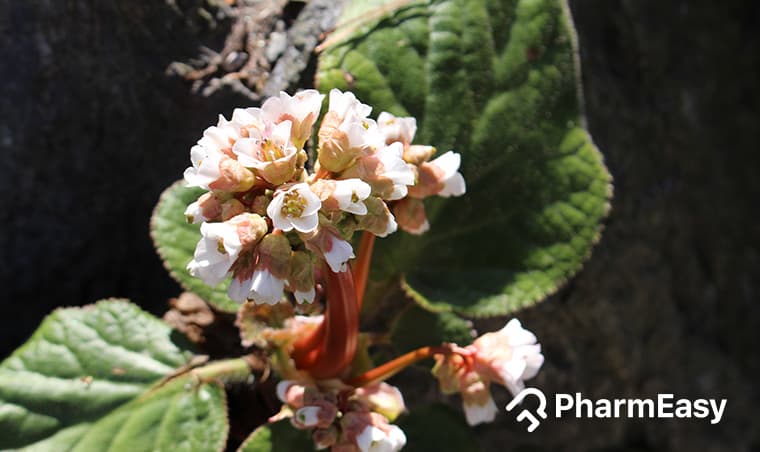
Pashanbhed (Bergenia Ligulata): Nature's Aid for Urinary Health and Beyond
Meena, 45, a homemaker from Jaipur, experienced a sharp, excruciating pain in her lower back that radiated to her abdomen. The discomfort intensified with every movement, making even simple tasks feel impossible. After a series of tests, the diagnosis was clear: urinary calculi. Her doctor suggested medication and dietary changes, but Meena, being an avid follower of traditional remedies, also sought advice from her Ayurvedic practitioner. She was introduced to Pashanbhed, also known scientifically as Bergenia Ligulata, an herb famed in Ayurveda for its remarkable qualities, particularly concerning urinary and kidney health.
This ancient herb has been a cornerstone of Ayurvedic medicine for centuries, valued for its litholytic (calculi-dissolving) and diuretic qualities. Practically speaking, its name itself, derived from Sanskrit words 'pashan' (stone) and 'bhed' (to break or shatter), hints at its primary historical application.
The reality is, many Indians still turn to traditional herbs like Pashanbhed when conventional treatments fall short or as a complementary therapy, especially for chronic conditions.
Understanding Pashanbhed: The Herb and Its Origins
Pashanbhed is a perennial herb that typically grows in the Himalayan regions of India, Nepal, and Bhutan. It is characterized by its thick, fleshy, and leathery leaves that grow in a basal rosette, and its bright pink or purple flowers.
The rhizome (underground stem) and roots are the parts most commonly used in medicinal preparations. Its ability to thrive in rocky, arid terrains speaks to its resilience and the potent compounds it harnesses from the earth.
The medicinal use of Pashanbhed is deeply rooted in Ayurvedic texts. Charaka Samhita and other classical Ayurvedic treatises mention its efficacy in managing urinary calculi, bladder stones, and urinary tract infections (UTIs).
Here's where it gets interesting.
Think about it this way: it’s nature’s way of providing a gentle yet effective solution to problems that cause immense suffering.
Key Benefits and Uses of Pashanbhed
The therapeutic promise of Pashanbhed is extensive, though its most celebrated role is in managing urinary and bladder calculi. However, its benefits extend far beyond this singular application.
1. Urinary and Bladder Calculi Management
This is arguably the most well-known application of Pashanbhed. Studies suggest that the herb possesses qualities that help in breaking down urinary calculi and preventing their formation. It acts as a diuretic, increasing urine output, which helps flush out small calculi and gravel from the urinary tract. On top of that,, its anti-lithic qualities inhibit the crystallization of calcium oxalate, a common component of urinary calculi. Investigations published in the journal Phytotherapy Research have indicated the herb’s effectiveness in reducing calculi size and alleviating pain associated with them. The International Journal of Pharmaceutical Sciences and Research reported that Pashanbhed extract significantly reduced calculi burden in animal models, suggesting its promise in human treatment.
2. Urinary Tract Infection (UTI) Relief
The diuretic and antimicrobial qualities of Pashanbhed make it beneficial for combating UTIs. By increasing urine flow, it helps to flush out bacteria from the urinary system. Its anti-inflammatory action can also soothe irritation and reduce the burning sensation often experienced during urination.
While not a substitute for antibiotics in severe cases, it can serve as a valuable supportive therapy. Approximately 50% of women experience at least one UTI in their lifetime (WHO), highlighting the widespread need for impactful relief.
3. Digestive Health Support
In traditional practice, Pashanbhed has also been used to improve digestion and manage gastrointestinal issues. It is believed to stimulate digestive enzymes and strengthen appetite.
Its astringent qualities might support in managing diarrhoea and other digestive disturbances. While scientific evidence is less robust in this area compared to its use for urinary calculi, its historical application warrants consideration.
4. Anti-inflammatory and Antioxidant Properties
The rhizomes of Bergenia Ligulata are rich in compounds like bergenin, which exhibit significant antioxidant and anti-inflammatory effects. These qualities are crucial for combating oxidative stress in the body, which is linked to numerous chronic diseases. The herb helps neutralize harmful free radicals and reduce inflammation, contributing to overall well-being. This is particularly relevant in contexts where chronic inflammation contributes to conditions like arthritis, a concern for many, especially during the damp monsoon season which can exacerbate joint pain.
5. Potential Respiratory Benefits
Traditional use includes remedies for coughs and respiratory ailments. Some investigations suggest that extracts of Pashanbhed may possess bronchodilatory and mucolytic qualities, potentially aiding in conditions like asthma and bronchitis. However, more study is needed to confirm these effects.
This is where most patients struggle.
Scientific Validation and Research
While Ayurveda has relied on Pashanbhed for millennia, modern scientific study is beginning to validate its traditional uses. Numerous phytochemical investigations have identified key active compounds, such as bergenin, arbutin, and tannic acid, responsible for its therapeutic effects.
For instance, bergenin has demonstrated anti-diabetic, anti-inflammatory, and antioxidant activities in various preclinical studies. Investigations conducted at the All India Institute of Medical Sciences (AIIMS) have explored the promise of bergenin derivatives for various health conditions.
A systematic review published in the journal Evidence-Based Complementary and Alternative Medicine highlighted the marked evidence supporting Pashanbhed’s role in managing urolithiasis (urinary calculi). The review emphasized its diuretic, anti-lithic, and anti-inflammatory actions as key mechanisms. What should you actually do? If you are experiencing symptoms of urinary calculi, consulting a doctor is paramount, and discussing the promise of Ayurvedic herbs like Pashanbhed as a complementary therapy could be beneficial.
How to Use Pashanbhed: Dosage and Forms
Pashanbhed is available in various forms, including powder (churna), decoction (kwath), and tinctures. The dosage typically depends on the form of the herb, the patient's condition, and the guidance of a qualified Ayurvedic practitioner.
- Powder (Churna): Often taken with water, honey, or buttermilk. A usual dosage might range from 3-6 grams per day.
- Decoction (Kwath): Prepared by boiling the dried rhizome in water. This concentrated liquid can be taken in doses of 50-100 ml per day.
- Juice: Fresh leaf juice can also be administered.
It is crucial to source Pashanbhed from reputable suppliers to ensure purity and potency. The preparation methods can influence the bioavailability of its active compounds. For example, decoctions are often preferred for extracting water-soluble active constituents.
That alone changes everything.
Potential Side Effects and Precautions
While generally considered safe when used appropriately under expert guidance, Pashanbhed can have potential side effects, especially if consumed in excessive amounts or by individuals with specific health conditions.
- Digestive Upset: Some individuals might experience mild gastrointestinal discomfort, such as nausea or stomach ache.
- Allergic Reactions: Though rare, allergic reactions can occur.
- Pregnancy and Breastfeeding: Pregnant and breastfeeding women should avoid using Pashanbhed due to a lack of safety data.
- Interactions: It may interact with certain medications, particularly diuretics and blood thinners. Always inform your doctor about any herbal supplements you are taking.
But why does this happen? The herb's potent compounds can affect the body's fluid balance and metabolism, necessitating careful usage. It is advisable to start with a low dose and monitor your body's response.
People with pre-existing urinary tract conditions should exercise extreme caution and consult their physician before use. The reality is, even natural remedies require a mindful approach to ensure safety and efficacy.
Pashanbhed in Indian Culture and Lifestyle
The use of Pashanbhed is deeply interwoven with the Indian traditional lifestyle. In many rural households, preparing herbal decoctions is a typical practice, especially for ailments like urinary calculi.
It sounds simple. It rarely is.
It’s not uncommon to see families sitting on the floor during festivals, discussing home remedies passed down through generations, and Pashanbhed often features in these conversations. The connection to nature and reliance on indigenous herbs reflect a profound cultural understanding of health and wellness.
The efficacy of Pashanbhed is particularly relevant in India, where the prevalence of urinary calculi is major. Factors like diet (high salt, low fluid intake), genetics, and climate contribute to this burden.
According to estimates, urinary calculi affect 8-12% of the Indian population, with a recurrence rate of nearly 50% within 5-7 years (Indian Journal of Urology). This makes traditional remedies like Pashanbhed a vital part of the healthcare landscape for many.
Comparing Pashanbhed with Modern Medicine
Modern medicine offers highly proven treatments for urinary calculi, including lithotripsy (ESWL) and surgical procedures for larger calculi. Medications like alpha-blockers can also support pass calculi. However, these treatments can be expensive and may have side effects.
It sounds simple. It rarely is.
Pashanbhed, on the other hand, offers a natural, often more affordable, alternative or complementary approach, particularly for smaller calculi or as a preventative measure. Think about it this way: it’s not necessarily an either/or situation, but rather a spectrum of options.
The World Health Organization (WHO) recognizes the importance of traditional medicine, encouraging its integration into national health systems where appropriate. While modern medicine provides rapid and often definitive solutions, Ayurvedic herbs like Pashanbhed offer a gentler, holistic approach that focuses on strengthening the body's natural healing mechanisms.
Here's the thing — the choice often depends on the severity of the problem, individual preferences, and accessibility.
Research on Bergenin and Other Phytochemicals
Bergenin, a key compound found in Pashanbhed, has been the subject of extensive study. Investigations have explored its promise in managing diabetes, as indicated by research published in journals like Diabetes Research and Clinical Practice. Its antioxidant qualities assist combat oxidative stress, a factor in diabetes complications. On top of that,, bergenin has shown anti-inflammatory effects, which could be beneficial in managing chronic inflammatory conditions. The IDF Diabetes Atlas 2021 reported that India has the second-highest number of people with diabetes globally, over 77 million, underscoring the need for therapies that address related complications.
Other phytochemicals present in Pashanbhed, such as arbutin, are known for their urinary antiseptic qualities, further supporting its traditional use in treating UTIs. Tannins contribute to its astringent effects, useful in managing diarrhoea.
Frequently Asked Questions about Pashanbhed
Q1: Can Pashanbhed cure urinary calculi completely?
While Pashanbhed can benefit in breaking down smaller calculi and facilitating their passage, it may not be sufficient for very large or complex calculi. It is often used as a complementary therapy. Always consult a doctor for proper diagnosis and management plan.
Q2: How long does it take for Pashanbhed to show effects?
The time frame varies depending on the individual, the situation being treated, and the dosage. Some may notice relief within a few days, while others might require several weeks of consistent use. Patience and adherence to prescribed dosages are key.
Q3: Is Pashanbhed safe for everyone?
It is generally safe for most adults when used appropriately. However, pregnant or breastfeeding women, and individuals with certain medical conditions (like severe urinary tract impairment) should avoid it or use it only under strict medical supervision. Interactions with certain medications are also possible.
Q4: Where can I buy authentic Pashanbhed?
Authentic Pashanbhed can be purchased from reputable Ayurvedic pharmacies, health stores, and trusted online retailers. Ensure the product is certified and from a reliable brand to guarantee quality and purity.
Key Takeaways
- Pashanbhed (Bergenia Ligulata) is an Ayurvedic herb primarily known for its effectiveness in managing urinary and bladder calculi.
- It possesses diuretic, anti-lithic, anti-inflammatory, and antimicrobial qualities, making it beneficial for UTIs and digestive issues.
- Key active compounds include bergenin and arbutin, which have been studied for their therapeutic promise.
- While generally safe, potential side effects exist, and precautions are necessary for pregnant/breastfeeding women and those on specific medications.
- Always consult a qualified physician before making any medical decisions.