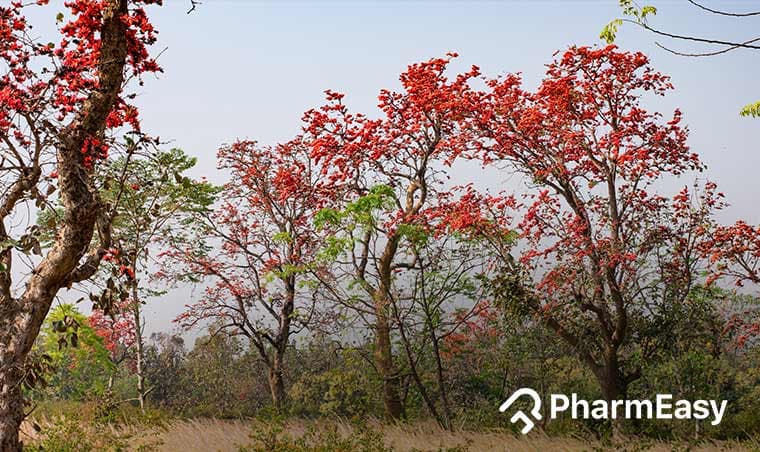
Palash Tree: A Sacred Flame in Indian Healthcare
Meena, 45, a homemaker from Jaipur, noticed persistent skin rashes that conventional remedies seemed unable to soothe. Her grandmother, a staunch believer in Ayurveda, suggested a poultice made from the blossoms of the Palash tree, also known as the 'Flame of the Forest'. Within weeks, Meena's skin cleared, leaving her amazed by the potency of this ancient botanical. This experience, common in many Indian households, highlights the profound and often underestimated medicinal value of the Palash tree (Butea monosperma).
Honestly, the Palash tree is more than just a vibrant splash of colour during springtime. Its fiery orange-red blossoms, reminiscent of a blazing fire, have earned it the moniker 'Flame of the Forest'.
This deciduous tree, native to India and Southeast Asia, holds a revered place in Indian culture and ancient medicine, particularly Ayurveda. Its various parts – blossoms, foliage, bark, seeds, and roots – have been employed for centuries to treat a wide array of ailments.
Have you ever wondered why certain plants are so deeply ingrained in a culture's healing practices? The Palash tree's enduring legacy stems from its rich chemical composition, which includes flavonoids, alkaloids, terpenoids, and glycosides. These compounds are responsible for its therapeutic benefits, including anti-inflammatory, pain-relieving, antidiabetic, antimicrobial, and wound-healing effects. In fact, studies published in journals like Phytotherapy Research have begun to scientifically validate many of these established uses.
Medicinal Uses and Ayurvedic Benefits of Palash
Blossoms: The Crimson Elixir
The vibrant blossoms of the Palash are perhaps its most celebrated part in Ayurvedic practice. They are primarily used to manage various urinary tract issues, including infections and painful urination. The blossoms are believed to possess diuretic benefits, helping to flush out toxins and reduce inflammation in the urinary system.
For instance, a decoction made from dried Palash blossoms is a prevalent recommendation. This remedy has been a go-to for generations, especially during the monsoon season when waterborne infections can spike.
Most people overlook this completely.
Palash blossoms are also thought to be beneficial for managing diabetes. Research suggests they may help in regulating blood sugar levels.
Some studies indicate that compounds within the blossoms can improve insulin sensitivity. Over 101 million Indians have diabetes (ICMR, 2023), making natural adjuncts like Palash blossoms a subject of significant interest for both practitioners and patients seeking complementary therapies.
Think about it this way: managing blood sugar is a delicate balance. The Palash blossom's potential to assist in this process, alongside conventional treatments, offers a glimmer of hope for many.
Foliage: Nature's Bandage
Palash foliage is not merely greenery; it is nature's effective bandage. It is used to promote wound healing and treat skin conditions like eczema and psoriasis. A paste made from fresh Palash foliage can be applied topically to affected areas.
Its anti-inflammatory and antimicrobial benefits assist reduce redness, itching, and prevent infection. The practice of using large Palash leaves as disposable plates during festivals or for serving food also speaks to their inherent purity and robustness.
The foliage also finds application in treating respiratory ailments. A decoction of the foliage can be used as a gargle for sore throats and tonsillitis. Its astringent benefits support to constrict tissues, reducing swelling and inflammation.
This is where most those affected struggle.
Bark: The Sturdy Healer
The bark of the Palash tree is known for its astringent and anthelmintic benefits. It is used to treat diarrhea, dysentery, and intestinal worms. A decoction of the bark can be prepared and consumed to cleanse the digestive tract.
Historically, the bark was also used to treat skin diseases and as a gargle for gum inflammation. Its robust nature reflects its potential to provide strong therapeutic support.
The Palash bark has been employed in managing leucorrhea (white discharge) in women. The astringent action helps to tone the reproductive tissues. It's a practice passed down through families, frequently mentioned by elder women when discussing women's health concerns.
Seeds: Potent Antiseptics
Palash seeds possess marked antiseptic and anti-inflammatory benefits. They are commonly used to treat skin infections, ringworm, and other fungal infections.
A paste made from the seeds, sometimes mixed with a little lemon juice, is applied directly to the affected skin. The seeds are also believed to have insecticidal properties, and historically, they were used to repel insects from stored grains.
Worth knowing: The seeds contain compounds that exhibit broad-spectrum antimicrobial activity. This makes them a valuable natural agent against various pathogens.
Roots: Grounding Support
The roots of the Palash tree are not as widely documented for medicinal use as other parts, but they are believed to have antidiabetic and aphrodisiac benefits. In some rural communities, root decoctions are consumed to manage blood sugar levels and optimise vitality.
Here's where it gets interesting.
Their grounding nature is associated with strengthening the body's core functions.
Scientific Validation and Research
While established knowledge forms the bedrock of Palash's use, modern scientific research is increasingly validating these applications. Studies have explored the anti-diabetic effects of Palash blossom extracts, demonstrating their potential to lower blood glucose levels and boost lipid profiles. For instance, research published in the International Journal of Pharmacy and Pharmaceutical Sciences has shown promising results in animal models.
Similarly, the anti-inflammatory and wound-healing benefits of Palash foliage and bark are being investigated. Extracts have demonstrated marked efficacy in reducing inflammation markers and accelerating tissue regeneration.
The Indian Council of Medical Research (ICMR) has supported various studies on medicinal plants, including those with potential benefits like Palash.
The World Health Organization (WHO) recognizes the importance of ancient medicine and advocates for further research into plant-based therapies. The potential for Palash derivatives in drug discovery is substantial, offering a natural source for novel therapeutic agents.
Its established use is supported by preliminary scientific findings, making it a plant of considerable ethnobotanical and pharmacological interest.
Potential Side Effects and Precautions
Despite its numerous benefits, it is crucial to use Palash medicinal preparations with caution. While generally considered safe when used appropriately in established doses, certain precautions are necessary.
Ingesting large quantities of any part of the Palash tree may lead to adverse effects. Some individuals might experience digestive upset, nausea, or allergic reactions.
It is particularly important for pregnant and breastfeeding women to avoid self-medicating with Palash preparations. There is insufficient scientific data regarding its safety during these sensitive periods. Children should also be given Palash remedies only under strict medical supervision.
It sounds simple. It rarely is.
So what does that mean for you? It means that while Palash offers a treasure trove of natural remedies, responsible usage is paramount.
Always ensure the source of the Palash material is reliable and free from contaminants. If you are undergoing treatment for any chronic condition, especially diabetes or kidney issues, consult your healthcare provider before incorporating Palash into your regimen.
Honestly, relying solely on herbal remedies without professional guidance can be risky. While natural, these potent plant compounds can interact with other medications or have unforeseen effects on individuals with pre-existing health conditions.
The Lancet has published numerous articles highlighting the importance of integrating established knowledge with modern medical practices safely.
Cultural Significance in India
The Palash tree is deeply woven into the fabric of Indian culture and spirituality. It is associated with Lord Brahma, the creator, and is considered sacred.
During the Holi festival, the vibrant blossoms are sometimes used to create a natural dye for the festivities, replacing synthetic colours. This practice, though less typical now, reflects a deep connection with nature.
In rural India, the large, sturdy leaves are stitched together to form disposable plates and cups, particularly during religious ceremonies and community gatherings. This sustainable practice avoids the use of plastics and reflects an indigenous understanding of the plant's utility.
Most people overlook this completely.
Sitting on the floor during meals, served on these Palash leaf platters, is a cultural norm in many Indian homes, further embedding the tree into daily life.
The tree's association with spring and renewal also imbues it with symbolic meaning. Its spectacular blooming signifies vibrancy, energy, and the triumph of life over dormancy. This symbolic resonance contributes to its revered status.
How to Use Palash (Established Methods)
Established methods of using Palash vary depending on the ailment and the part of the plant used. For digestive issues like diarrhea and dysentery, a decoction of the bark is prepared. About 10-15 grams of dried bark is boiled in 2 cups of water until the water reduces to half, then strained and consumed twice daily.
For skin conditions, a paste is made from fresh foliage or seeds. This paste is then applied topically to the affected area for about 15-20 minutes before being washed off with lukewarm water.
For urinary tract infections or diabetes management, a decoction of the blossoms is commonly used. A handful of dried blossoms is boiled in water, strained, and consumed regularly.
Remember, these are established methods. Dosages and preparation techniques may vary significantly between different regions and practitioners. Adherence to precise measurements and methods is key in established healing, much like in modern pharmacology.
Key Takeaways
- The Palash tree (Butea monosperma), or 'Flame of the Forest', has marked medicinal value in Ayurveda.
- Its blossoms, foliage, bark, and seeds are used to treat a variety of conditions including diabetes, skin ailments, digestive issues, and urinary tract infections.
- Scientific research is beginning to validate many established uses, particularly its antidiabetic and anti-inflammatory benefits.
- Potential side effects exist, and caution is advised, especially for pregnant women, children, and individuals with chronic health conditions.
- Palash holds deep cultural and symbolic significance in India, often associated with festivals and established practices.
Always consult a qualified physician before making any medical decisions.