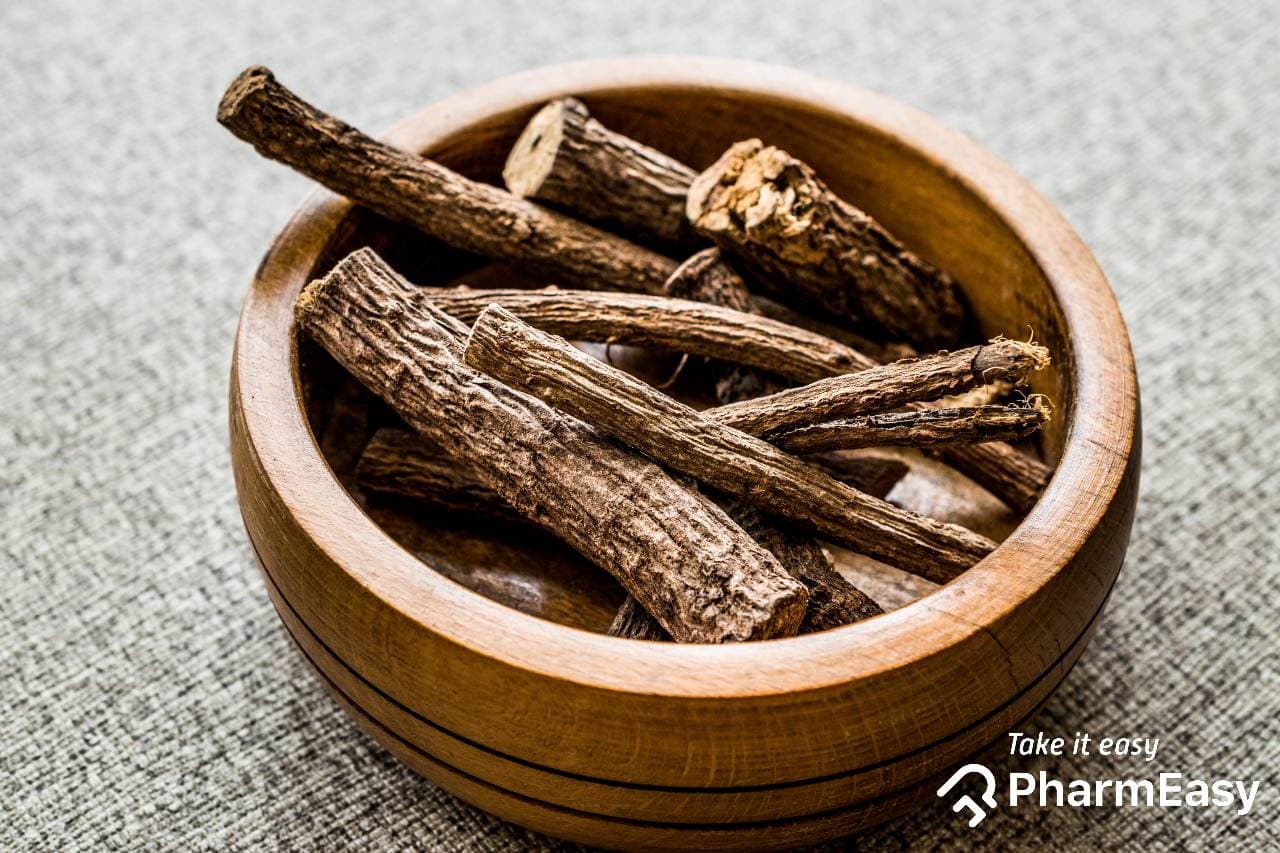
Licorice (Mulethi): Uses, Benefits, Side Effects, and More!
Meena, 45, a homemaker from Jaipur, noticed a persistent cough that lingered for weeks after the monsoon season. Her grandmother suggested a traditional remedy: a warm concoction made with mulethi, also known as licorice root. Within days, Meena’s cough subsided, and she felt a general sense of well-being. This common Indian household remedy highlights the profound, yet often underestimated, medicinal qualities of licorice.
Licorice root, scientifically known as Glycyrrhiza glabra, has been a cornerstone of traditional medicine systems like Ayurveda and Unani for millennia. Its distinctive sweet taste, derived from glycyrrhizin (about 50 times sweeter than sugar), makes it palatable, but its true value lies in its therapeutic promise. In India, it’s a familiar sight in Ayurvedic pharmacies and often found as a flavouring agent in traditional sweets and beverages. Have you ever wondered why this ancient herb continues to be so relevant in modern wellness discussions?
Understanding Licorice Root
The licorice plant, native to parts of Europe and Asia, yields a root that contains a complex array of bioactive compounds. These include flavonoids, saponins, and isoflavonoids, which are believed to contribute to its diverse beneficial actions.
While commonly available as dried root pieces, powders, or extracts, its potent nature necessitates mindful usage.
Worth knowing: The primary active compound, glycyrrhizin, is responsible for both its sweetness and many of its medicinal actions, but also for some of its possible downsides when consumed excessively.
Key Wellness Benefits of Licorice (Mulethi)
Digestive System Support
Licorice root is perhaps most celebrated for its remarkable benefits for the digestive system. It is traditionally used to soothe gastrointestinal discomfort and promote gut health.
Think about it this way: its demulcent qualities help to coat the lining of the esophagus and stomach, providing a protective barrier against irritants and acid reflux. This makes it a valuable ally for individuals suffering from heartburn, indigestion, and acidity, typical ailments for many in India, especially after indulging in rich festival diets.
Studies suggest that licorice can assist increase mucus production in the stomach, which can protect the stomach lining from damage caused by stomach acid. Preliminary findings indicate its efficacy in managing peptic ulcers, with some compounds in licorice exhibiting anti-ulcer and anti-inflammatory activities.
While more robust clinical trials are needed, traditional use and initial evidence are compelling. Over 20% of Indians experience digestive issues annually, underscoring the need for effective natural remedies.
The numbers don't lie.
Respiratory System Relief
The soothing and expectorant qualities of mulethi make it a potent remedy for respiratory ailments. From the prevalent cold and cough to more persistent conditions like bronchitis and asthma, licorice root can offer significant relief.
Its ability to loosen phlegm and ease congestion in the airways is a well-documented advantage. Inhaling steam infused with licorice root or consuming a warm licorice tea can support calm an irritated throat and reduce inflammation.
The anti-inflammatory and antiviral qualities of licorice compounds are thought to play a role in combating respiratory infections. It is particularly proven in providing relief from dry, hacking coughs.
Many Ayurvedic practitioners recommend it as a primary ingredient in herbal formulations for respiratory wellness. During the unpredictable weather patterns in India, where seasonal coughs and colds are rampant, mulethi offers a comforting and successful natural solution.
That alone changes everything.
Immune System Modulation
Licorice root contains compounds like glycyrrhizin and flavonoids that possess immunomodulatory actions. This means it can aid regulate and support the immune system's response to pathogens.
It has demonstrated antiviral, antibacterial, and antifungal qualities in various laboratory studies. For instance, research has shown its capacity to inhibit the replication of certain viruses.
The World Health Organization (WHO) acknowledges the role of traditional medicines in global wellness, and licorice is a prominent example. Its ability to bolster the body’s natural defenses makes it a beneficial herb, particularly during times when the immune system might be compromised.
Approximately 15-20% of the global population suffers from autoimmune diseases, and compounds that can modulate immune responses are of great interest.
Skin Wellness and Beauty
Beyond internal wellness, licorice root has found its way into skincare formulations due to its soothing and brightening qualities. Its anti-inflammatory agents can assist calm irritated skin conditions like eczema and psoriasis.
On top of that,, compounds like glabridin have demonstrated skin-lightening actions by inhibiting melanin production, which can aid reduce hyperpigmentation, dark spots, and uneven skin tone. This makes it a popular ingredient in many Indian fairness creams and treatments.
In many cases, topical application of licorice extract can soothe sunburn and reduce redness. Its antioxidant qualities also enable protect the skin from free radical damage, contributing to a more youthful appearance. A study published in the *Journal of Cosmetic Dermatology* highlighted the efficacy of licorice extract in improving skin hydration and elasticity. Does this sound familiar if you’ve ever explored natural skincare solutions?
Hormonal Balance and Adrenal Support
Some research suggests that licorice may influence the adrenal glands and hormonal balance. Glycyrrhizin can inhibit an enzyme that breaks down cortisol, a stress hormone.
This might lead to increased cortisol levels in the body, which, in some contexts, could be beneficial for managing stress and fatigue. However, this action also underscores the importance of caution with excessive consumption, as it can lead to adverse hormonal outcomes.
This is where most patients struggle.
The International Diabetes Federation (IDF) Atlas 2021 reported that approximately 101 million Indians have diabetes, a condition often linked with stress and hormonal fluctuations. While licorice is not a direct treatment for diabetes, its possible impact on cortisol levels warrants careful consideration, especially for individuals with pre-existing endocrine conditions.
Possible Side Effects and Precautions
Despite its numerous benefits, licorice root is not without its risks, particularly with prolonged or excessive use. The high glycyrrhizin content can lead to adverse outcomes such as:
- Increased blood pressure: Glycyrrhizin can cause the body to retain sodium and excrete potassium, leading to fluid retention and elevated blood pressure. This is a major concern for individuals with hypertension.
- Low potassium levels (Hypokalemia): This can result in muscle weakness, fatigue, and heart rhythm abnormalities.
- Edema (Swelling): Fluid retention can cause swelling, particularly in the legs and feet.
- Hormonal Imbalances: As mentioned, it can affect cortisol levels and potentially interfere with other hormones.
Here's the thing: Individuals with heart disease, kidney problems, high blood pressure, or hormone-sensitive conditions should exercise extreme caution or avoid licorice altogether. Pregnant and breastfeeding women should also steer clear of licorice supplements. The dosage and duration of use are critical factors in determining safety.
S. Food and Drug Administration (FDA) has issued warnings about the possible wellness risks associated with consuming large amounts of licorice daily over extended periods.
It is advisable to consume licorice root in moderation, ideally in formulations recommended by a healthcare professional or as traditionally used in small, intermittent doses.
Drug Interactions
Licorice can interact with several medications. It may decrease the effectiveness of certain drugs, including blood pressure medications and diuretics.
Conversely, it can increase the actions and side effects of corticosteroids and other drugs that affect potassium levels. Always inform your doctor about any herbal supplements you are taking, including licorice.
How to Use Licorice (Mulethi)
Licorice can be incorporated into your wellness routine in several ways:
- Mulethi Decoction (Kadha): Boil a small piece of dried licorice root in water, strain, and drink. This is excellent for sore throats and coughs.
- Licorice Tea: Steep licorice root powder or pieces in hot water for a soothing beverage.
- Chewing the Root: Small pieces of raw licorice root can be chewed for throat relief.
- Powdered Form: Available in Ayurvedic stores, it can be mixed with honey or water.
- Topical Applications: Licorice extracts are found in many skincare products.
Crucially, always source your licorice from reputable suppliers to ensure quality and purity. The amount used in traditional remedies is typically small, reflecting an understanding of its potency. For example, a frequent cough remedy might use just a finger-length piece of root.
The Science Behind Mulethi
Modern scientific research is increasingly validating the traditional uses of licorice. Studies at institutions like the All India Institute of Medical Sciences (AIIMS) have explored its anti-inflammatory and immunomodulatory actions.
The compound glabridin, for instance, is being investigated for its possible anti-cancer effects and its role in preventing cardiovascular diseases. Flavonoids present in licorice contribute to its antioxidant capacity, helping to combat oxidative stress in the body.
The numbers don't lie.
While anecdotal evidence abounds, rigorous clinical trials are essential for establishing definitive medical recommendations. However, the growing body of scientific literature supports the use of licorice root for specific conditions when used appropriately.
The ICMR (Indian Council of Medical Research) encourages research into traditional Indian medicinal plants, recognizing their possible contribution to public wellness.
Key Takeaways
- Licorice (Mulethi) offers notable benefits for digestive wellness, respiratory issues, and skin conditions.
- Its active compound, glycyrrhizin, provides sweetness and therapeutic actions but can cause side effects like increased blood pressure and low potassium with excessive use.
- Approximately 101 million Indians have diabetes (ICMR, 2023), and while licorice isn't a direct approach, its action on cortisol warrants caution in hormonal wellness.
- Always use licorice in moderation and consult a healthcare provider, especially if you have pre-existing wellness conditions or are taking medications.
- Licorice root has demonstrated antiviral, anti-inflammatory, and antioxidant qualities supported by preliminary scientific research.
Always consult a qualified physician before making any medical decisions.