Arogyavardhini Vati: An Ancient Indian Remedy for Contemporary Well-being
Meena, 45, a homemaker from Jaipur, experienced a persistent, dull ache in her upper abdomen, accompanied by a feeling of heaviness after meals. Her appetite had dwindled, and she often felt bloated. Her family physician suggested lifestyle changes, but Meena, a devout follower of ancient Indian practices, decided to explore healing options.
Her neighbour recommended Arogyavardhini Vati, a blend of herbs and minerals steeped in centuries of use. Meena's experience, while common, highlights a growing interest in time-tested Indian remedies for current physical concerns.
Arogyavardhini Vati, often translated as 'the revitalizer of well-being,' is a cornerstone in the system of Indian medicine. Its efficacy stems from a synergistic blend of herbs and minerals, meticulously prepared according to classical texts like the Sharngadhara Samhita. This preparation is particularly revered for its potential to address a wide spectrum of ailments, ranging from liver disorders and skin diseases to metabolic imbalances and digestive complaints. In many cases, individuals turn to this potent remedy when conventional treatments offer limited relief or when seeking a more holistic approach to wellness.
The Indian Medicine Perspective: Balancing Bodily Energies
Indian medicine, the ancient Indian system of healing, posits that well-being is a state of equilibrium between the body's three vital energies, or doshas: Vata, Pitta, and Kapha. Illness arises when these energies become imbalanced. Arogyavardhini Vati is believed to work by pacifying aggravated doshas, primarily Pitta and Kapha, which are often implicated in conditions like inflammation, sluggish digestion, and toxic accumulation (ama).
Consider it this way: the human body is like a finely tuned orchestra. When all instruments play in harmony, the music is beautiful and balanced. If one section is out of tune or playing too loudly, the entire symphony suffers. Arogyavardhini Vati aims to restore that harmonic balance.
Key Ingredients and Their Actions
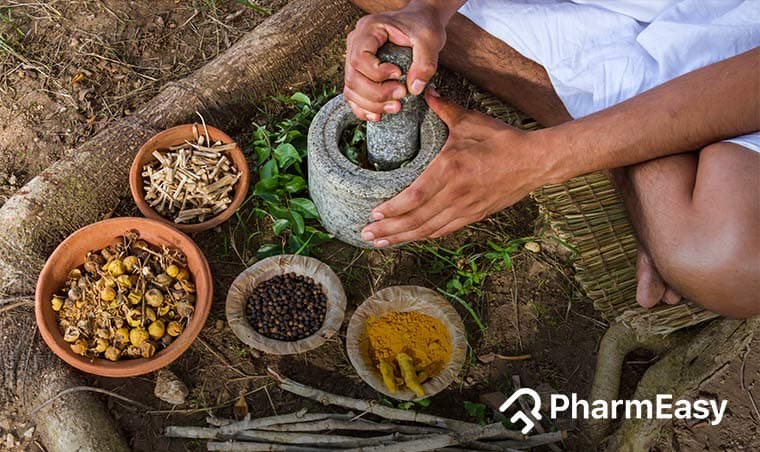
The precise composition of Arogyavardhini Vati can vary slightly between manufacturers, but it typically includes a base of Haritaki (Terminalia chebula), Bibhitaki (Terminalia bellirica), and Amalaki (Emblica officinalis) – the famous Indian trio known as Triphala. These fruits are renowned for their digestive, detoxifying, and rejuvenating properties. The preparation also contains:
- Purified Shilajit: A mineral-rich resin, valued for its adaptogenic and rejuvenating qualities.
- Purified Sulphur (Gandhak): Traditionally used for skin conditions and detoxification.
- Nimba (Neem): Famous for its potent antibacterial, antifungal, and anti-inflammatory properties.
- Vatsanabha (Aconitum ferox): Used cautiously in minute quantities, it's believed to enhance the potency of other ingredients.
- Musta (Cyperus rotundus): Aids digestion and helps manage inflammatory conditions.
- Vidanga (Embelia ribes): Known for its anthelmintic (anti-worm) and digestive properties.
- Triphala: As mentioned, these three fruits form the backbone, supporting digestion and detoxification.
The inclusion of minerals like purified mercury (Parada) and purified sulphur (Gandhaka) – known as Bhasmas in Indian medicine – requires expert processing to ensure safety and efficacy. These mineral preparations are believed to enhance the bioavailability and therapeutic action of the herbal components. It's worth noting: The preparation of these Bhasmas is a complex process involving repeated purification and calcination, aiming to reduce toxicity and increase therapeutic potential.
Uses and Benefits of Arogyavardhini Vati
Arogyavardhini Vati is a versatile remedy, prescribed for a multitude of physical issues. Its therapeutic actions are broad, often addressing the root cause of imbalance rather than just symptomatic relief.
That alone changes everything.
1. Liver Well-being and Detoxification
The liver is the body's primary detoxification organ. In modern lifestyles, factors like processed foods, environmental toxins, and stress can overwhelm it. Arogyavardhini Vati is widely used to support liver function.
Its constituents, particularly Triphala and Nimba, are believed to possess hepatoprotective properties, aiding in the elimination of toxins and promoting bile flow. Studies suggest that Indian preparations can indeed support liver well-being, although more large-scale clinical trials are needed to establish definitive evidence according to Western medical standards. The Indian Council of Medical Research (ICMR) has funded investigations into the efficacy of Indian medicines, showing promising results in preliminary inquiries.
2. Digestive Disorders
Issues like indigestion, acidity, bloating, constipation, and loss of appetite are frequent. Arogyavardhini Vati helps by stimulating digestive enzymes, improving gut motility, and clearing ama (toxins) that can accumulate due to poor digestion.
Its carminative properties help relieve gas and bloating. This time-tested remedy is often recommended during festive seasons in India when dietary indiscretions are prevalent, and digestive systems are frequently challenged.
That's the part worth remembering.
3. Skin Conditions
Numerous Indian texts mention Arogyavardhini Vati for various skin ailments. Its detoxifying and anti-inflammatory actions are thought to purify the blood, which in turn reflects in healthier skin. It's often used for conditions like acne, eczema, psoriasis, and itching.
The presence of potent herbs like Nimba contributes significantly to its effectiveness against bacterial and fungal skin infections. Honestly, its reputation for clearing complexion issues is well-established within traditional circles.
4. Metabolic Disorders and Weight Management
In recent years, Arogyavardhini Vati has gained attention for its potential role in managing metabolic well-being. Over 101 million Indians have diabetes (ICMR, 2023), and metabolic syndrome is increasingly prevalent. This Vati is believed to assist regulate lipid metabolism, improve insulin sensitivity, and reduce cholesterol levels.
By improving digestion and reducing ama, it can also support weight management efforts. The International Diabetes Federation (IDF) acknowledges the growing burden of diabetes in India and encourages exploration of diverse therapeutic approaches, including time-tested ones.
Recovery is rarely linear.
5. Other Potential Benefits
Beyond these primary uses, Arogyavardhini Vati is also traditionally employed for:
- Fever management
- Urinary tract infections
- Anemia
- Improving appetite
- Reducing inflammation
Have you ever wondered why a single preparation can address so many different issues? The Indian medicine principle of targeting the root cause – the imbalance of doshas and the accumulation of toxins – allows a single remedy to have a wide-ranging impact on bodily systems.
How to Use Arogyavardhini Vati
The dosage and duration of treatment with Arogyavardhini Vati depend on the individual's condition, age, and the severity of the ailment. It is typically prescribed by a practitioner of Indian medicine. prevalent dosages range from 1-2 tablets (usually 250-500 mg each) taken twice daily, usually after meals.
It is often recommended to take it with warm water, buttermilk, or decoctions of specific herbs, as advised by the physician. Following time-tested practices, some people might consume it while sitting on the floor, believing it aids in grounding and better absorption – a cultural practice reflecting a holistic view of the body and its connection to the environment.
Precautions and Potential Side Effects
While generally considered safe when taken under proper guidance, Arogyavardhini Vati contains potent ingredients, including trace amounts of purified heavy metals like mercury. Therefore, self-medication is strongly discouraged.
Here's where it gets interesting.
Possible side effects, though rare and usually associated with incorrect dosage or prolonged use, can include:
- Digestive upset (e.g., diarrhoea, nausea)
- Allergic reactions in sensitive individuals
- Aggravation of Pitta dosha if not used correctly
It is contraindicated in pregnant and breastfeeding women, and children should only be given this preparation under strict medical supervision. Individuals with pre-existing conditions, especially those on other medications, must consult their healthcare provider.
But why does this happen? The potent nature of some ingredients requires careful consideration of individual constitution and potential interactions.
Institutions like the All India Institute of Medical Sciences (AIIMS) advocate for rigorous scientific validation of Indian medicines. While Arogyavardhini Vati has a long history of safe use in India, integrating it with modern medical care requires open communication between patients and all their healthcare providers.
Scientific Evidence and Modern Investigation
While Arogyavardhini Vati boasts a rich time-tested background, scientific validation through modern investigation is crucial for broader acceptance. Several studies have investigated the pharmacological properties of its individual ingredients and the preparation itself. Investigations published in journals like The Lancet and regional Indian medicine publications have explored its anti-inflammatory, antioxidant, and hepatoprotective effects. For instance, studies on Nimba have demonstrated significant antimicrobial and anti-inflammatory activity. Similarly, investigations on Triphala have shown its benefits for gut well-being and metabolic parameters. However, many of these studies are preclinical or small-scale clinical trials. More robust, large-scale, randomized controlled trials are needed to provide definitive evidence comparable to pharmaceutical drug investigation. The World Health Organization (WHO) encourages the integration of time-tested medicine into healthcare systems, provided it is safe, effective, and of good quality, emphasizing the need for continued investigation and standardization.
Challenges and Future Directions
Standardization of Indian preparations like Arogyavardhini Vati remains a major challenge. Variations in raw material quality, processing methods, and ingredient proportions can affect potency and efficacy. Ensuring consistent quality control is paramount.
On top of that,, understanding the precise mechanisms of action at a molecular level and conducting rigorous clinical trials are key areas for future investigation. Collaboration between Indian medicine experts and modern medical scientists is essential to bridge the gap between time-tested knowledge and evidence-based medicine.
That's the part worth remembering.
Key Takeaways
- Arogyavardhini Vati is a classical Indian polyherbal preparation used for various physical conditions.
- It is traditionally used to support liver function, strengthen digestion, and address skin ailments.
- The preparation contains a blend of herbs like Triphala and Nimba, along with processed minerals.
- While generally safe, it should be taken under the guidance of a qualified practitioner of Indian medicine due to its potent ingredients.
- More rigorous scientific investigation is needed to fully validate its efficacy and mechanisms of action according to modern medical standards.
Always consult a qualified physician before making any medical decisions.