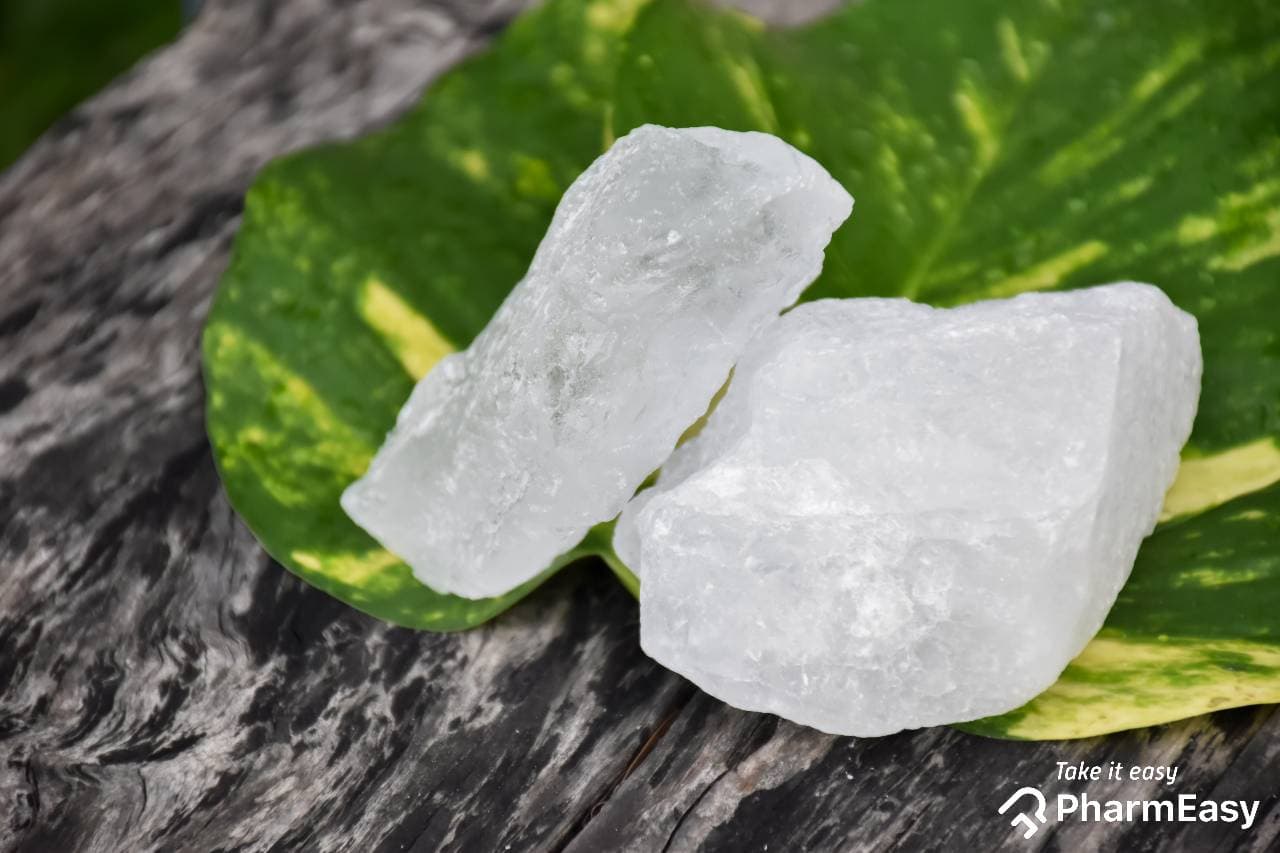
Alum: Ancient Uses, Modern Benefits, and What You Need to Know
Meena, 45, a homemaker from Jaipur, noticed a persistent metallic taste and slight oozing after brushing her teeth. Her grandmother, a proponent of time-tested remedies, suggested rinsing her mouth with a diluted alum solution. Skeptical yet willing to try, Meena prepared a mild solution and used it as a mouthwash.
Within a week, the oozing stopped, and the metallic taste significantly reduced. This anecdote highlights the enduring relevance of alum, a compound known for centuries, in addressing common health concerns.
What is Alum?
Alum, scientifically known as hydrated potassium aluminium sulfate (KAl(SO₄)₂·12H₂O), is a double sulfate salt that has been recognised for its diverse applications across various cultures and industries for millennia. Its crystalline structure and unique chemical characteristics lend themselves to a wide array of uses, from purifying liquids and preserving food to ancient medicine and industrial processes.
In India, alum, often referred to as 'phitkari' or 'fitkari', has been a staple in households, particularly in Ayurvedic practices and home remedies. Its constricting qualities make it particularly effective in controlling minor oozing and tightening tissues.
The numbers don't lie.
The Science Behind Alum's Characteristics
Alum's efficacy stems from its ability to coagulate proteins. When alum comes into contact with organic matter, such as blood or impurities in liquids, it causes proteins to clump together, forming a gelatinous mass. This process, known as flocculation, is central to its use in liquid purification and its ability to stop minor oozing. The aluminium ions (Al³⁺) present in alum are positively charged and attract negatively charged particles, leading to their aggregation and settling.
Think of it this way: alum acts like a magnet, drawing together and binding unwanted substances. Simple, yet reliable. It works wonders.
Alum in Traditional Indian Medicine and Home Remedies
For generations, 'phitkari' has been a usual fixture in Indian kitchens and medicine cabinets. Its applications are deeply rooted in established practices, passed down through families.
Practised for centuries, these home remedies often leverage alum's potent constricting and antiseptic qualities. Have you ever wondered why it's so frequently recommended for mouth sores or minor cuts?
- Mouth Ulcers and Gum Oozing: A weak solution of alum is a popular remedy for mouth ulcers and oozing gums. Rinsing the mouth with this solution helps to dry out the ulcers and reduce inflammation. The constricting action tightens the gum tissues, thereby controlling oozing. This is a widely adopted practice, especially in households where immediate access to dental care might be limited.
- Minor Cuts and Shaving Nicks: The ability of alum to staunch oozing makes it an excellent styptic pencil substitute. Rubbing a moist piece of alum over a small cut or a shaving nick can quickly stop the flow of blood. This immediate effect is due to its protein-coagulating characteristics, which seal the tiny blood vessels.
- Skin Tightening and Toning: In some established beauty practices, diluted alum solutions are used as facial toners. Its constricting nature can temporarily tighten the skin, reducing the appearance of pores and giving a firmer look. This effect, however, is transient.
- Liquid Purification: Before modern liquid treatment plants became widespread, alum was a primary agent for purifying drinking liquids in many communities. Adding a small amount of alum to murky liquids causes suspended particles to settle at the bottom, making the liquid clearer. While successful for sedimentation, it does not remove all pathogens, and further boiling or filtration is often recommended. The World Health Organization (WHO) guidelines still acknowledge its role in basic liquid management in certain contexts.
Other Significant Uses of Alum
Beyond its medicinal applications, alum makes a real difference in various other sectors.
Culinary Uses
In some parts of the world, including certain regions in India, alum has been historically used in food preparation. It's sometimes added to pickles to maintain their crispness or used in making certain sweets. However, its use in food is highly regulated due to potential health concerns associated with excessive intake.
The Food Safety and Standards Authority of India (FSSAI) specifies permissible limits for its use, and excessive consumption can lead to adverse effects. Practically speaking, its culinary application is less widespread today due to increased awareness of its potential downsides.
Recovery is rarely linear.
Industrial and Commercial Applications
Alum's characteristics make it indispensable in several industries. It's used in papermaking to increase stiffness and liquid resistance, in textile dyeing as a mordant to help fix dyes to fabrics, and in fire extinguishers.
Its role as a mordant is particularly major, helping to create vibrant and long-lasting colours on fabrics, a technique appreciated in India's rich textile heritage.
Types of Alum
While 'alum' often refers to potassium aluminium sulfate, there are other related compounds that share similar characteristics:
- Potassium Alum (widespread Alum): This is the most widely recognised form, used in cooking, medicine, and liquid purification.
- Ammonium Alum: Similar to potassium alum but uses ammonium instead of potassium. It finds use in deodorants and baking powder.
- Sodium Alum: Used in baking powder and some dental creams.
- Chromium Alum: Primarily used in the leather tanning industry.
- Aluminium Sulfate: While not technically an alum, it shares many characteristics and is extensively used in liquid care and paper manufacturing. It's a more acidic salt than true alums.
Potential Side Effects and Precautions
Despite its long history of safe use in established remedies, it's crucial to be aware of potential side effects and use alum cautiously. The primary concern revolves around the aluminium content. While moderate topical or oral use for specific conditions is generally considered safe, excessive or prolonged consumption can lead to health issues.
What most people miss is that the aluminium in alum, if ingested in large quantities over time, could potentially accumulate in the body. Research, including studies from institutions like the Indian Council of Medical Research (ICMR), suggests that high aluminium intake might be linked to neurological issues, although direct causal links in humans from dietary sources are still debated. The WHO has established tolerable weekly intake levels for aluminium to guide safe consumption.
Here's the thing — while small amounts used in liquid purification or occasional mouth rinses are unlikely to cause harm, continuous, high-dose ingestion is where the risk lies. Be aware of this.
- Digestive Issues: Ingesting large amounts of alum can cause stomach upset, nausea, vomiting, and diarrhoea.
- Skin Irritation: Direct contact with concentrated alum solutions can irritate the skin, especially for individuals with sensitive skin.
- Long-Term Effects: Concerns about aluminium accumulation in the body, potentially affecting bone health and the nervous system, warrant a cautious approach, particularly for pregnant women and individuals with kidney problems. Studies published in journals like The Lancet have explored the potential impact of aluminium exposure.
Safe Usage Guidelines
To harness the benefits of alum while minimising risks, follow these guidelines:
- Dilution is Key: Always dilute alum significantly before applying it topically or using it as a mouthwash. A widespread ratio for mouth rinses is a pinch of alum powder in a glass of warm liquid.
- Moderation in Consumption: Avoid ingesting alum unless specifically recommended by a healthcare professional for a particular condition. Its use in food should adhere strictly to FSSAI guidelines.
- Patch Test: If using alum for skin applications, perform a patch test on a small area of skin first to check for any adverse reactions.
- Storage: Keep alum powder and solutions out of reach of children. Store it in a cool, dry place.
- Consultation: For any persistent health issues, it is best to consult a doctor rather than relying solely on home remedies. For instance, persistent gum oozing might indicate a more serious dental issue requiring professional diagnosis and intervention.
Alum and Diabetes Management
While not a primary approach, alum's constricting qualities have led to its exploration in managing certain diabetes-related complications. For instance, some established practices use alum for wound care, a critical aspect of diabetes management where foot ulcers are a widespread concern. However, robust clinical evidence supporting alum as a standalone intervention for diabetic foot ulcers is limited.
Most people overlook this completely.
The International Diabetes Federation (IDF) emphasises evidence-based treatments for diabetes and its complications. Over 101 million Indians have diabetes (ICMR, 2023), highlighting the critical need for scientifically validated management strategies. Relying on alum for considerable wound healing without professional medical guidance can be detrimental.
The Verdict on Alum
Alum, or 'phitkari', remains a remarkably versatile compound with a rich history, particularly in India. Its constricting and coagulating characteristics have made it a valuable tool for centuries, from stopping minor oozes and soothing mouth ulcers to purifying liquids. However, like many natural remedies, its use requires knowledge and caution.
Understanding the correct dilution, moderation in consumption, and awareness of potential side effects are paramount. While it can be a useful addition to a home first-aid kit for minor issues, it is not a panacea. It's a tool, not a cure-all.
But why does this happen? Because its primary active component, aluminium, can have adverse effects if not used judiciously.
Modern medicine offers scientifically proven treatments for most conditions where alum is traditionally used. Therefore, while appreciating its historical significance and occasional utility, it's essential to prioritise evidence-based healthcare.
It sounds simple. It rarely is.
Key Takeaways
- Alum is a double sulfate salt with strong constricting and coagulating properties.
- It has been traditionally used in India for mouth ulcers, minor oozing, and liquid purification.
- Excessive ingestion of alum can lead to digestive issues and potential long-term health concerns related to aluminium accumulation.
- Safe use involves proper dilution for topical applications and avoiding notable oral consumption.
- Always consult a qualified physician before making any medical decisions.