Frequently Asked Questions (FAQs)
Can I use Betadine for burns?
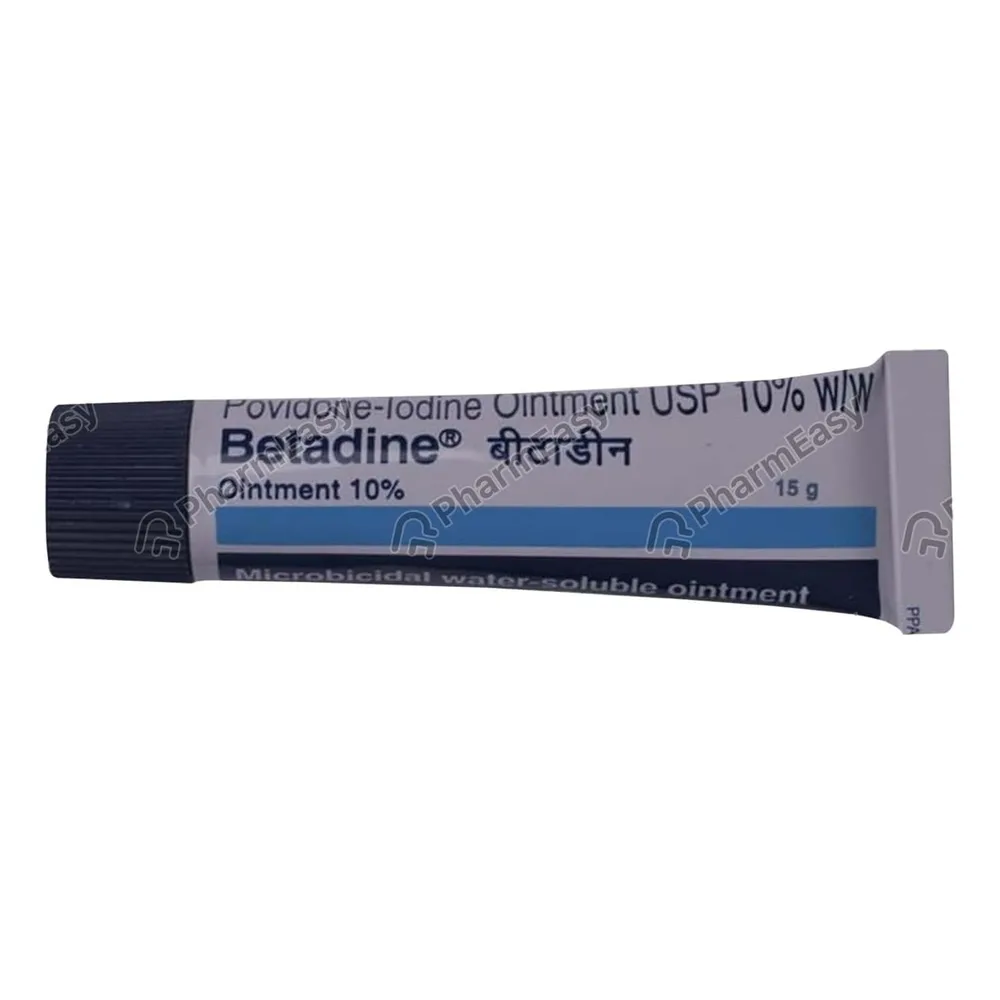
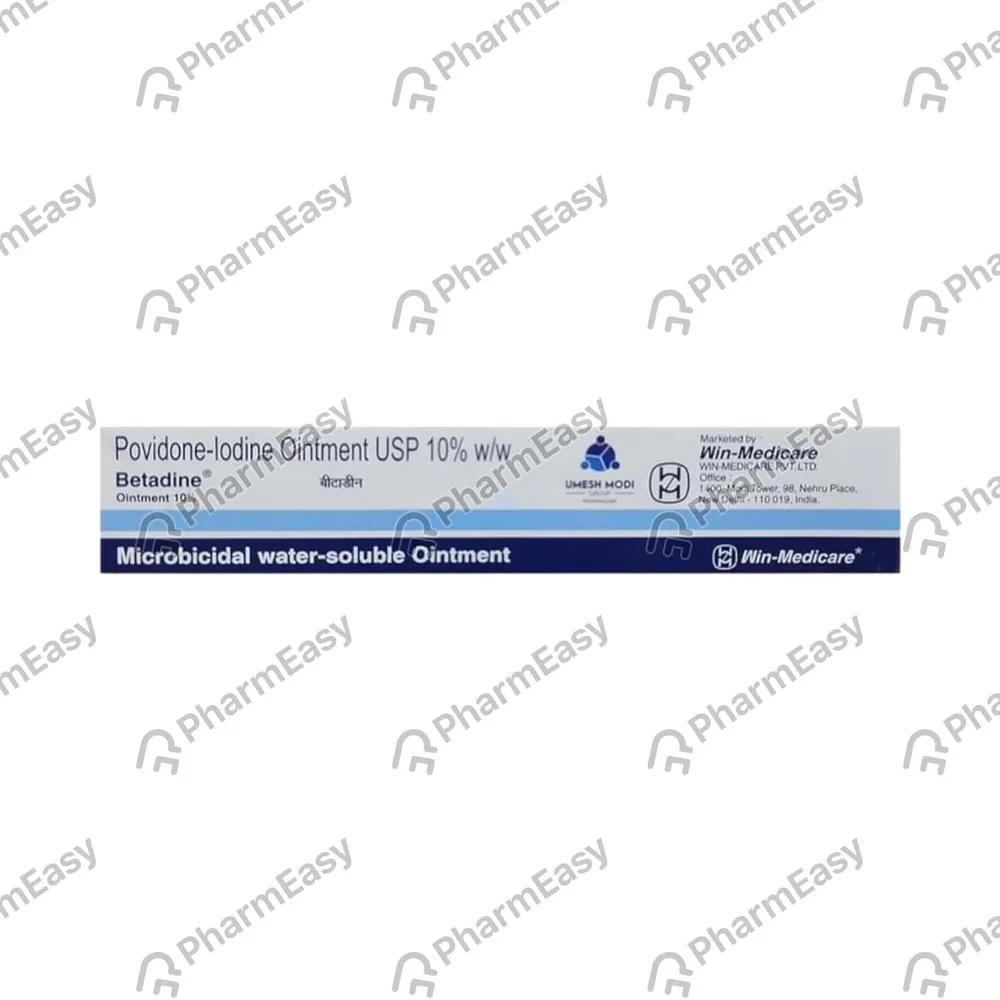
Yes, Betadine 10% ointment can be used to heal burns. However, it should be applied cautiously on burns as there are chances of absorption of iodine into the blood.
What is Betadine 10% ointment used for?
Betadine is used as first aid for cuts, burns and minor wounds. It provides infection protection against a variety of germs that can cause infection in minor cuts, wounds, scrapes and burns.
Can we use Betadine for children?
No, Betadine should not be used for children. The skin of children is sensitive and can lead to significant absorption of iodine from the skin.
How does Betadine work?
Betadine has antiseptic properties. It kills the microbes by oxidising certain cell components of microbes and thus prevents their growth.
For how many days should I use Betadine?
Your doctor will decide the duration of the application for Betadine. Do not stop applying this ointment on your own. If there is no improvement in your infection or wound after 7 days of use, get in touch with your doctor.
Is Betadine ointment an antibiotic?
Betadine 10% ointment is a topical antiseptic medicine.
How many times can Betadine be applied?
You can apply Betadine 2-3 times daily or as advised by the doctor. Betadine is generally safe for daily use for up to 1 week, as described in the product directions. If you do not feel any improvement even after using it for more than 1 week, stop usage and consult your physician.
When should you not use Betadine?
You should not use Betadine for longer than 1 week without consulting a doctor. Also, if you experience any other unwanted symptoms like fever, nausea or headache, stop usage and immediately consult your physician.
Can I use Betadine ointment for skin wounds and abrasions?
Betadine 10% ointment can be used as an antiseptic for minor wounds, abrasions, or infections of the skin. However, apply it as recommended and avoid over-application.
Can I use Betadine for lacerations or open wounds?
Betadine ointment prevents infection in minor cuts, scrapes, abrasions and burns. Ask your doctor for advice before using this medicine in case of deep cuts, puncture wounds, open wounds or lacerations.
Why is it important to use antiseptic for wounds?
An antiseptic like Betadine 10% ointment helps to kill the germs like bacteria, viruses, fungi and others in the wound. It also prevents their replication and reduces the number of microorganisms which helps to control wound infection. Thus, it is important to use an antiseptic for a wound.
Does Betadine ointment cause peeling skin?
Betadine 10% ointment is not known to cause peeling skin. However, you should use this medicine exactly as recommended and avoid over-application.
Betadine ointment vs cream, are they the same?
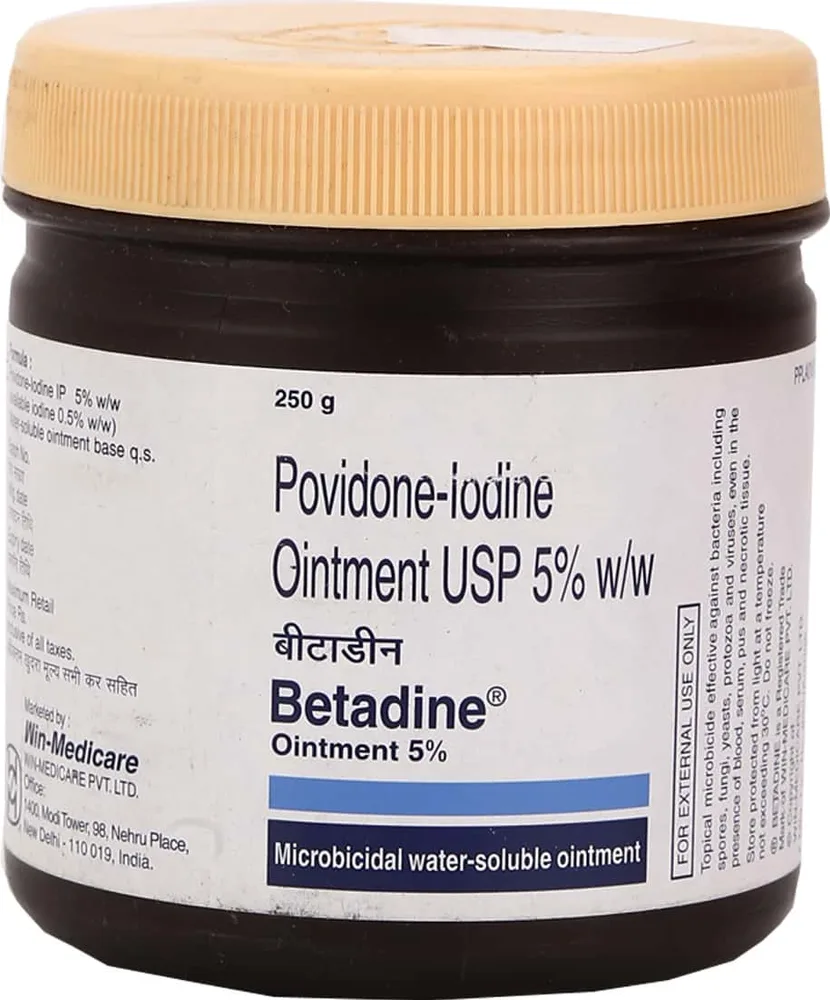
Betadine ointment and Betadine cream are similar products with minor differences. The ointment is oil-based and has a thicker, greasier texture, whereas the cream is water-based and absorbs more easily. Both contain povidone-iodine as an antiseptic for wound care and skin infections. The choice between ointment and cream is determined by the specific needs of the condition being treated.
Betadine ointment vs T Bact ointment, which one is better?
The effectiveness of Betadine ointment versus T Bact ointment depends on the specific condition being treated. Betadine contains povidone-iodine as an antiseptic, while T Bact contains mupirocin, an antibiotic. The choice between them should be made based on the recommendation of a healthcare professional, who will consider factors like the type and severity of the infection and individual circumstances. Self-diagnosis and self-medication are not advised.
Betadine vs Cipladine, are they the same?
Both Betadine and Cipladine contain the active ingredient povidone-iodine, which is an antiseptic agent used to kill germs and prevent infection. However, each product's specific formulations, concentrations or additional inactive ingredients may differ. These distinctions can have an impact on factors such as texture, application and potential side effects. For specific information on each product's formulation, usage instructions and precautions, it is best to consult with a healthcare professional or read the product labels.
Betadine vs Fucidin, which one is better?
Betadine and Fucidin are two distinct medicines with distinct applications. Betadine, which contains povidone-iodine, is used to treat wounds and skin infections. Fucidin, which contains fusidic acid, is used to treat skin infections caused by susceptible bacteria. The choice between them is determined by the specific condition being treated as well as the advice of a healthcare professional.
Betadine vs Soframycin, which one is better for cuts and burns?
Both Betadine and Soframycin can be used for cuts and burns, but they have different active ingredients and properties. Betadine contains povidone-iodine, an antiseptic, while Soframycin contains framycetin, an antibiotic. The choice between them depends on the specific condition, severity and recommendation of a healthcare professional.
Does Betadine ointment heal wounds faster?
Yes. For open wounds, clean the affected area first and apply Betadine as directed to prevent infection and promote healing.