

Free Helpline
We are here to assist you.
Health Advisor
+91-8877772277Available 7 days a week
10:00 AM – 6:00 PM to support you with urgent concerns and guide you toward the right care.

We are here to assist you.
Health Advisor
+91-8877772277Available 7 days a week
10:00 AM – 6:00 PM to support you with urgent concerns and guide you toward the right care.
Explore the concept of consensual forced orgasms, focusing on communication, consent, pleasure, and safety within BDSM and intimate relationships. Understand what it entails and how to practice it responsibly.

The term "forced orgasm" might sound intense, even alarming, conjuring images of non-consensual acts. However, in consensual sexual exploration, particularly within BDSM (Bondage, Discipline, Sadism, Masochism) communities, it takes on a very different meaning. It's not about coercion but about a pre-arranged, enthusiastic agreement between partners to explore intense pleasure, often involving repeated orgasms or a controlled build-up to one. This practice centers entirely on consent, communication, and mutual exploration of desires.
Most often, "forced orgasm" refers to orgasms that are intentionally given to a willing participant as part of a consensual sexual scene. This typically involves a dominant partner directing and controlling the stimulation for a submissive partner. The submissive partner might be physically restrained or bound, not to prevent their escape, but to heighten their sense of surrender and anticipation. The "force" here is a playful, agreed-upon element of control within the sexual dynamic, designed to amplify pleasure and intensity. It's crucial to understand that this is a chosen activity, not an imposition.
There's a stark contrast with another, far more sinister, definition: orgasms that occur during sexual assault. This is a violation and has nothing to do with consensual sexual play. For the purpose of this discussion, we are focusing solely on the consensual exploration between adults.
The specifics of a consensual forced orgasm depend heavily on the individuals involved. Factors such as anatomy, personal preferences, and tolerance for pleasure and pain all play a role. Similarly, the person facilitating the experience brings their own stamina, preferences, skills, and comfort levels with pleasure and pain.
Generally, individuals with vulvas have a shorter refractory period (the time it takes to recover after orgasm before another can be achieved) compared to those with penises. Therefore, a consensual forced orgasm for someone with a vulva often involves facilitating multiple orgasms in succession without significant breaks in between. Imagine a scenario where a partner uses a powerful vibrator, holding it in place to elicit one orgasm after another, while the receiver is perhaps gently restrained. The intensity can build, with the receiver potentially asking for permission to climax, or the dominant partner deciding when the orgasm will occur.
Real-life scenario: Priya and Rohan have been together for years and are exploring new dimensions of their intimacy. Priya, who has a vulva, expresses a desire to experience repeated orgasms. Rohan, her partner, agrees to help her explore this. They set up a scene where Priya is comfortably positioned, and Rohan uses a high-quality vibrator to bring her to orgasm. After each climax, he maintains gentle but firm pressure, guiding her back to intense pleasure, allowing her to experience several orgasms in a relatively short period, as they had discussed and agreed upon beforehand.
Individuals with penises typically have a longer refractory period. For them, "forced orgasm" might involve elements of orgasm denial or what's sometimes referred to as "post-orgasm torture" – teasing and heightened stimulation after an initial orgasm, without immediately allowing another full climax. This can create a prolonged state of arousal and intense anticipation.
The ultimate goal of consensual forced orgasms is pleasure. However, it's important to acknowledge that the experience isn't always purely pleasurable throughout. "Typically, forced orgasms start off as being pleasurable," explains Carly S., a kink-inclusive sex educator. "But as more orgasms occur, the body can become so sensitive that the orgasms become overstimulating and even painful."
This heightened sensitivity can be part of the intended experience for some, pushing boundaries and exploring new sensations. The body's release of endorphins during orgasm, even when overstimulating, ultimately contributes to a feeling of intense pleasure and satisfaction. It's a delicate balance that requires constant communication and checking in.
Embarking on this kind of exploration doesn't necessarily require elaborate equipment. The most important "tools" are familiarity with your own body and with your partner's body. Self-exploration through masturbation, sensual touch, and understanding your own responses can significantly enhance partnered play.
Key Principles for Exploration:
Initiating the Conversation:
Bringing up such a topic can be done playfully and thoughtfully. Consider:
While consensual exploration of intense sexual experiences can be a rewarding part of a relationship, it's important to ensure it's healthy and consensual. If you or someone you know is experiencing pressure, coercion, or non-consensual sexual activity, please reach out for help.
Resources:
In the context of sexual exploration and BDSM, "forced orgasm" specifically refers to consensual scenarios where partners agree to explore intense stimulation and controlled climaxes. However, the term can also be misused to describe non-consensual acts, which is a serious violation and entirely different.
Not necessarily. While toys like vibrators can enhance the experience, the most important elements are communication, consent, and a good understanding of each other's bodies. Sensual touch and skilled manual stimulation can be very effective.
Yes, they can become overstimulating or even slightly painful due to extreme sensitivity. This can be an intended part of the experience for some, but it requires careful monitoring and communication. The goal is pleasure, and if pain becomes a deterrent, it's important to adjust or stop.
Constant communication is key. Check in verbally ("How are you feeling?", "Is this okay?"), observe body language, and respect any safe words or signals immediately. Ensure consent is enthusiastic and ongoing.
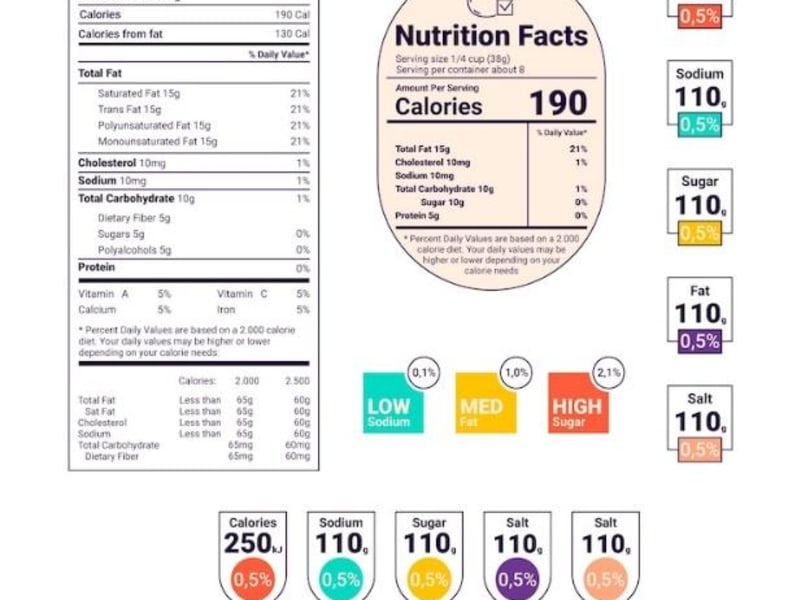
Nutrition labels are designed to inform — but food manufacturers often make them difficult to interpret. This expert guide walks through every section of a nutrition label, exposing the common tricks used to mislead consumers and showing you what to actually look for.
April 14, 2026

The carbohydrate debate is more nuanced than "eat less carbs." The quality of carbohydrates — their fibre content, processing level, and glycaemic impact — matters far more than their mere presence in your diet. Here's the science behind the distinction.
April 14, 2026

Most official protein recommendations were set to prevent deficiency — not to optimise health, muscle mass, or longevity. New research suggests the real requirements are significantly higher than the standard RDA, particularly for active adults and older populations.
April 13, 2026