

Emergency & Help
24/7 Emergency & General Advisory
🚨 24/7 Medical Emergency
Welcome to Doctar
Join our healthcare community
Free Eye Test
AI powered and calibrated eye test
24/7 Emergency & General Advisory
🚨 24/7 Medical Emergency
Join our healthcare community
Are night owls really more likely to gain weight than early risers? A 2026 study of nearly 300 women found evening types had higher body fat, higher blood sugar and triglyceride levels, and a pattern of eating fewer nutrients in the morning but far more energy-dense food late at night. This piece br

A 2026 study found that women with an evening chronotype, commonly called night owls, had higher body fat percentages, higher blood sugar and triglyceride levels, and a greater likelihood of obesity-related measures than morning-type or intermediate-type women. The two groups ate roughly the same total number of calories per day, but night owls concentrated their eating much later, often between 8 p.m. and 3 a.m., while eating very little in the morning. The findings are observational, meaning they show a strong association rather than direct proof that being a night owl causes obesity.
Researchers led by Professor Rozanne Kruger of Griffith University and Massey University studied 287 women in Auckland, New Zealand, drawn from an existing research cohort. Participants were between ages 18 and 45 with either a healthy-range BMI or a BMI indicating obesity. The findings were published July 7, 2026, in Frontiers in Nutrition.
Researchers collected blood samples, body composition data, five days of estimated food records, and chronotype and sleep questionnaires. Participants also wore accelerometers to track activity and sleep patterns. Based on their questionnaire responses, women were grouped into evening types (night owls), morning types (early birds), and an intermediate group — which, since it made up just over half the sample, was ultimately combined with the morning-type group for comparison.
[REVIEWER: add clinical insight here — e.g., how you'd counsel a patient who identifies strongly as a night owl and is concerned about their metabolic risk based on findings like these.]
Total daily calorie intake was similar between chronotype groups — the real difference was in timing. Night owls ate relatively little in the early morning and consumed a large share of their day's carbohydrates, fat, and energy late in the evening and into the early night. Morning and intermediate types showed the reverse pattern, eating more earlier in the day.
Night owls also had higher BMI, waist and hip circumference, and higher percentages of visceral fat and android fat — fat stored in the upper body and abdomen, which is more strongly linked to cardiometabolic risk than fat stored elsewhere. On blood work, evening types showed higher blood sugar and triglyceride levels, though the morning and intermediate group actually had higher LDL ("bad") cholesterol.
Professor Kruger explained that eating during what the body treats as its biological night misaligns food intake with the circadian rhythms that govern metabolism. That mismatch, she said, creates a tendency to store more of those late-night calories as fat rather than use them for immediate energy, raising the risk of obesity and metabolic syndrome over time.
The data reflected this pattern in more specific ways too. Later sleep times were linked to higher insulin and triglyceride levels, and higher evening energy intake was linked to elevated hemoglobin A1C, a marker used to assess prediabetes and type 2 diabetes risk. Sura Alqaisi, an endocrinologist at UTMB who wasn't involved in the study, noted that the combination of higher triglycerides, insulin, and A1C alongside lower HDL cholesterol in evening types strengthens the case that meal timing, not just total calories, plays a meaningful role in body fat distribution and metabolic health.
[REVIEWER: add clinical insight here — e.g., how meal-timing considerations might factor into your recommendations for patients managing prediabetes or metabolic syndrome.]
This research has real limits worth knowing before drawing conclusions about your own risk.
It's observational, not causal. The study can't prove that being a night owl causes obesity or metabolic problems — it shows an association. Longer-term and interventional studies are needed to establish cause and effect.
It studied a specific, narrow population. All participants were women aged 18 to 45 in New Zealand, and the group with an evening chronotype was more likely to be of Pacific descent and to score higher on a deprivation index used to measure socioeconomic disadvantage — meaning limited access to healthy food, rather than chronotype alone, could be part of what's driving the results.
Self-reported data has known limits. Diet and chronotype information came from participant questionnaires and food records, which are subject to recall error, and researchers noted this kind of inaccuracy may be more common among evening-type participants specifically.
Alex Dimitriu, a psychiatrist and sleep medicine physician not involved in the study, said the findings largely confirm existing patterns: night owls tend to eat less healthy food after dark, get a shorter overnight fasting window, and often carry more body fat and higher BMI than earlier-to-bed counterparts.
Rather than framing this as a reason to feel bad about being a night owl, the researchers and outside experts pointed toward a more personalized approach to nutrition. Alqaisi suggested chronotype should be considered as part of nutritional assessment, particularly for patients managing obesity, prediabetes, type 2 diabetes, or other metabolic conditions — shifting some focus from purely what people eat to also when they eat it. Mir Ali, a bariatric surgeon not involved in the research, said there may be a benefit for some people in adjusting their eating schedule, and that emphasizing protein and non-starchy vegetables while cutting back on carbohydrates and sugar at night is a reasonable, practical starting point.
If you're a natural night owl, this research isn't a verdict that you're destined for weight gain — it's a signal that when you eat may be worth paying attention to, alongside what you eat. Shifting even part of your calorie intake earlier in the day, prioritizing protein and vegetables at night instead of carbohydrate- and fat-heavy foods, and being mindful of very late, energy-dense eating windows are reasonable, low-risk adjustments to consider. If you have obesity, prediabetes, or other metabolic concerns, talk to a doctor or registered dietitian about whether a chronotype-informed approach to meal timing makes sense for you.
Are night owls really more likely to become obese?
A 2026 study of nearly 300 women found that evening chronotypes (night owls) had higher body fat percentages and other obesity-related measures than morning or intermediate types, even though total daily calorie intake was similar between groups. The study is observational, so it shows an association, not proof of direct cause.
Why would eating late at night contribute to weight gain?
Researchers suggest that eating during the body's biological night misaligns food intake with circadian rhythms that regulate metabolism, which may lead the body to store more of those calories as fat rather than use them for energy.
Do night owls eat more food overall than early risers?
Not necessarily. The 2026 study found total daily energy intake was similar between chronotypes — the key difference was timing, with night owls eating far more of their carbohydrates and fat late in the evening and into the early night.
What other health markers were affected in night owls?
Night owls in the study had higher blood sugar and triglyceride levels, higher insulin associated with later sleep times, and elevated hemoglobin A1C linked to higher evening energy intake — all markers relevant to prediabetes and type 2 diabetes risk.
Should night owls change their eating schedule?
Some experts suggest shifting more calories earlier in the day and choosing protein and non-starchy vegetables over carbohydrates and sugar at night may help. Anyone with obesity, prediabetes, or metabolic syndrome should discuss personalized meal-timing strategies with a doctor or dietitian.
van der Merwe, C. et al. "Chronotype and associations with dietary intake, meal timing, body composition, and metabolic biomarkers," Frontiers in Nutrition, July 7, 2026.
Medical News Today: "Night owls vs larks: Does chronotype influence metabolic risk?" July 20, 2026.
MedicalXpress: "Night owls eat later, choose less nutritious food, carry more belly fat and show higher metabolic risk," July 2026.
Visit Hospital
Near You
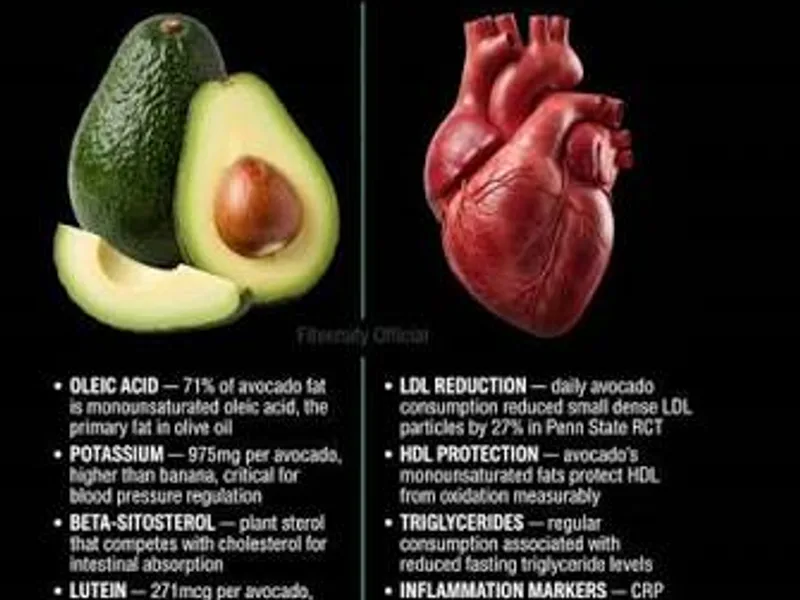
Multiple studies out of Penn State have tested whether eating one avocado a day can improve cholesterol. The results are consistent but modest: daily avocado eaters see measurable drops in LDL ("bad") cholesterol and LDL particle number, without significant weight gain. This piece walks through what
July 23, 2026
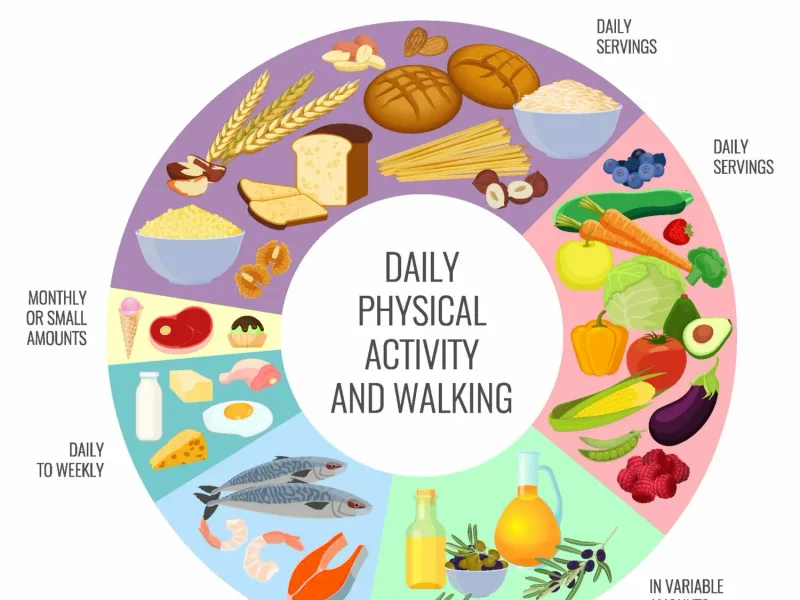
Scientists have long known the Mediterranean diet protects the heart and brain — but not exactly how. A 2026 USC-led study offers a clue: people who closely follow the diet have higher blood levels of two mitochondrial microproteins, humanin and SHMOOSE, both tied to cardiovascular and brain protect
July 23, 2026
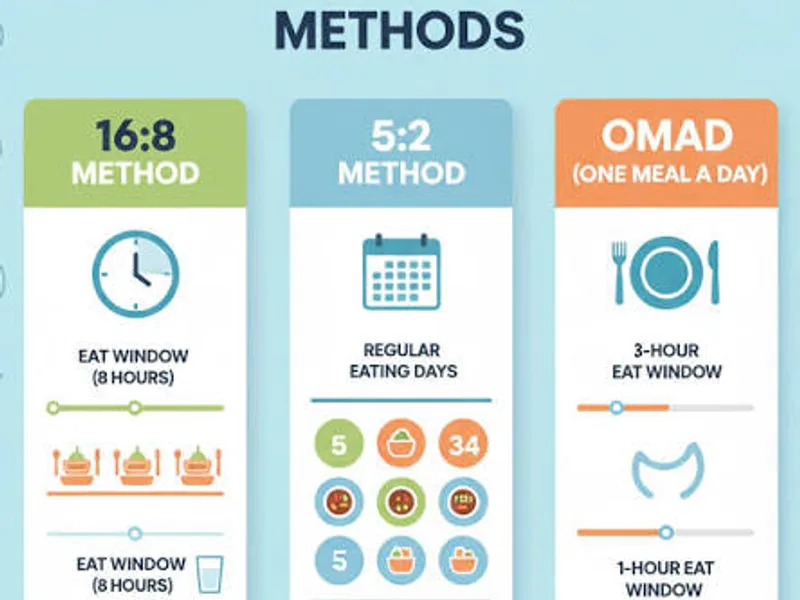
An 8-hour eating window, also called 16:8 time-restricted eating, has become one of the most popular ways to structure intermittent fasting. But what does it actually do for your body? Research led by the University of Granada and NIH-affiliated researchers has linked it to visceral fat loss, better
July 23, 2026