

Free Helpline
We are here to assist you.
Health Advisor
+91-8877772277Available 7 days a week
10:00 AM – 6:00 PM to support you with urgent concerns and guide you toward the right care.

We are here to assist you.
Health Advisor
+91-8877772277Available 7 days a week
10:00 AM – 6:00 PM to support you with urgent concerns and guide you toward the right care.
Explore the key differences between sociopaths and psychopaths within the context of Antisocial Personality Disorder (ASPD). Learn about symptoms, causes, diagnosis, and treatment options for these complex mental health conditions.

The terms "sociopath" and "psychopath" are frequently used in popular culture, often interchangeably, to describe individuals who exhibit a profound disregard for the feelings and rights of others. While these terms are not official clinical diagnoses in the Diagnostic and Statistical Manual of Mental Disorders, Fifth Edition (DSM-5), they are widely used to describe different manifestations of Antisocial Personality Disorder (ASPD). Understanding the nuances between what is commonly referred to as a sociopath and a psychopath can shed light on the complexities of ASPD and its impact on individuals and society.
This article will delve into the characteristics of ASPD, explore the conceptual differences between sociopathy and psychopathy, discuss their symptoms, potential causes, diagnostic approaches, and available treatment options, as well as address when professional help is needed.
Antisocial Personality Disorder is a mental health condition characterized by a pervasive pattern of disregard for, and violation of, the rights of others. This pattern typically begins in childhood or early adolescence and continues into adulthood. Individuals with ASPD often lack empathy, manipulate others, and show little to no remorse for their actions. It is one of the most challenging personality disorders to treat due to the individual's lack of insight into their own behavior and their tendency to blame others.
For a diagnosis of ASPD, a person must be at least 18 years old and have a history of symptoms of conduct disorder before age 15.
While both sociopathy and psychopathy fall under the umbrella of ASPD, they are often distinguished by specific behavioral patterns, emotional responses, and presumed origins. These distinctions, though not formally recognized in the DSM-5, are helpful for understanding the spectrum of antisocial behaviors.
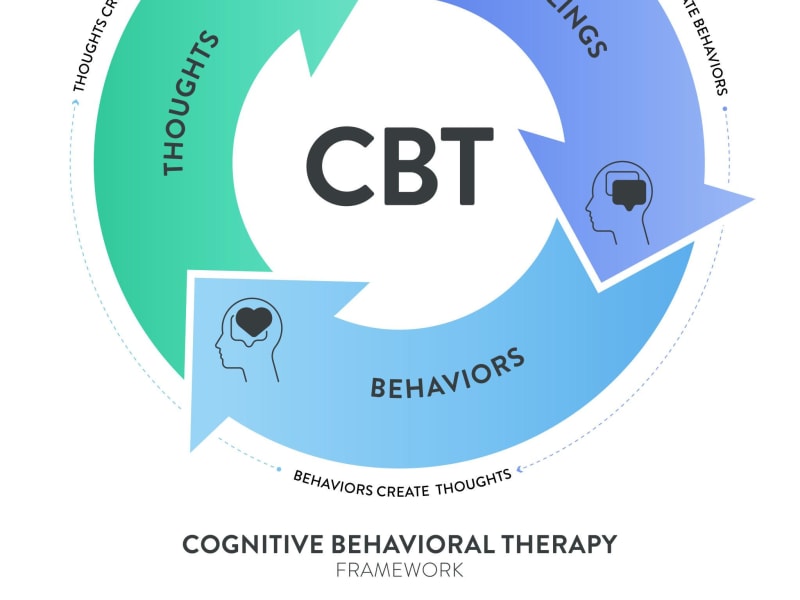
Cognitive Behavioural Therapy has one of the strongest evidence bases in mental healthcare. While professional guidance is valuable, many core CBT techniques are designed to be practised independently — and their effectiveness in self-help formats is well-documented.
April 14, 2026

Explore aversion therapy, a controversial treatment method that uses unpleasant stimuli to break unwanted habits like addiction. Learn about its methods, effectiveness, and when to seek professional help.
April 1, 2026

Discover how play therapy helps children (and adults) express emotions, process trauma, and build coping skills through the natural language of play. Learn about its benefits and when to consider it.
April 1, 2026