

Free Helpline
We are here to assist you.
Health Advisor
+91-8877772277Available 7 days a week
10:00 AM – 6:00 PM to support you with urgent concerns and guide you toward the right care.

We are here to assist you.
Health Advisor
+91-8877772277Available 7 days a week
10:00 AM – 6:00 PM to support you with urgent concerns and guide you toward the right care.
Explore the Kinsey Scale, its history, its impact on understanding sexuality, and its limitations. Discover modern perspectives on sexual orientation beyond simple labels.

Sexuality is a complex and deeply personal aspect of human experience. For a long time, many people thought of sexual orientation in very simple terms: you were either attracted to men or you were attracted to women. This binary view, however, doesn't capture the full spectrum of human attraction. Enter the Kinsey Scale, a groundbreaking tool developed in the mid-20th century that offered a more nuanced way to think about sexual orientation. While it has its limitations, understanding the Kinsey Scale can help us appreciate the diversity of human sexuality.
The Kinsey Scale, also known as the Heterosexual-Homosexual Rating Scale, was first introduced by Alfred Kinsey, Wardell Pomeroy, and Clyde Martin in 1948. It emerged from extensive research involving thousands of interviews about people's sexual histories and behaviors. Unlike previous models that often forced people into rigid categories of 'heterosexual' or 'homosexual,' the Kinsey Scale proposed that sexuality exists on a continuum. It uses a scale from 0 to 6, with an additional category 'X' for those who don't fit neatly into any other description.
At the time of its publication, the Kinsey Scale was revolutionary. It challenged the prevailing notion that people were strictly one way or the other. By suggesting that many individuals fall somewhere in between, it acknowledged the fluidity and complexity of sexual attraction. This opened up conversations and helped validate the experiences of people who didn't fit the traditional, narrow definitions of sexual orientation. It was a significant step towards a more inclusive understanding of human sexuality.
Despite its historical significance, the Kinsey Scale has several well-documented limitations. As time has passed and our understanding of sexuality has evolved, these shortcomings have become more apparent. Modern researchers and individuals often find the scale to be too simplistic for the vast diversity of human experience.
Today, there are numerous other scales and models used to understand sexual orientation, with some experts suggesting over 200 different ways to measure it. Tools like the Klein Sexual Orientation Grid (KSOG) offer more detailed assessments, considering factors like past behavior, present behavior, and ideal behavior across various variables. These newer models acknowledge the complexity and fluidity of sexuality more effectively.
Common terms used today include:
It's important to remember that these labels are tools to help describe experiences, not rigid boxes. Many people find that their understanding of their own sexuality evolves over time.
You might come across online quizzes or questionnaires referred to as a "Kinsey Scale test." However, according to the Kinsey Institute itself, there is no official or scientifically validated test based on the Kinsey Scale. These online quizzes are often not based on rigorous data and are not endorsed by the Kinsey Institute. They can be a starting point for self-reflection, but they should not be considered definitive assessments of one's sexual orientation.
Ultimately, the most important thing is how you understand yourself. If you choose to use the Kinsey Scale as a reference point, identify with the number that feels most comfortable and accurate for you. However, don't feel pressured to fit yourself into any scale if it doesn't feel right. Your sexual orientation is your own unique experience.
Consider these questions for self-reflection:
Many people find it helpful to explore resources that offer a broader range of terms and concepts related to sexuality. Understanding that sexuality is diverse and can be fluid is key to a more inclusive and accurate view of ourselves and others.
Exploring your sexuality can be a deeply personal journey. If you're experiencing confusion, distress, or simply want to understand yourself better, speaking with a healthcare professional can be incredibly beneficial. Therapists specializing in sexuality, counselors, or even your primary care doctor can provide a safe and non-judgmental space to discuss your thoughts and feelings. They can offer support, provide accurate information, and help you navigate your understanding of your own identity.
Priya has always identified as straight, but recently she's found herself developing strong romantic feelings for her close female friend, Maya. She's never been attracted to women before, and she's feeling confused about what this means for her identity. She wonders if she's bisexual or if this is just a one-off situation. Priya decides to talk to a therapist who specializes in LGBTQ+ issues to help her sort through her feelings.
This scenario highlights how personal experiences can lead to a deeper exploration of one's sexuality, often beyond the confines of simple labels or scales.
The Kinsey Scale was a pivotal tool in shifting our understanding of sexual orientation from a rigid binary to a more fluid spectrum. While it has limitations and is considered outdated by many, its legacy lies in opening the door to recognizing the diversity of human sexuality. Today, a richer vocabulary and more nuanced models help us appreciate that attraction and identity are multifaceted. The journey of understanding one's own sexuality is personal, and self-reflection, coupled with reliable resources and professional support, can illuminate the path forward.
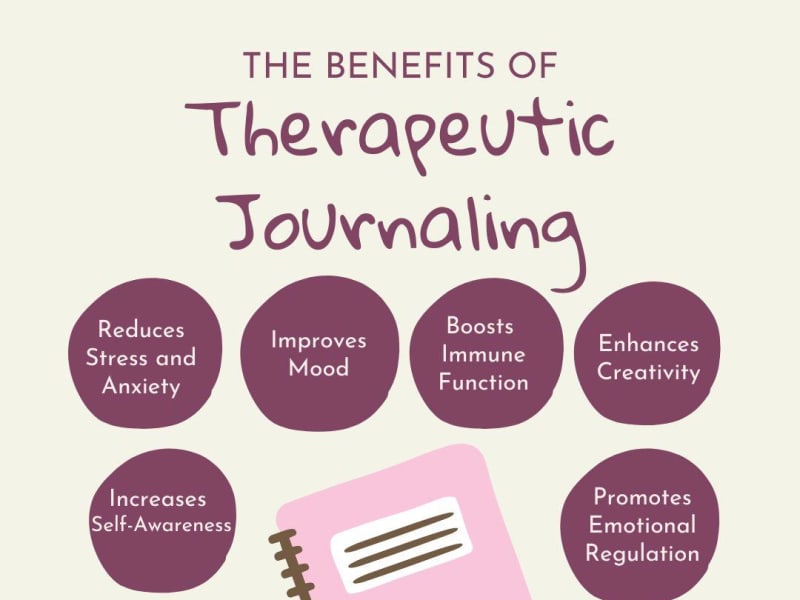
Journaling is more than a wellness trend — it's a scientifically validated tool for emotional processing, stress reduction, and psychological clarity. The evidence base, built over decades, reveals why putting pen to paper has such measurable effects on mental health
April 14, 2026

Learn when and how to take a mental health day to recharge, prevent burnout, and prioritize your overall well-being. Practical tips for Indian readers.
April 1, 2026

Feeling stuck and unmotivated due to mental health challenges? Discover practical, actionable tips to break through overwhelm and get things done, even on your toughest days.
April 1, 2026