

Free Helpline
We are here to assist you.
Health Advisor
+91-8877772277Available 7 days a week
10:00 AM – 6:00 PM to support you with urgent concerns and guide you toward the right care.

We are here to assist you.
Health Advisor
+91-8877772277Available 7 days a week
10:00 AM – 6:00 PM to support you with urgent concerns and guide you toward the right care.
Explore abstract thinking: what it is, how it develops, its importance in problem-solving and creativity, and practical ways to enhance this vital cognitive skill. Learn when to balance it with concrete thinking and when to seek professional help.

In our daily lives, we often deal with things we can see, touch, and directly experience. This is concrete thinking. But what happens when we need to understand ideas that aren't tied to a specific object or event? That's where abstract thinking comes in. It's the ability to grasp concepts like freedom, justice, or even a complex joke. Abstract thinking allows us to see patterns, make connections, and solve problems in innovative ways. It's a vital skill for creativity, understanding others, and navigating the complexities of the world. What Exactly Is Abstract Thinking? At its core, abstract thinking is the ability to comprehend concepts that are not directly linked to tangible, physical objects or sensory experiences. Think about ideas such as love, honesty, or the passage of time. You can't hold love in your hand or see time passing, yet these concepts are very real and influence our lives significantly. Abstract thinking helps us connect our sensory experiences to these broader, more conceptual understandings. It's often defined in contrast to concrete thinking. Concrete thinking focuses on the literal and observable. For instance, if you're planning a project, concrete thinking involves listing the specific steps in order: buy materials, cut wood, assemble pieces. It's about the 'what' and 'how' of immediate reality. Abstract thinking , on the other hand, delves into the 'why' and the broader implications. For the same project, abstract thinking might involve considering the project's purpose, its potential impact, or how it fits into a larger goal. It's about understanding the meaning behind the actions and objects. How Abstract Thinking Develops Over Time Our ability to think abstractly isn't something we're born with. It develops gradually, influenced by our experiences and cognitive growth. Swiss psychologist Jean Piaget, a pioneer in child development, outlined stages that illustrate this progression: Sensorimotor Stage (Birth to 2 years): During infancy and toddlerhood, thinking is largely concrete. Babies explore the world through their senses and physical actions. They learn by doing – touching, tasting, and moving. Preoperational Stage (2 to 7 years): Children begin to use symbols, like words and pictures, to represent objects. This symbolic thinking lays the groundwork for more complex abstract thought later on. They might pretend a banana is a phone, demonstrating an understanding of representation. Concrete Operational Stage (7 to 11 years): Kids start to develop logical reasoning. However, their thinking is still largely tied to what they can directly see and manipulate. They can understand concepts like conservation (e.g., that water in a different shaped glass is still the same amount), but abstract hypothetical situations can be challenging. Formal Operational Stage (Around 12 years and up): This is when abstract thinking really blossoms. Most individuals start to move beyond concrete reality and can think about hypothetical situations, abstract concepts, and future possibilities. They can reason deductively and consider multiple perspectives. This developmental process means that while a young child might struggle to understand the concept of 'fairness' in a broad sense, an adolescent can begin to grapple with complex ethical dilemmas. Why Abstract Thinking Matters Abstract thinking is a cornerstone of higher-order reasoning. It fuels many essential aspects of our lives: Problem-Solving: It allows us to move beyond obvious solutions and explore creative, unconventional approaches. When faced with a challenge, abstract thinking helps us identify underlying issues and potential remedies that aren't immediately apparent. Creativity and Innovation: The ability to connect seemingly unrelated ideas is the engine of creativity. Artists, writers, scientists, and entrepreneurs all rely on abstract thinking to generate new concepts and bring them to life. Think of a musician composing a melody or an engineer designing a new device – both involve abstract thought. Understanding Complex Information: In today's data-driven world, abstract thinking is crucial for making sense of information. It helps us interpret statistics, identify trends, and translate raw data into meaningful narratives. Experts use abstract thought to find patterns in vast datasets and explain their significance. Empathy and Social Understanding: Understanding another person's feelings or perspective – putting yourself in their shoes – is a form of abstract thinking. It allows us to connect with others on a deeper level, fostering better relationships and social harmony. Humor: Comedians are masters of abstract thinking. They observe the absurdities and incongruities in everyday life, identify unexpected connections, and craft jokes that play on these abstract relationships. A well-timed punchline often relies on the audience's ability to grasp a non-literal meaning. Future Planning: Abstract thinking enables us to envision future scenarios, set long-term goals, and make plans to achieve them. It's about projecting ourselves beyond the present moment. Imagine a team working on a new marketing campaign. Concrete thinking helps them list the tasks: design ads, book media slots, write copy. Abstract thinking helps them understand the target audience's desires, craft a compelling brand message, and predict how the campaign will influence public perception – the 'why' behind the 'what'. Boosting Your Abstract Thinking Skills The good news is that abstract thinking isn't fixed. Like a muscle, it can be strengthened with practice. Here are some effective ways to enhance your abilities: Engage with Puzzles: Solving 3D puzzles, visual riddles, and word games challenges your brain to think beyond immediate solutions. These activities train you to consider multiple possibilities and make non-obvious connections. Build 3D Models: Engaging in arts and crafts projects that involve building models has been shown to improve abstract thinking, particularly in fields like science, technology, engineering, and mathematics (STEM). It helps visualize and manipulate concepts in a tangible way. Explore Figurative Language: Pay attention to metaphors, similes, and idioms in literature, poetry, and everyday conversation. Understanding and using figurative language hones your ability to grasp non-literal meanings and symbolic representation. Practice Empathy: Actively try to understand situations from other people's points of view. Ask yourself: How might they be feeling? What might be their motivations? This exercise in perspective-taking is a powerful abstract thinking tool. Try Improv Comedy: Improv activities, even if you're not performing, encourage quick thinking, creative association, and the ability to build on ideas spontaneously. This fosters flexibility in thought. Analyze Optical Illusions: Optical illusions often trick our brains by presenting visual information that can be interpreted in multiple ways. Studying them helps you recognize how perception can be manipulated and how to look for underlying structures. Connect Ideas: When you read, listen to a lecture, or observe something, make an effort to connect it to other things you know. Ask yourself: How does this relate to X? What are the broader implications of Y? When Abstract Thinking Needs Balance While abstract thinking is incredibly valuable, it's not always helpful. In certain situations, an over-reliance on abstract thought can be detrimental. For instance, individuals experiencing anxiety or depression might fall into habits like catastrophizing – imagining the worst possible outcomes. This is a form of unhelpful abstract thinking where the mind spirals into negative possibilities. In such cases, consciously shifting focus back to concrete thinking can be beneficial. Instead of dwelling on 'what if everything goes wrong?', focus on the immediate, actionable steps you can take right now. For example, if you're worried about an upcoming presentation, instead of abstractly fearing the audience's judgment, concrete thinking would involve practicing your speech, preparing your notes, and focusing on delivering your message clearly. Most of us function best when we can fluidly switch between abstract and concrete thinking, using each as needed. Concrete thinking helps us manage the practicalities of life, while abstract thinking helps us understand the bigger picture and innovate. When to Consult a Doctor or Mental Health Professional While abstract thinking is a normal part of cognitive development, significant difficulties in understanding concepts or making connections might warrant professional attention. If you or someone you know experiences: A sudden and marked inability to understand abstract ideas or metaphors. Severe difficulty in problem-solving or planning that impacts daily life. Persistent negative thought patterns that feel overwhelming (e.g., severe anxiety or depressive rumination) that you can't manage with practical strategies. Concerns about cognitive changes, especially if there's a history of neurological conditions or significant head injuries. Conditions like certain neurological disorders, dementia, or severe mental health issues such as major depression or anxiety disorders can affect abstract thinking abilities. A doctor or mental health professional can help diagnose any underlying issues and recommend appropriate strategies or treatments. They can guide you on how to balance concrete and abstract thinking for better mental well-being. Frequently Asked Questions (FAQ) Q1: Can abstract thinking be learned at any age? Yes, absolutely. While abstract thinking skills develop naturally during adolescence, they can be learned, improved, and refined at any age through consistent practice and engaging in activities that challenge cognitive flexibility. Q2: How does abstract thinking relate to learning in school? Abstract thinking is fundamental to academic success, especially in subjects like literature, mathematics, science, and social studies. It enables students to understand complex theories, solve abstract problems, analyze concepts, and engage with nuanced ideas beyond rote memorization. Q3: Is it possible to
In summary, timely diagnosis, evidence-based treatment, and prevention-focused care improve long-term health outcomes.
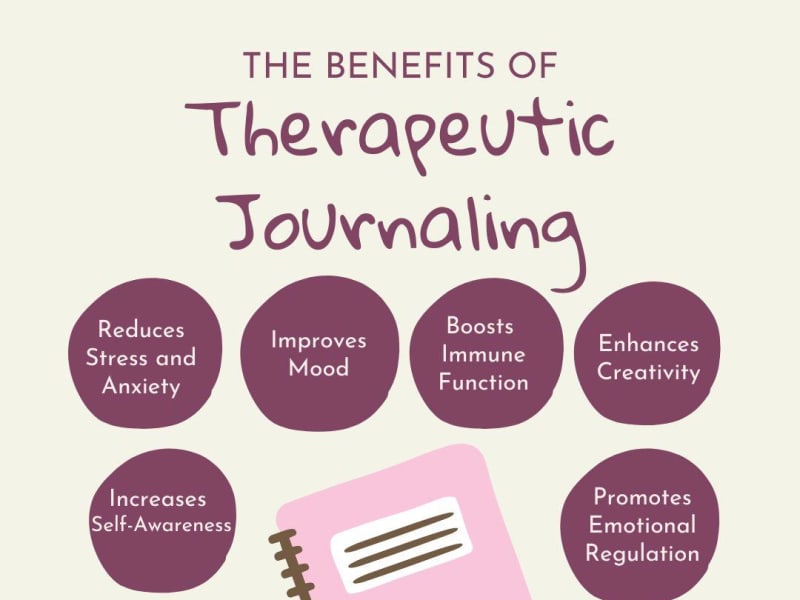
Journaling is more than a wellness trend — it's a scientifically validated tool for emotional processing, stress reduction, and psychological clarity. The evidence base, built over decades, reveals why putting pen to paper has such measurable effects on mental health
April 14, 2026

Learn when and how to take a mental health day to recharge, prevent burnout, and prioritize your overall well-being. Practical tips for Indian readers.
April 1, 2026

Feeling stuck and unmotivated due to mental health challenges? Discover practical, actionable tips to break through overwhelm and get things done, even on your toughest days.
April 1, 2026