You reach the 9th month thinking the baby could arrive any day. Then… nothing. No strong contractions, no clear signs, just waiting. It can feel oddly frustrating, especially when your body seems ready but not quite there yet. I’ve seen this a lot—perfectly healthy pregnancies where labor just takes its time. If you’re wondering how to induce labor naturally at home, you’re not alone. The urge to “do something” is real. But the trick is knowing what actually helps—and what’s just internet noise.
Is it normal to have no pain even after 9 months?
Short answer: yes, more normal than people admit. Movies make it look dramatic—water breaks, pain starts, chaos follows. Real life? Often slower. Much slower.
Many women reach full term (37–40 weeks) without any noticeable pain. The body prepares quietly. Cervix softens. Hormones shift. But contractions? They may not show up right away.
Here’s what most guides won’t tell you: absence of pain doesn’t mean something is wrong. In fact, doctors usually wait until around 41 weeks before stepping in medically, unless there’s a complication.
I’ve seen cases where labor started suddenly after days of nothing. One morning—mild cramps. By evening—active labor.
So if you’re sitting there thinking, “Why is nothing happening?”—you’re still well within the normal window.
That said, it’s also okay to want to nudge things along naturally.
What actually helps to induce labor naturally at home?
Let’s keep this practical. No magic tricks here. Just methods that have some real-world backing.
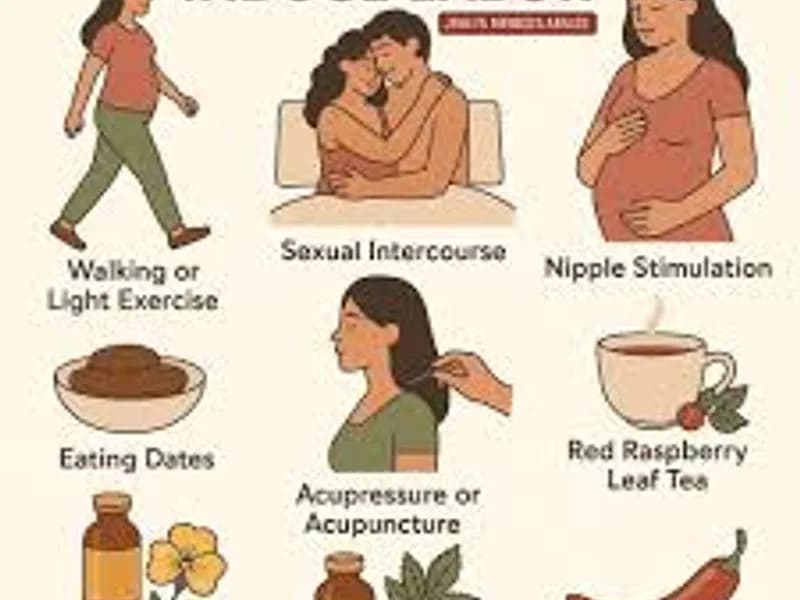
Walking is the simplest place to start. Not power walking like you’re training for a marathon—just steady movement. It helps the baby move down and puts gentle pressure on the cervix. That pressure matters.
Then there’s gravity. Sitting upright, using a birthing ball, even doing light squats if you’re comfortable—these positions encourage engagement of the baby’s head. I’ve seen this make a difference within a day or two.
Another commonly suggested method is nipple stimulation. It sounds odd, but it triggers oxytocin—the same hormone that causes contractions. The key is not to overdo it. Gentle, short sessions. Stop if contractions become too intense or close together.
Sex is often mentioned too, and there’s a reason. Semen contains prostaglandins, which can help soften the cervix. Plus, orgasm can stimulate contractions. But—and this matters—only if your doctor has said it’s safe for you.
Spicy food? Honestly, hit or miss. Some swear by it, but there’s no strong evidence. If you enjoy it, fine. Just don’t rely on it.
Hydration and rest matter more than people think. A tired, dehydrated body doesn’t go into labor easily. Sounds basic, but it’s often ignored.
What you should NOT try (even if the internet says so)
This is where things get a bit blunt. Some “natural” methods floating around are not safe.
Castor oil is a big one. It can cause severe diarrhea, dehydration, and unnecessary stress on your body. I’ve seen more bad experiences than good with this.
Herbal supplements without medical guidance? Risky. You don’t always know the dosage or effects.
And forcing things—overexercising, extreme remedies—that usually backfires. Your body doesn’t respond well to pressure. It responds to readiness.
The reality is, you can encourage labor, but you can’t force it. That line matters.
Conclusion
The final days of pregnancy can feel like the longest stretch of your life. You’re ready. Physically, mentally, emotionally. And yet, your body moves at its own pace. If you’re trying to figure out how to induce labor naturally at home, focus on gentle, safe methods—walking, positioning, rest, and small hormonal triggers that support your body, not fight it. Most importantly, trust that no pain at 9 months isn’t a failure—it’s just part of the process. Sometimes, waiting is the work.