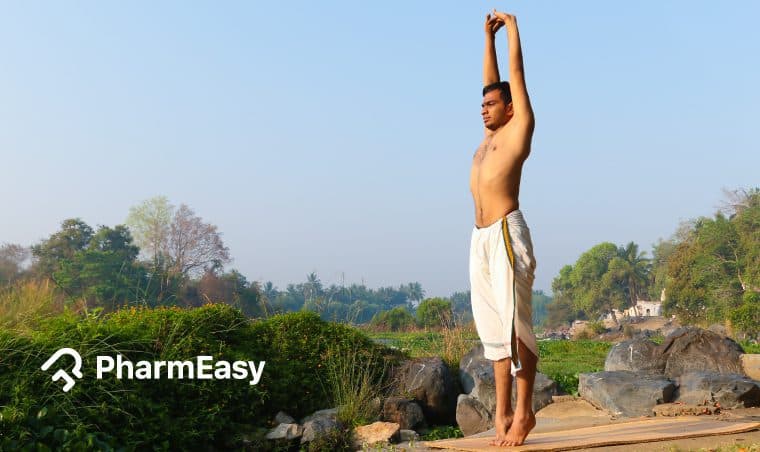
The Mountain Pose: The Groundwork of Your Yoga Journey
Meena, 45, a homemaker from Jaipur, noticed her shoulders slumping more often, especially after long hours spent sitting on the floor during family gatherings. She also felt a persistent ache in her lower back. Seeking relief, she turned to yoga, and her instructor introduced her to the Mountain Pose.
Initially, it seemed deceptively simple – just standing straight. However, Meena soon discovered that mastering this fundamental asana unlocked a cascade of physical and mental advantages.
The Mountain Pose, often referred to as Tadasana, is the bedrock upon which many other upright yoga postures are built. Its apparent simplicity belies its profound impact on carriage, stability, and overall bodily alignment.
Engaged correctly, it instills a sense of groundedness and steadiness, much like a mighty mountain. Worth knowing: This pose isn't just about standing tall; it's about standing with intention and awareness.
The Diverse Advantages of the Mountain Pose
The advantages of consistently engaging with the Mountain Pose extend far beyond mere physical uprightness. Regular immersion in this pose can lead to significant improvements in your physical well-being. Here's the thing — the benefits are surprisingly diverse, addressing common ailments and enhancing overall vitality.
It sounds simple. It rarely is.
Improved Carriage and Spinal Health
In our modern lives, characterised by prolonged sitting at desks and constant screen time, poor carriage has become alarmingly prevalent. Over 60% of adults experience back pain at some point in their lives, according to various health surveys. The Mountain Pose actively counteracts this by strengthening the muscles that support the spine.
It encourages the natural curvature of the spine, reducing the tendency to slouch. By engaging the core and lengthening the torso, you create space between the vertebrae, alleviating pressure and potentially reducing back pain. This conscious lengthening helps in correcting rounded shoulders and a forward-head carriage, conditions often exacerbated by our digital habits.
Enhanced Stability and Steadiness
Developing a strong sense of stability is crucial, particularly as we age. Falls can lead to serious injuries, and maintaining steadiness is key to independence. The Mountain Pose is an excellent pose for cultivating this essential skill.
It requires you to find your centre of gravity and maintain it, strengthening the ankles, feet, and leg muscles. In many cases, even a few minutes of daily engagement can lead to noticeable improvements in steadiness. The World Health Organization (WHO) highlights the importance of stability exercises in fall prevention strategies for older adults.
Most people overlook this completely.
Strengthened Core and Abdominal Muscles
While the Mountain Pose might appear to be a passive pose, it actively engages your core muscles. Drawing the navel gently towards the spine activates the transversus abdominis, a deep abdominal muscle crucial for core stability.
A strong core supports the lower back, improves carriage, and enhances overall bodily function. This subtle engagement is vital for transferring power efficiently throughout the body during movement.
Increased Body Awareness (Proprioception)
Engaging in the Mountain Pose heightens your awareness of your body's position in space. This enhanced proprioception — the sense of knowing where your limbs are without looking — is fundamental for coordination and preventing injuries. You become more attuned to subtle shifts in weight and muscle engagement, leading to more mindful movement throughout your day.
Does this sound familiar? You might start noticing how you stand even when not doing yoga.
Stress Reduction and Mental Calm
The mindful focus required for the Mountain Pose can have a calming effect on the mind. By concentrating on your breath and the sensations in your body, you divert attention away from worries and anxieties.
This engagement can lower cortisol levels, the body's primary stress hormone. A study published in The Lancet indicated that regular yoga engagement, including foundational poses like the Mountain Pose, can be an effective complementary therapy for managing stress and anxiety disorders.
That's the part worth remembering.
Improved Circulation
Standing tall with proper alignment in the Mountain Pose can help improve blood circulation. The pose encourages an open chest and diaphragm, facilitating deeper breathing. Better oxygenation of the blood benefits all bodily systems. It's a simple yet reliable way to get your blood flowing more freely.
Foundation for Other Poses
As mentioned, the Mountain Pose is the starting point for many upright yoga sequences. Mastering its alignment principles — grounding through the feet, lengthening the spine, engaging the core — provides a solid foundation for more complex asanas like Virabhadrasana (Warrior Poses) or Trikonasana (Triangle Pose).
Without a strong Mountain Pose, achieving proper form in other poses becomes significantly harder.
How to Perform the Mountain Pose Correctly
Achieving the full advantages of the Mountain Pose lies in its precise execution. It’s not just about standing; it’s about standing with purpose and alignment. Follow these steps for an successful engagement:
Step-by-Step Guide
- Starting Position: Stand with your feet together or hip-width apart, whichever feels more stable. Align your big toes and heels. If standing with feet together feels uncomfortable or strains your knees, widen them slightly.
- Grounding: Distribute your weight evenly across the soles of both feet. Press down through all four corners of each foot — the ball of the big toe, the little toe, and the inner and outer heel. Feel a sense of rooting into the earth.
- Leg Engagement: Gently engage your thigh muscles, lifting your kneecaps slightly. Avoid locking your knees; maintain a micro-bend.
- Core Activation: Draw your navel gently towards your spine. This engages your core muscles, providing support for your lower back and helping to lengthen your torso.
- Chest and Shoulders: Broaden your collarbones and relax your shoulders down away from your ears. Imagine lengthening the back of your neck. Avoid puffing out your chest unnaturally; aim for an open, natural carriage.
- Arms: Let your arms hang naturally at your sides, palms facing forward or towards your thighs. Some practitioners prefer to keep palms facing forward to encourage chest opening.
- Gaze: Fix your gaze gently at a point straight ahead (Drishti). This helps maintain stability and focus.
- Breath: Breathe deeply and smoothly through your nose. Coordinate your breath with the subtle movements of your body — inhale to lengthen, exhale to settle into the pose.
- Hold: Maintain the pose for 5-10 deep breaths, or for 30-60 seconds. Focus on the sensations within your body and the feeling of stability.
typical Mistakes to Avoid
Even in a seemingly simple pose like the Mountain Pose, typical errors can diminish its effectiveness or even lead to strain. Being aware of these pitfalls is crucial for safe and beneficial engagement.
Recovery is rarely linear.
- Knee Locking: Hyperextending the knees can put undue stress on the joint. Always maintain a slight bend.
- Slouching Shoulders: Allowing the shoulders to round forward negates the postural benefits. Actively draw them back and down.
- Uneven Weight Distribution: Leaning too heavily on the heels or the balls of the feet disrupts stability and alignment. Ensure even grounding.
- Gripping the Toes: Tensing the toes can create unnecessary tension in the feet and legs. Keep the toes relaxed and spread.
- Holding Your Breath: The Mountain Pose is a breathing pose. Holding your breath increases tension. Focus on steady, deep breaths.
Cultural Context and Variations
In India, the engagement of yoga is deeply ingrained in the cultural fabric. The Mountain Pose, as a foundational pose, is often introduced early in a student's journey. While the core principles remain universal, variations can be introduced based on individual needs and the specific lineage of yoga being engaged.
For instance, during festive seasons like Diwali, when dietary habits might shift towards richer foods, an engagement that grounds and centres like the Mountain Pose can be particularly beneficial for digestion and overall well-being. So what does that mean for you? It means adapting the engagement to fit your life and cultural context.
Practically speaking, the Mountain Pose can be modified. For individuals with stability issues, standing with the feet slightly wider apart or even near a wall for support can be helpful initially.
Those with neck issues might find it more comfortable to keep their gaze slightly downward rather than straight ahead. The key is to find an alignment that feels stable, grounded, and energetically uplifting for your unique body.
When to Seek Professional Guidance
While the Mountain Pose is generally safe for most individuals, certain conditions warrant caution or professional advice. If you experience notable joint pain, dizziness, or have a history of serious injuries (particularly to the ankles, knees, or spine), it is always best to consult with a qualified yoga instructor or a healthcare professional.
The numbers don't lie.
Institutions like the All India Institute of Medical Sciences (AIIMS) often have yoga therapy departments that can provide tailored guidance.
Remember, yoga is a personal journey. What works perfectly for one person might need adjustment for another. The International Diabetes Federation (IDF) has also noted the advantages of physical activity, including yoga, in managing lifestyle diseases, underscoring the holistic approach the Mountain Pose supports.
Key Takeaways
- The Mountain Pose (Tadasana) is a foundational upright yoga posture that improves carriage and spinal alignment.
- Consistent engagement enhances stability, strengthens the core, and increases body awareness.
- The pose offers marked stress reduction advantages by promoting mindful breathing and present moment awareness.
- Proper execution involves even weight distribution, engaged core, relaxed shoulders, and steady breathing.
- Modifications are available for varying levels of stability and specific physical considerations.
Always consult a qualified physician before making any medical decisions.