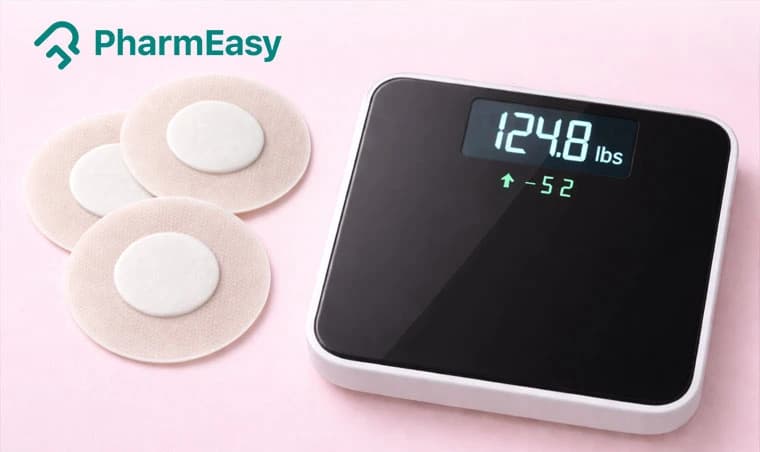
Fat Reduction Patches: What Are They, How They Work, Efficacy & Myths
Meena, 45, a homemaker from Jaipur, noticed her body mass increasing after the festive season, exacerbated by a sedentary lifestyle. She’d tried various diets and exercises with limited success. Scrolling online, she stumbled upon advertisements for "miracle" fat reduction patches, promising effortless fat reduction.
Does this sound familiar? Many Indians, facing similar body mass concerns, are increasingly curious about these transdermal solutions. But what exactly are fat reduction patches, and do they truly deliver on their promises?
In India, where traditional diets can be rich and celebratory feasts are common, managing body mass can present unique challenges. With the rise of lifestyle diseases like diabetes and hypertension, which are closely linked to obesity, finding effective and sustainable body mass management strategies is paramount. Over 101 million Indians have diabetes (ICMR, 2023), and a considerable portion of this is linked to excess body mass.
Here's the thing — the allure of a quick fix, like a patch that claims to melt away fat while you go about your day, is understandable. However, as with many advertised health products, a healthy dose of skepticism and a thorough understanding of the science are crucial.
Most people overlook this completely.
Understanding Fat Reduction Patches
Fat reduction patches, also known as transdermal patches, are small adhesive pads designed to be applied to the skin. The concept is that they deliver specific compounds through the skin directly into the bloodstream, bypassing the digestive system.
These compounds are typically a blend of herbs, vitamins, minerals, and sometimes even hormones or stimulants, all purported to aid in body mass reduction. The proposed mechanisms of action vary widely depending on the specific product and its advertised compounds.
Commonly Advertised Mechanisms
Proponents claim these patches work in several ways:
- Appetite Suppression: Some patches are said to contain compounds that signal satiety to the brain, reducing hunger and cravings.
- Metabolism Boost: Others are marketed as containing substances that increase the body's metabolic rate, causing it to burn more calories at rest. Think about it this way — a faster metabolism means your body is a more efficient furnace.
- Fat Mobilization: Certain compounds are claimed to help break down stored fat cells, making them available for energy use.
- Nutrient Absorption: A few patches focus on delivering essential nutrients that may be lacking in a body mass reduction diet, supporting overall health and energy levels.
The convenience factor is a considerable draw. Unlike pills that need to be swallowed or shakes that require preparation, a patch is simply applied and, in theory, works continuously for a set period (often 24-72 hours).
This passive approach appeals to individuals seeking simpler solutions amidst busy schedules, a frequent reality for many in India juggling work, family, and social obligations.
The Science (or Lack Thereof) Behind Efficacy
When we scrutinise the scientific evidence supporting the efficacy of most commercially available fat reduction patches, the picture becomes less clear. The majority of claims are based on anecdotal evidence or studies on individual compounds, rather than robust clinical trials on the patches themselves.
That's the part worth remembering.
Worth knowing: the regulatory oversight for such products can be less stringent than for pharmaceuticals, meaning efficacy and safety aren't always proven to the same rigorous standards.
The concept of transdermal delivery is scientifically valid for certain medications (like nicotine patches for smoking cessation or hormone replacement therapy). However, successfully delivering a complex cocktail of body mass reduction-promoting compounds through the skin in sufficient quantities to induce notable physiological change is a considerable challenge.
The skin acts as a formidable barrier, and the concentration of active compounds that can actually penetrate it is often too low to have a measurable impact on metabolism or appetite.
What Does the Research Say?
Independent, peer-reviewed studies demonstrating the efficacy of fat reduction patches in promoting substantial and sustainable body mass reduction are scarce. Many studies cited by manufacturers are either preliminary, conducted on animals, or focus on isolated compounds without proving the efficacy of the patch formulation.
For instance, while some herbal compounds might have mild metabolic effects, the dosage delivered via a patch is unlikely to replicate the effects seen in controlled laboratory settings or through oral consumption where absorption might be more predictable. The World Health Organization (WHO) consistently advocates for evidence-based approaches to body mass management, which primarily include dietary modifications and physical activity.
In many cases, any body mass reduction reported by users of these patches is likely attributable to other factors. This could include a placebo effect, where the belief in the product's efficacy leads to perceived results, or concurrent lifestyle changes that the user made alongside using the patch, such as reducing calorie intake or increasing exercise.
Recovery is rarely linear.
Have you ever wondered why? It's easy to attribute progress to the new product, even if other factors are the primary drivers.
usual Compounds and Their Proposed Roles
Fat reduction patches often contain a variety of compounds, each with a supposed role in body mass management. Let's examine a few:
- Green Tea Extract: Rich in antioxidants like EGCG, it's believed to modestly boost metabolism and aid fat oxidation. However, the amount delivered via a patch might be minimal.
- Garcinia Cambogia: This fruit extract contains hydroxycitric acid (HCA), which is claimed to inhibit fat production and suppress appetite. Evidence for notable body mass reduction in humans is mixed.
- Guarana: A stimulant containing caffeine, it may temporarily increase energy expenditure and potentially suppress appetite.
- L-Carnitine: An amino acid involved in fat metabolism, it's thought to assist the body use fat for energy. Its effectiveness for body mass reduction in the general population is debated.
- Fucoxanthin: Derived from seaweed, some studies suggest it may increase metabolism and reduce fat accumulation, but research is still in early stages.
It's crucial to remember that the efficacy and safety of these compounds, especially when delivered transdermally, require more rigorous scientific validation. The concentration and absorption rate are key variables that are often not well-defined in product marketing.
Debunking Fat Reduction Patch Myths
The marketing surrounding fat reduction patches is often filled with exaggerated claims. Let's debunk some typical myths:
Myth 1: Patches Cause Effortless Fat Burning
This is perhaps the biggest myth. No topical application, including patches, can magically 'melt' fat. Fat loss requires a consistent calorie deficit achieved through diet and exercise. Patches cannot override fundamental physiological principles.
Myth 2: They Replace Diet and Exercise
This is a dangerous misconception. Fat reduction patches, even if they had some minor supporting effect, are not a substitute for healthy eating habits and regular physical activity.
Relying solely on a patch is a recipe for disappointment and can delay the adoption of truly successful lifestyle changes. Think about it this way — you wouldn't expect a bandage to heal a broken bone; similarly, a patch can't fix an unhealthy lifestyle.
Myth 3: All Compounds Are Safe and proven
Going back to what we discussed, the scientific backing for many compounds in these patches is weak. On top of that,, some individuals may experience skin irritation or allergic reactions at the application site.
Certain stimulants could also cause side effects like jitters, increased heart rate, or sleep disturbances, especially in sensitive individuals or when combined with other sources of caffeine. The Indian Journal of Dermatology sometimes features case studies on contact dermatitis from various topical products.
That alone changes everything.
Myth 4: They Work for Everyone
Individual responses to any supplement or treatment vary greatly. What might theoretically have a slight effect on one person could have no discernible impact on another due to differences in metabolism, genetics, and overall health. The idea of a one-size-fits-all solution for body mass reduction is generally unrealistic.
Efficacy: The Verdict from Experts
Medical and scientific consensus is largely skeptical regarding the efficacy of fat reduction patches as a primary method for notable body mass reduction. While some compounds might offer marginal benefits when consumed orally in appropriate doses and as part of a holistic plan, their efficacy via transdermal patches remains unproven for substantial fat loss.
A meta-analysis published in The Lancet Diabetes & Endocrinology highlighted that non-pharmacological interventions (diet, exercise) remain the cornerstone of obesity management.
The International Diabetes Federation (IDF) also stresses the importance of lifestyle modification for preventing and managing diabetes and related complications, often linked to obesity. While research into novel drug delivery systems is ongoing, including transdermal methods for certain conditions, current fat reduction patches generally fall short of rigorous scientific validation for notable, sustainable results.
The convenience they offer is often overshadowed by a lack of demonstrable efficacy.
The Role of Lifestyle Changes
Sustainable and healthy body mass reduction is overwhelmingly achieved through a combination of:
- Balanced Nutrition: Focusing on whole foods, controlling portion sizes, and reducing intake of processed items, sugary drinks, and unhealthy fats. Indian cuisine, while diverse, offers plenty of healthy options when prepared mindfully — think dals, sabzis, and whole grains.
- Regular Physical Activity: Aiming for at least 150 minutes of moderate-intensity aerobic activity or 75 minutes of vigorous-intensity activity per week, along with muscle-strengthening exercises.
- Adequate Sleep: Poor sleep can disrupt hormones that regulate appetite, leading to increased hunger.
- Stress Management: Chronic stress can lead to emotional eating and hormonal changes that favour fat storage. Techniques like yoga or meditation can be beneficial.
These foundational elements are critical for long-term health and body mass management. While Meena from Jaipur eventually decided against the fat reduction patch and consulted a dietitian, she began incorporating more home-cooked meals and started her day with a brisk walk.
The numbers don't lie.
She found that gradual, consistent changes yielded far more satisfying and lasting results than any quick-fix promise.
Key Takeaways
- Fat reduction patches are adhesive pads designed to deliver compounds through the skin, claiming to aid body mass reduction via appetite suppression or metabolism boosting.
- Scientific evidence supporting the notable efficacy of most fat reduction patches for substantial, sustainable body mass reduction is largely lacking.
- Many purported benefits are based on anecdotal evidence or studies of individual compounds, not the patch formulation itself.
- Fat reduction patches are not a substitute for a healthy diet and regular exercise, which remain the cornerstones of impactful body mass management.
- Potential side effects include skin irritation, and some compounds may cause adverse reactions in certain individuals.
Always consult a qualified physician before making any medical decisions.