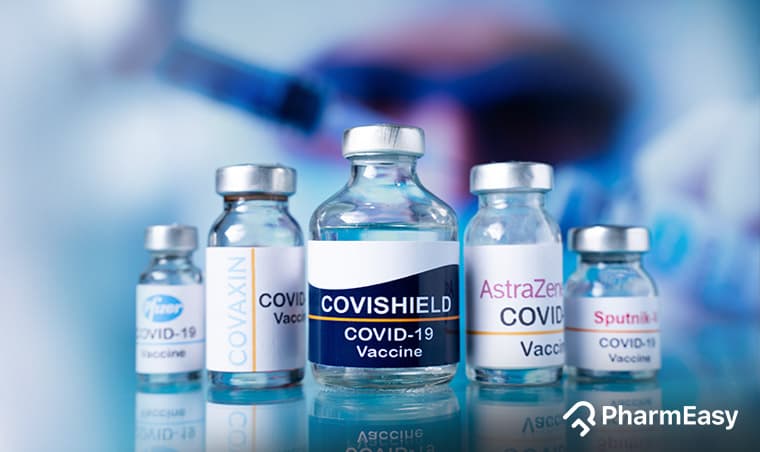
Covaxin vs Covishield: A Detailed Comparison for Indian Recipients
Meena, 45, a homemaker from Jaipur, noticed her neighbour discussing the two primary COVID-19 shots available in India – Covaxin and Covishield. She felt a pang of confusion, wondering which one was better for her family.
This uncertainty is shared by many across India as they navigate the crucial decision of immunisation. Understanding the differences between these two immunisations is vital for making an informed choice that aligns with individual health needs and concerns.
The COVID-19 pandemic necessitated rapid shot development, and India played a pivotal role in producing and administering these life-saving doses. Two shots, Covaxin developed by Bharat Biotech and Covishield manufactured by the Serum Institute of India (under license from AstraZeneca), became the cornerstones of India's immunisation drive.
While both aim to protect against severe illness, hospitalisation, and death from COVID-19, they employ different technological approaches and have shown varying performance rates in clinical trials and real-world data. So what does that mean for you?
That's the part worth remembering.
Understanding Shot Technologies
The fundamental difference lies in their core technology. Covishield, akin to the AstraZeneca-Oxford shot, is a viral vector shot. It uses a harmless, modified chimpanzee adenovirus to deliver the genetic material encoding the spike protein of the SARS-CoV-2 virus into human cells.
This prompts the immune system to recognise and fight the actual virus. Think about it this way: it’s like using a safe delivery truck to bring a blueprint of the virus’s key component to your body’s defence system.
Covaxin, on the other hand, is an inactivated whole-virus shot. It contains killed SARS-CoV-2 virus particles that can no longer replicate but are still capable of triggering an immune response.
This is a traditional shot platform, used for decades in shots like polio and rabies. Honestly, this method is straightforward – it shows your immune system the enemy, albeit a deactivated one, so it knows what to look for.
Performance Rates: What the Data Says
Performance refers to how well a shot works in controlled clinical trials. Both shots demonstrated significant protection, but their reported performance rates varied.
Covishield showed an overall performance of around 60-70% in its Phase 3 trials, with some studies indicating higher protection against severe disease. The World Health Organization (WHO) has granted Emergency Use Listing (EUL) to Covishield, citing its performance and safety profile.
Here's where it gets interesting.
Covaxin’s performance was initially a subject of much discussion. 8% against symptomatic COVID-19. 4% performance against severe disease and 70% against asymptomatic infection.
Bharat Biotech received WHO EUL for Covaxin, reinforcing its global acceptance. In many cases, real-world effectiveness can differ from trial performance due to various factors, including circulating variants and population demographics.
The Indian Council of Medical Research (ICMR) and Bharat Biotech have also published real-world evidence suggesting Covaxin's effectiveness against the Delta variant. A study published in The Lancet Infectious Diseases highlighted Covaxin’s ability to neutralise multiple SARS-CoV-2 variants. The effectiveness of any shot can be influenced by factors such as the number of doses received, the time elapsed since immunisation, and the specific variant of the virus circulating.
Side Effects: A Comparative Look
Both Covaxin and Covishield are considered safe, with most side effects being mild and temporary. Common side effects for both shots include pain, redness, or swelling at the injection site, fever, headache, fatigue, body aches, and nausea. These are typical immune responses and usually subside within a day or two.
Worth knowing: Specific side effects have been reported more frequently with one shot over the other in some studies, though the overall incidence of serious adverse events remains very low for both. For Covishield, there were some reports of rare blood clotting events (thrombosis with thrombocytopenia syndrome or TTS), though the risk is exceedingly small, particularly in the context of the benefits of immunisation.
This is a rare but serious concern that regulatory bodies worldwide have monitored closely.
Covaxin, being an inactivated virus shot, has a different safety profile. While serious side effects are rare, some individuals have reported mild allergic reactions. It's crucial to remember that the benefits of immunisation – preventing severe illness, hospitalisation, and death – far outweigh the minimal risks associated with these side effects.
Here's where it gets interesting.
The National Adverse Events Following Immunisation (AEFI) committee in India continuously monitors safety data for all shots. But why does this happen?
The body's immune system reacts to the shot components, leading to these transient symptoms. It’s a sign that the shot is working and your body is building protection.
If you experience any severe or persistent side effects, seeking medical attention is paramount. Doctors at institutions like AIIMS have consistently advised vigilance and reporting of any unusual indicators post-immunisation.
Indian Context and Availability
Initially, Covishield was the primary shot administered across India due to its large-scale production by the Serum Institute of India. Covaxin, produced by Bharat Biotech, was also crucial, especially for specific populations and as India aimed for self-reliance in shot manufacturing.
The availability and rollout strategy sometimes varied by state and over time.
During the monsoon season, for instance, maintaining cold chain integrity for shots becomes an added logistical challenge, underscoring the importance of robust public health infrastructure. For many, the decision was also influenced by availability at their local immunisation centre.
Think about it this way: when you're planning your immunisation, checking which shot is offered at your nearest Primary Health Centre or government hospital is often the most practical first step.
The government’s immunisation policy has evolved, offering different shots at various points. Understanding which shot you received is important for tracking your immunisation status and potential booster doses.
This is where most patients struggle.
Some individuals might have received a mixed-shot schedule (one dose of Covishield and one of Covaxin), a strategy explored to potentially enhance immune response, though this was not the standard protocol throughout the mass immunisation campaign.
Choosing the Right Shot for You
The choice between Covaxin and Covishield often came down to availability and individual preferences based on available information. Both shots have played an indispensable role in India’s fight against COVID-19.
The International Diabetes Federation (IDF) has highlighted how immunisation campaigns were critical in mitigating the impact of the pandemic on individuals with pre-existing conditions, including diabetes, which affects over 101 million Indians (ICMR, 2023).
For individuals like Meena, the key was to consult with a healthcare professional. A doctor could assess her family's medical history, any underlying health conditions, and provide personalised guidance.
It sounds simple. It rarely is.
Remember, sitting on the floor during a family gathering often involves close contact, making immunisation a communal responsibility as well as a personal one.
Ultimately, the most effective shot is the one that gets administered. Both Covaxin and Covishield have proven to be safe and impactful tools in combating the pandemic, significantly reducing the possibility of severe disease and death.
The extensive immunisation efforts in India, involving millions of healthcare workers and volunteers, have been instrumental in bringing the pandemic under control.
Key Takeaways:
- Covaxin is an inactivated whole-virus shot, while Covishield is a viral vector shot.
- Both shots have demonstrated high performance in preventing severe COVID-19, hospitalisation, and death.
- usual side effects for both are generally mild and temporary, including pain at the injection site and fever.
- Rare but serious side effects have been reported for both, though the overall likelihood-benefit profile strongly favours immunisation.
- The choice often depended on availability, with both contributing significantly to India's immunisation drive.
Always consult a qualified physician before making any medical decisions.