Understanding the KOH Prep Test for Mycotic Conditions
Common yet often uncomfortable and persistent, conditions caused by fungi demand accurate diagnosis. Pinpointing the exact organism responsible is a crucial initial step for effective therapy.
Fortunately, an accessible diagnostic method is available: the Potassium Hydroxide (KOH) preparation test. Through this widely adopted procedure, medical professionals can rapidly observe telltale signs of a mycotic presence directly from a patient's specimen.
Consider this: rather than enduring days for a microbial cultivation to develop, the KOH examination provides instant clarity. It serves as a fundamental tool for identifying ailments such as ringworm, athlete's foot, and specific candidal conditions.
How Does the KOH Test Work?
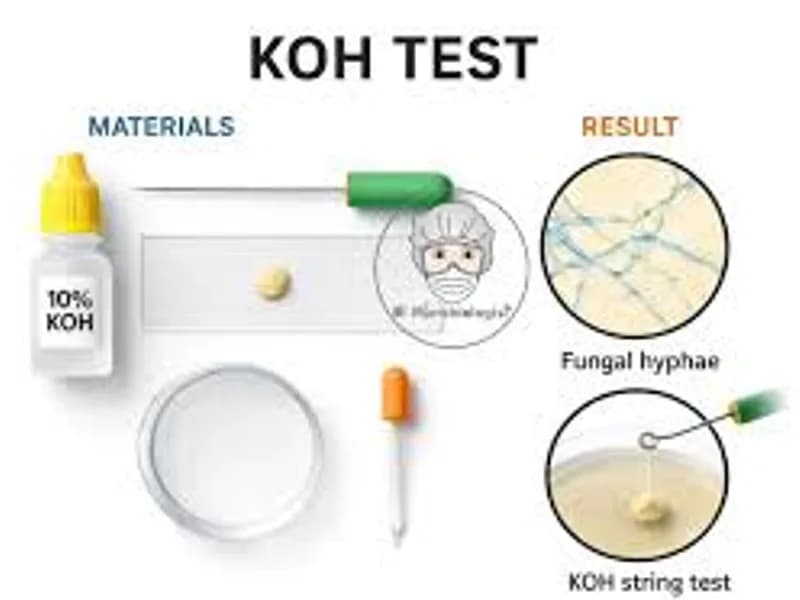
The effectiveness of the KOH test stems from its straightforward nature and chemical reaction. From the affected region, a small specimen—often skin scrapings, nail clippings, or hair—is gathered. Upon a microscope slide, this collected material is then placed, followed by the addition of a single drop of potassium hydroxide solution.
How does this work in practice? Essentially, the KOH solution functions as a clarifying agent. Its action involves breaking down human epidermal cells and other detritus.
The cell walls of fungi, in contrast, withstand this chemical action. Because of this resilience, the mycotic structures—like hyphae (thread-like formations) and spores—become distinctly visible when viewed through a microscope. This seemingly simple step is profoundly impactful because it efficiently removes cellular 'background noise,' thereby revealing the microscopic intruders.
Here's where it gets interesting.
The Procedure in Detail
Specimen Collection: A healthcare professional employs a sterile scalpel or curette to delicately gather a small quantity of skin, nail, or hair from the suspect area. While generally pain-free, a slight scraping feeling may be noticed.
Slide Preparation: The gathered material is then thinly spread across a pristine glass microscope slide.
KOH Application: Onto the specimen on the slide, a drop of 10-20% KOH solution is applied.
Incubation (Optional but prevalent): To ensure the KOH works optimally, the slide might be subtly warmed or simply allowed to sit at room temperature for several minutes (usually 5-15).
Microscopic Examination: then, the slide undergoes examination through a microscope, typically beginning with a lower power lens before transitioning to higher magnification for intricate viewing.
What Does a Positive KOH Test Indicate?
Should a KOH test return positive, it unequivocally points to the presence of a mycotic condition. Upon a medical practitioner observing characteristic structures such as branching hyphae or budding yeast cells, the existence of a fungal pathogen is confirmed. Such direct observation becomes vital for commencing the appropriate antifungal therapy.
Indeed, the direct observation of these structures offers a degree of certainty, which proves reassuring for both the patient and the attending specialist. This insight aids in excluding other ailments that could resemble mycotic issues, including bacterial contagions or inflammatory dermatological problems.
Advantages of the KOH Test
The KOH preparation stands as an exceptionally valuable diagnostic instrument for multiple crucial reasons. Its rapidity, perhaps, represents its paramount benefit. Outcomes are frequently ready mere minutes after the specimen's examination, facilitating swift diagnosis and the formulation of a treatment strategy.
Beyond its speed, the examination is comparatively economical to conduct, rendering it obtainable in diverse medical environments. Only essential apparatus is needed: merely a microscope and standard laboratory provisions. Such widespread availability holds immense importance, particularly in regions with constrained resources.
The numbers don't lie.
What's more, it exhibits high specificity for mycotic components. Although it cannot pinpoint the precise species of organism (a microbial cultivation is typically required for that), it dependably validates the existence of these structures, thereby informing the initial management plan.
Limitations and When Further Testing is Needed
Notwithstanding its advantages, the KOH examination does possess certain constraints. As previously noted, it frequently fails to pinpoint the exact mycotic species responsible for the ailment.
When precise identification is necessary—especially vital for particular persistent or uncommon conditions—a cultivation of the organism is commonly undertaken either simultaneously or afterward. This allows the organism to proliferate in a laboratory environment, permitting experts to definitively identify it.
On top of that,, the KOH test's sensitivity can fluctuate. Should the specimen collection be less than ideal, or if the mycotic structures are scarce, the test could produce a false-negative outcome. In such cases, the result appears negative despite the actual presence of a situation.
Ever pondered why a clinician may still harbor suspicion of a mycotic ailment even after an initial negative test? Such situations can arise from these very factors.
Practically speaking, a physician may request a KOH examination concurrent with a microbial cultivation to enhance diagnostic precision. The KOH offers a swift initial evaluation, whereas the cultivation provides conclusive identification at a later stage.
That's the part worth remembering.
Preparing for Your KOH Test
Typically, patients require no specific preparations for a KOH examination. Nonetheless, refraining from applying any topical treatments—such as creams, lotions, or powders—to the afflicted region for at least 24-48 hours before your visit is advisable.
Such topical agents possess the potential to skew test outcomes, possibly resulting in erroneous conclusions. Always apprise your doctor of any current medications you are taking.
Interpreting the Results with Your Doctor
A positive outcome signifies the detection of mycotic structures. Your physician will review the implications with you and propose a suitable therapeutic strategy, which could encompass topical or systemic anti-mycotic drugs.
Conversely, a negative finding indicates no such structures were observed; yet, your clinician may still explore alternative diagnoses or re-administer the test if clinical suspicion persists.
To put it simply: the KOH test serves as a potent initial diagnostic tool in the battle against widespread mycotic ailments. This examination provides swift, dependable verification, empowering medical professionals to direct people toward improved skin health and quicker recuperation.
Thus, it stands as an uncomplicated yet indispensable measure in addressing a widespread health issue.