

Free Helpline
We are here to assist you.
Health Advisor
+91-8877772277Available 7 days a week
10:00 AM – 6:00 PM to support you with urgent concerns and guide you toward the right care.

We are here to assist you.
Health Advisor
+91-8877772277Available 7 days a week
10:00 AM – 6:00 PM to support you with urgent concerns and guide you toward the right care.
Learn about brown widow spider bites, including symptoms, treatment, and prevention tips. Understand the differences between brown and black widow bites and when to seek medical advice.

When you think of venomous spiders in India, the black widow often comes to mind. But there’s another related spider, the brown widow (Lactrodectus geometricus), that you might encounter. While it shares a family with the notorious black widow, its bite is generally less severe. Let’s clear up some common concerns and understand what a brown widow spider bite really means for your health.
The brown widow spider, scientifically known as Lactrodectus geometricus, is a cousin to the black widow. You might notice its brownish or greyish colour, often with a distinctive hourglass marking on its underside, though this can be less defined than in black widows. The females, which are larger, typically reach about 1/2 inch in length with their legs spread. Males are considerably smaller.
Interestingly, ecological experts have observed that brown widow spiders are sometimes displacing black widow spiders. Where brown widows establish themselves, black widows tend to move away. This means you might actually see fewer black widows in areas where brown widows are present.
The good news is that a brown widow spider bite usually doesn’t pack the same punch as a black widow bite. This is mainly because brown widows tend to inject less venom, and often, they don't inject venom at all during a bite. Most of the symptoms you experience are typically local reactions to the bite itself, rather than a systemic reaction to venom.
What can you expect if you’re bitten?
Unlike black widow bites, severe symptoms like muscle cramps, nausea, vomiting, or difficulty breathing are very rare with brown widow bites. The discomfort is usually limited to the bite area.
Real-life scenario: Imagine you’re gardening and reach into a pile of leaves without looking carefully. You feel a sharp pinch on your hand. Later, you notice a small red, itchy bump where you felt the pinch. This is a typical reaction you might experience from a brown widow spider bite.
Even though it’s not a life-threatening situation, a spider bite can be uncomfortable. Here’s how you can manage it at home:
While most brown widow spider bites resolve on their own with home care, there are times when you should consult a doctor:
Prevention is always better than cure. Here’s how you can minimize your risk of encountering and being bitten by a brown widow spider:
It’s important to distinguish between the brown widow and the black widow. While both belong to the same genus, their bite severity and behaviour differ:
Generally, no. Brown widow spider bites are not considered dangerous or life-threatening. Symptoms are usually mild and localized to the bite area, primarily pain and itching.
Necrotic lesions (tissue death) are much more commonly associated with the brown recluse spider bite, not the brown widow. While any puncture wound carries a small risk of infection, significant tissue damage is not typical for a brown widow bite.
Most brown widow spider bites heal within a few days to a week with proper home care, as long as no infection sets in.
Brown widow egg sacs are typically spherical and have a spiky, papery appearance, often described as looking like a small pincushion. They are usually cream or tan coloured.
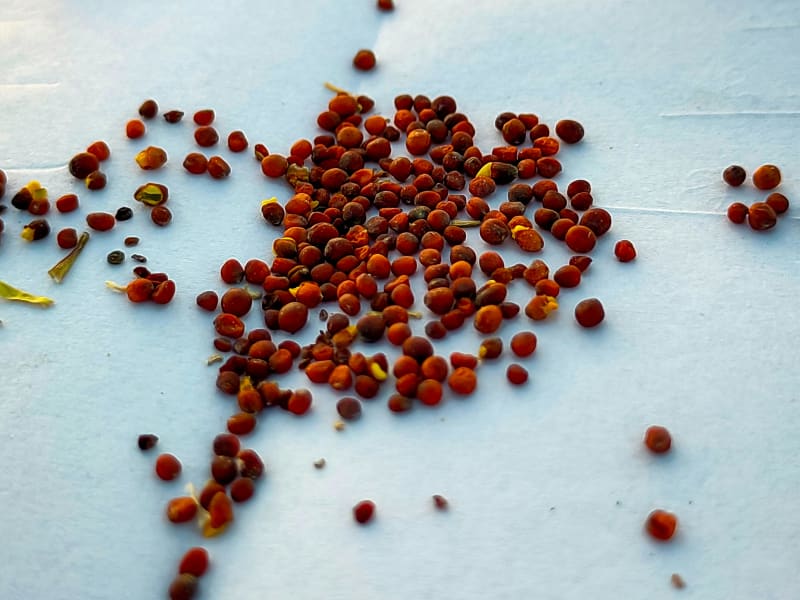
An example of a spice, which has potential health benefits, is mustard seeds. Their nutrition, applications, benefits, and safety are explained in simple terms in this manual.
April 11, 2026

Explore the fascinating world of DNA (deoxyribonucleic acid), the molecule that holds the blueprint for life. Learn about its structure, function, genes, and its vital role in health and inheritance, explained simply for Indian readers.
April 1, 2026

Discover effective, practical tips for recovering from the common cold faster. Learn about hydration, warm liquids, rest, and when to see a doctor, tailored for an Indian audience.
April 1, 2026