Understanding a Baby's Typical Body Heat: A Parent's Guide
Meena, 45, a homemaker from Jaipur, noticed her 6-month-old son, Rohan, seemed unusually listless after a long afternoon nap. His cheeks felt warm, and a nagging worry began to creep in.
Like many new parents, Meena found herself constantly questioning whether Rohan's body heat was typical. This anxiety is incredibly common; differentiating between a slightly warm infant and one experiencing a significant rise in heat can be challenging.
What is considered a typical body heat for a baby? The generally accepted range for a baby's normal internal heat is between 97.7°F (36.5°C) and 99.5°F (37.5°C). However, this can fluctuate slightly depending on the method used for measurement, the infant's activity level, and even the ambient room temperature. Honestly, for infants, even a slight deviation can be a cause for concern, necessitating careful monitoring.
Why is Infant Heat Regulation Different?
Infants, especially newborns, have immature thermoregulation systems. This means their bodies are less efficient at maintaining a stable internal temperature compared to adults.
They can lose heat rapidly, particularly in cooler environments, and conversely, can overheat more easily if overdressed or in a warm room. Practically speaking, this makes them more vulnerable to extreme temperature fluctuations.
Newborns, under three periods of months, have a harder time regulating their internal warmth. Their bodies might struggle to conserve heat, leading to a lower temperature (hypothermia), or they might not be able to cool down effectively, leading to a higher temperature (fever).
In many cases, even a slight elevation in heat in a very young infant requires immediate clinical attention. The World Health Organization (WHO) emphasizes the critical importance of monitoring internal heat in neonates and young infants.
Most people overlook this completely.
When Does an Infant's Heat Indicate a Fever?
A marked rise in body heat is generally defined as an internal temperature of 100.4°F (38°C) or higher. However, the urgency of the situation often depends on the infant's age.
Elevated Heat in Newborns (Under 3 Months Old)
A marked rise in heat of 100.4°F (38°C) or higher in a newborn under three months old is a clinical emergency. The reason is straightforward: newborns have underdeveloped immune systems and are more susceptible to serious infections. Any sign of elevated heat in this age group warrants an immediate call to your pediatrician or a visit to the emergency room. Do not attempt to self-treat with heat-reducing medication without consulting a doctor first.
Elevated Heat in Older Infants (3 to 6 Months Old)
2°F (39°C) or higher is typically considered a notable rise in heat. If your infant in this age range has elevated heat along with other concerning symptoms like unusual irritability, extreme fussiness, lethargy, or a poor appetite, you should contact your doctor.
Does this sound familiar – that gut feeling that something isn't quite right?
Elevated Heat in Infants (Over 6 Months Old)
2°F (39°C) or higher usually warrants a call to the pediatrician. What most people miss: An elevated temperature itself isn't always a sign of a serious illness; it's often the body's natural response to fighting infection.
However, if the elevated heat is very high, persists for more than a couple of days, or is accompanied by other worrying manifestations—such as difficulty breathing, a stiff neck, a rash that doesn't fade when pressed, or dehydration—seek clinical advice promptly.
How to Accurately Take Your Infant's Temperature
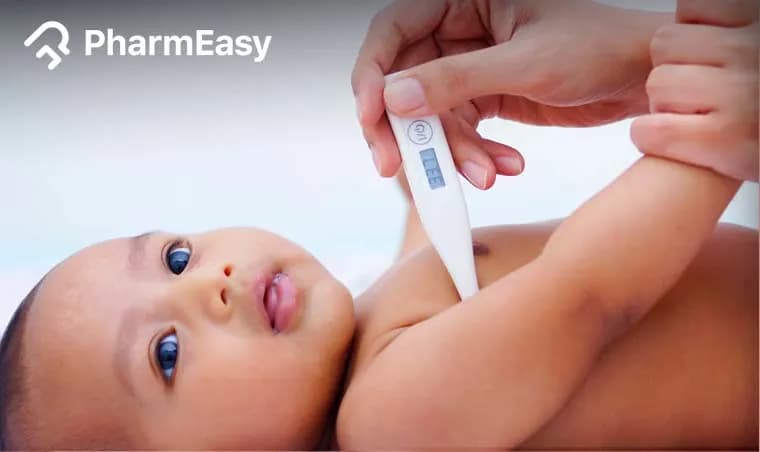
Choosing the right thermometer and using it correctly are crucial for obtaining an accurate reading. Several types of thermometers are available, each with its pros and cons.
Rectal Thermometers
For infants and young children, a digital rectal thermometer is considered the most accurate method. This is the gold standard recommended by organizations like the American Academy of Pediatrics (AAP).
The numbers don't lie.
To use it, lubricate the tip with petroleum jelly, gently insert it about half an inch to an inch into the rectum, and hold it in place until it beeps. Ensure the infant is lying on their stomach or back with knees bent towards their chest for ease of measurement.
Other Types of Thermometers
- Axillary (Armpit) Thermometers: These are less invasive but also less accurate than rectal thermometers. Ensure the thermometer is placed firmly in the armpit and held there for the recommended time. Readings are typically 0.5°F to 1°F lower than rectal readings.
- Temporal Artery (Forehead) Thermometers: These are quick and easy to use, scanning the forehead. Accuracy can be affected by sweat or improper placement.
- Tympanic (Ear) Thermometers: While convenient, ear thermometers can be inaccurate in infants under six periods of months because their ear canals are too small. Even in older children, earwax or improper angle can affect readings.
Honestly, when in doubt about the reading, it's always best to confirm with a rectal temperature measurement, especially if the infant seems unwell.
Factors Affecting an Infant's Temperature
Several external factors can influence your infant's body heat, making it essential to consider the context when interpreting a reading.
- Environmental Temperature: An infant in a very warm room or overdressed might have a slightly elevated internal heat. Conversely, an infant left in a cool environment without adequate clothing could register a lower internal heat. Think about how you feel after sitting on the floor for a long time during a festival meal – your body heat can be affected by the surroundings.
- Activity Level: Just like in adults, an infant's internal heat can rise slightly after vigorous activity or crying.
- Feeding: Drinking warm milk can temporarily increase oral temperature readings if using an oral thermometer (though not recommended for infants).
- Recent Bath: A warm bath can temporarily lower skin temperature readings.
So what does that mean for you? It means a single reading isn't always definitive. Observing your infant's overall condition—their alertness, feeding habits, and comfort level—is just as important as the number on the thermometer.
When to Seek Clinical Help
While many instances of elevated heat in infants are caused by typical viral infections and resolve on their own, certain signs warrant immediate clinical attention. The Indian Council of Medical Research (ICMR) reports that respiratory infections are a leading cause of illness in young children in India, often accompanied by elevated heat.
Call your pediatrician immediately if your infant:
- Is under three periods of months old and has an internal temperature of 100.4°F (38°C) or higher.
- Is three to six periods of months old with an internal temperature of 102.2°F (39°C) or higher, or any elevated heat accompanied by concerning warning signs.
- Is over six periods of months old with an elevated temperature above 102.2°F (39°C) that lasts longer than 2-3 days.
- Shows signs of dehydration: fewer wet diapers (less than 4-6 in 24 hours), dry mouth, no tears when crying, sunken eyes.
- Appears very ill, unusually sleepy, or is difficult to wake.
- Has difficulty breathing or is breathing much faster than normal.
- Has a stiff neck, persistent vomiting, or a rash that doesn't disappear when pressed.
- Experiences a seizure (febrile seizure). While often frightening, febrile seizures are typically harmless in the long run for children over 1 year, but they always require a clinical evaluation.
Practically speaking, trusting your parental intuition is key. If you are worried about your infant's internal heat or overall problem, it is always best to err on the side of caution and seek professional clinical advice.
Most people overlook this completely.
Managing Elevated Heat in Infants
If your infant has an elevated temperature and is uncomfortable, you can take steps to benefit them feel better, always after consulting your doctor.
- Medication: Your pediatrician may recommend age- and weight-appropriate doses of acetaminophen (Tylenol) or ibuprofen (Advil, Motrin). Never give aspirin to children or teenagers due to the risk of Reye's syndrome.
- Hydration: Ensure your infant is drinking plenty of fluids. For breastfed infants, continue frequent nursing. For formula-fed infants, offer formula as usual. For infants over six periods of months, you can offer small sips of water.
- Comfortable Clothing: Dress your infant in lightweight clothing. Avoid overdressing or heavy blankets, which can prevent heat from escaping the body.
- Lukewarm Sponge Bath: A lukewarm sponge bath might aid an infant feel more comfortable, but avoid cold water, which can cause shivering and actually raise body heat.
What most people miss: The goal of managing an elevated temperature isn't necessarily to bring the heat down to the 'normal' range, but to make your infant more comfortable. A low-grade elevated temperature might not require any intervention if the infant is otherwise happy and active.
Key Takeaways
- Normal infant internal heat ranges from 97.7°F (36.5°C) to 99.5°F (37.5°C).
- A rectal internal temperature of 100.4°F (38°C) or higher is an emergency in infants under three periods of months.
- Rectal thermometers are the most accurate for infants and young children.
- Elevated heat is the body's response to infection; focus on the infant's overall well-being, not just the number.
- Always consult a qualified physician before making any clinical decisions.